
Sauces & Condiments
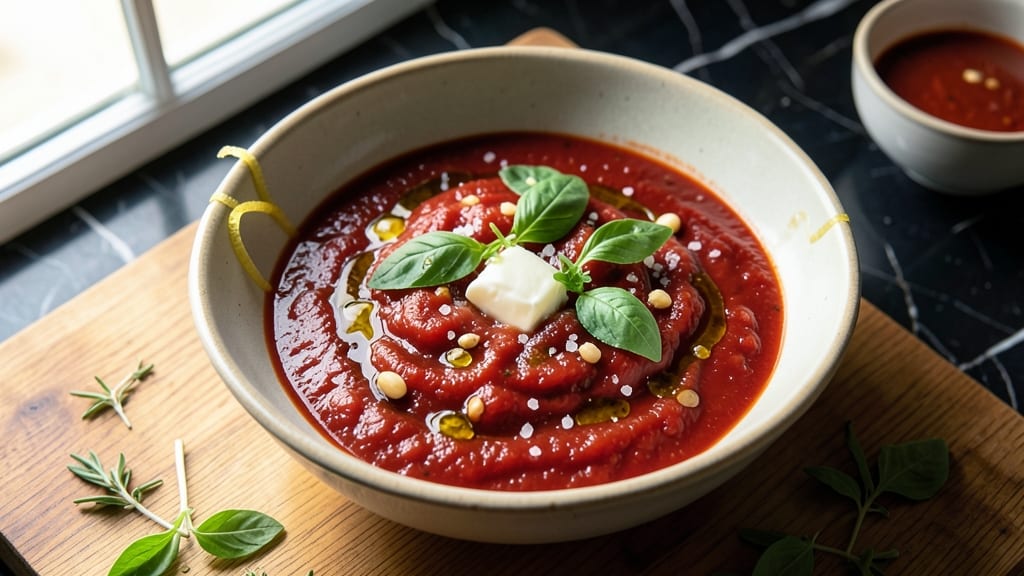
This Amish pizza sauce recipe transforms simple pantry staples into a rich, slow-simmered base that elevates every homemade pizza. The secret lies in a long, gentle cook that develops deep tomato flavor without overpowering sweetness—just like the hearty, no-fuss traditions of Amish kitchens.
No fancy ingredients, just quality tomatoes, warm herbs, and time to create something truly special.
The beauty of this sauce is in its simplicity: no blending required, just a heavy-bottomed pot, a few hours on the stove, and patience.
The tomatoes break down into a velvety consistency while absorbing the flavors of garlic, basil, and a touch of butter—creating a sauce that's smooth yet complex, with just enough acidity to balance the richness. It's the kind of sauce that makes even store-bought pizza dough feel like a gourmet experience.
What sets this apart is the slow-simmered depth that builds as it cooks, transforming basic canned tomatoes into something restaurant-worthy. The herbs infuse gradually, and the butter at the end adds a subtle richness that rounds out the flavors.
This isn't just pizza sauce—it's a pantry staple that keeps well for months, ready to transform any meal with a single spoonful.
Perfect for homemade pizzas, pasta, or even as a dipping sauce for garlic bread. The best part? It tastes even better the next day as the flavors meld further. Let's get started on creating this timeless, flavor-packed sauce that brings a taste of tradition to your table.
Ingredients for amish pizza sauce
Nine pantry staples and fresh herbs create this velvety, slow-simmered pizza sauce perfect for homemade pies.
| Ingredient | Amount | Notes |
|---|---|---|
| San Marzano Crushed Tomatoes 🍅 | 28 oz | High-quality, whole peeled tomatoes |
| Extra-Virgin Olive Oil 🫒 | ¼ cup | For slow sautéing aromatics |
| Garlic Cloves 🧄 | 4 cloves | Minced, not pre-minced jar |
| Fresh Basil Leaves 🌿 | ½ cup | Packed, stems removed |
| Unsalted Butter 🧈 | 2 tbsp | Cold, for finishing |
| Diamond Crystal Kosher Salt 🧂 | 1 ½ tsp | Adjust to taste |
| Freshly Ground Black Pepper 🌶️ | ½ tsp | Freshly cracked preferred |
| Dried Oregano 🍃 | 1 tsp | Mexican oregano preferred |
| Granulated Sugar 🍚 | 1 tsp | Balances acidity |
| Red Wine Vinegar 🍷 | 1 tbsp | For brightness |
The tomatoes are non-negotiable here. San Marzano is the gold standard for its sweetness and low acidity, but any high-quality canned tomatoes work in a pinch. Look for brands with minimal additives—Muir Glen or Whole Foods 365 are reliable grocery store options. Fresh basil is ideal, but dried oregano at one-third the amount delivers similar earthy depth. For the olive oil, California avocado oil has a higher smoke point and won't overpower the tomatoes during the long simmer. The butter at the end adds richness without making the sauce greasy—just let it melt gently off the heat.
No San Marzano? Crushed tomatoes with no added salt work perfectly—just drain any excess liquid first. Fresh basil wilt fast, so if you're prepping ahead, blanch and freeze the leaves until ready to use. The vinegar can be swapped for lemon juice at half the amount, though it won't have the same depth of flavor. For a meatier sauce, add 1 tbsp tomato paste with the aromatics. The sugar balances acidity, but if you're using particularly sweet tomatoes, you can reduce it to 0.5 tsp. The oregano is crucial—Italian oregano lacks the peppery kick of Mexican varieties, so seek it out at Latin markets or specialty stores.
This sauce tastes better with time—3-4 days in the fridge lets the flavors meld beautifully. For longer storage, portion into glass jars with olive oil seals and freeze for up to 6 months. The butter should be cold when added to prevent separation. If the sauce thickens too much after chilling, simply whisk in 1-2 tbsp water to reach your desired consistency. A splash of pasta water works in a pinch if you're using it immediately on pizza dough.
Why You'll Love This Recipe
- Five-Ingredient Magic: I swear by this—just tomatoes, olive oil, garlic, basil, and butter. That’s it. No fancy blends, no hidden spices. My kids think I’m a genius because it’s foolproof.
- Garlic-Butter Bliss: Honestly, the moment that butter melts into the tomatoes? Pure satisfaction. The garlic cloves soften just enough to be rich, not sharp, and the olive oil ties it all together like a warm hug.
- Pantry to Party: Between us, this sauce is my secret weapon for game nights, potlucks, or when my book club shows up unannounced. It’s the same simple recipe, but suddenly everything feels special—no stress, just flavor.
Step-by-step instructions for slow-simmered Amish pizza sauce
This method builds rich tomato depth through gentle cooking and careful seasoning.
Sauté Aromatics in Olive Oil
Heat the 0.25 cup extra-virgin olive oil in a medium saucepan over medium-low heat. Add the 4 cloves minced garlic cloves and cook for 3-4 minutes until they're fragrant but not browned—just golden around the edges. The oil should shimmer but not smoke, indicating proper heat control.
Watch the garlic closely—it burns quickly. If it starts to darken, remove the pan from heat and let it cool slightly before continuing. This foundational step develops the sauce's aromatic complexity that carries through to the final product.
Incorporate Tomatoes and Seasonings
Pour in the 28 oz San Marzano crushed tomatoes and stir to combine with the garlic. Add the 1.5 tsp Diamond Crystal kosher salt, 0.5 tsp freshly ground black pepper, 1 tsp dried oregano, and 1 tsp granulated sugar. Bring the mixture to a gentle simmer over medium heat.
The sugar helps balance the tomatoes' natural acidity while the oregano adds that characteristic Amish warmth. Let the sauce bubble gently for 15 minutes, stirring occasionally to prevent sticking. You'll notice the mixture thicken slightly as it reduces.
Add Brightness and Simmer Long
After 15 minutes, stir in the 1 tbsp red wine vinegar and 0.5 cup packed fresh basil leaves. The vinegar adds brightness that cuts through the richness, while the basil infuses fresh herb notes. Return to a simmer and cook uncovered for 30-40 minutes, stirring occasionally.
This extended simmering develops the sauce's depth and allows flavors to meld. You'll know it's ready when it reaches a thick, jam-like consistency that coats the back of a spoon. The basil should be completely incorporated, leaving no noticeable stems.
Finish with Butter for Richness
Reduce heat to low and remove the sauce from heat. Stir in the 2 tbsp cold unsalted butter until completely melted and emulsified. The butter adds a velvety finish that enhances the sauce's mouthfeel and carries the flavors.
Taste and adjust seasoning if needed—you may want to add a pinch more salt or pepper to suit your preference. Let the sauce cool to room temperature before using, as this allows the flavors to fully settle and intensify. The sauce keeps well in the refrigerator for up to 5 days.
Pro Tips For Making Amish Pizza Sauce
- Sweat the Garlic: Cook the minced garlic in butter and olive oil until it’s golden—not just fragrant. I learned this the hard way: raw garlic in pizza sauce tastes like a medicine cabinet exploded. Let it caramelize for 3-4 minutes, stirring constantly, or you’ll burn it before the tomatoes even hit.
- Crush Tomatoes by Hand: Skip the can opener and use your fingers to break up the San Marzano tomatoes—no seeds, just pulp. Canned tomatoes have a weird texture when dumped straight in, and this step removes the slimy bits that make sauce taste watery. (Yes, it’s messy, but your sauce will thank you.)
- Simmer Low and Long: Reduce the heat to a bare simmer after adding tomatoes—this isn’t a race. Thirty minutes on low gives the flavors time to marry without breaking down the basil or turning the sauce into glue. Walk away. Let it do its thing.
- Add Butter Last: Stir in the unsalted butter off the heat, just before serving. It coats everything in a silky finish without melting into the sauce prematurely. (And if you’re using fresh basil, toss in a few leaves with the butter—it wilts beautifully and adds brightness.)
Troubleshooting this recipe
Grainy Texture Fix
If your sauce ends up too chunky after simmering, strain it through a fine-mesh sieve into a clean pot. This removes any remaining basil stems or tomato skins that can create an uneven texture.
For a smoother consistency without straining, use an immersion blender to blend directly in the pot for 20-30 seconds—just enough to break up any large pieces while keeping the sauce rustic. 🌿
Sauce Too Thin?
Simmer uncovered for an additional 10-15 minutes to reduce the moisture naturally. If you need faster results, transfer the sauce to a small saucepan and cook over medium-high heat until it thickens to your desired consistency.
For a quick fix, mix 1 tbsp cornstarch with 2 tbsp cold water, stir into the sauce, and simmer for 2-3 minutes until thickened.
Overpowering Vinegar?
If the red wine vinegar taste is too sharp, balance it by adding ½ tsp granulated sugar or a pinch of salt. For a smoother finish, stir in 1 tsp tomato paste and simmer for 5 minutes to mellow the acidity.
Alternatively, add a small pat of butter and let it melt gently—this softens the vinegar's bite while adding richness. 🍷
Butter Separating?
If the butter separates after cooling, gently reheat the sauce over low heat while whisking continuously until fully emulsified. For a quick fix, whisk in 1 tsp cold water or lemon juice to help bind the sauce again.
Always use cold butter when adding it to prevent separation—never melted butter directly from the fridge.
Flat Flavor Profile
Boost the depth by adding 1 tsp dried thyme or ½ tsp smoked paprika during the final 10 minutes of simmering. For a brighter finish, stir in 1 tsp fresh lemon juice or a pinch of red pepper flakes after removing from heat.
The key is patience—let the sauce rest for 30 minutes before tasting to allow flavors to develop fully. ✨
Storage Issues
If your sauce develops a skin or separates after refrigeration, simply stir vigorously to re-emulsify. For long-term storage, freeze in ice cube trays for easy portioning—just thaw and stir before using.
Avoid storing in metal containers, as they can react with the acidity over time. Glass jars with tight lids are ideal for both fridge and freezer storage. ❄️
Nutrition facts
Frequently asked questions
Why does this Amish-style pizza sauce need such a long simmer?
The extended simmering (over 45 minutes) is key to developing deep, complex tomato flavor without overpowering sweetness. This traditional technique allows the natural sugars in the tomatoes to caramelize gently, creating a velvety texture and balanced acidity that store-bought sauces can't match. The patience pays off with restaurant-quality depth!
Can I make this sauce without fresh basil?
Yes! Use 1 tablespoon dried basil instead, but add it during the final 10 minutes of simmering to prevent bitterness. For extra depth, combine ½ tsp dried basil + ½ tsp dried oregano. The dried herbs work perfectly—they just need more time to infuse their earthy notes into the sauce.
How do I adjust the thickness for different uses?
For pizza: Use as-is (it should coat the back of a spoon). For pasta: Thin with 1-2 tablespoons water or pasta water per ½ cup sauce. To thicken: Simmer uncovered for 10-15 extra minutes or stir in 1 tsp cornstarch mixed with 2 tbsp water. The sauce will naturally reduce more overnight in the fridge.
What makes this different from regular tomato sauce?
Three key elements set it apart: San Marzano tomatoes (sweeter, lower acid), the red wine vinegar for brightness, and the butter finish that adds richness without heaviness. The slow simmer also develops a smoother, jam-like consistency perfect for pizza—unlike chunky or overly acidic commercial sauces. It's like a cross between classic marinara and a velvety tomato jam!
Can I use this sauce for other dishes besides pizza?
It's perfect for pasta (like lasagna or penne), as a dipping sauce for garlic bread or mozzarella sticks, or even as a base for meatballs or meatloaf. The rich, balanced flavor works surprisingly well in breakfast dishes too—try it on eggs or in a frittata. Just remember it's more flavorful than mild tomato sauce, so use it as a condiment rather than a primary ingredient.