
Sauces & Condiments
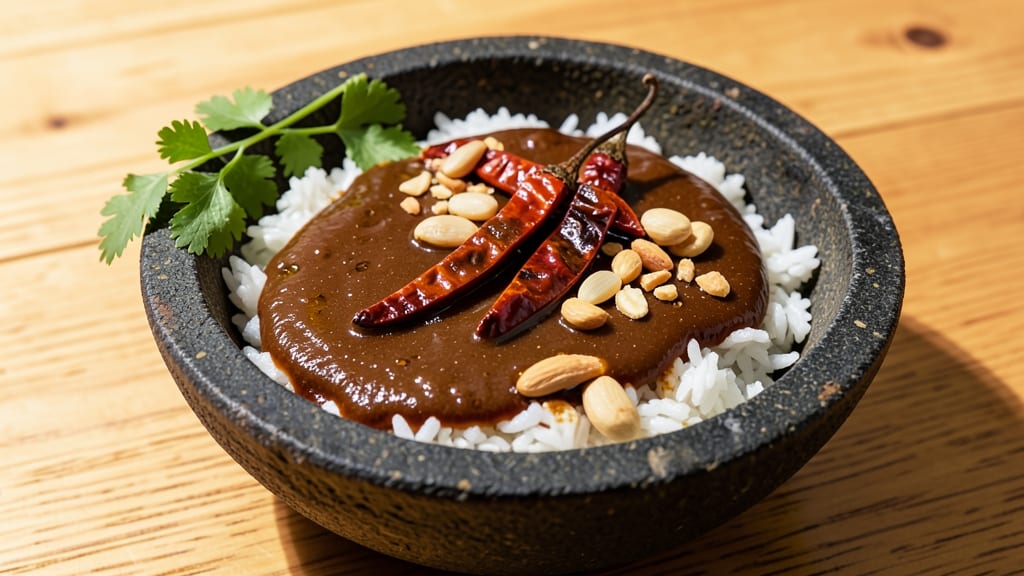
This ancho mole sauce recipe transforms dried chilies, warm spices, and toasted nuts into a rich, complex sauce that adds depth to any dish. The process begins with carefully toasting ancho chilies and nuts to unlock their smoky, earthy flavors—this step is non-negotiable for authentic taste.
What makes this sauce special is how the spices (cinnamon, cumin, cloves) blend with the chilies, creating a balance of heat, sweetness, and warmth that lingers long after the first bite.
The sauce starts as a vibrant, textured paste before simmering into a velvety consistency that clings beautifully to meats like chicken or pork. Unlike store-bought versions, this recipe builds flavor layer by layer—first toasting, then blending, and finally simmering with broth to achieve that signature depth.
The result is a sauce that’s smoky yet not overpowering, with just enough spice to satisfy without overwhelming. It’s the kind of sauce that transforms a simple protein into a restaurant-worthy meal.
What sets this ancho mole sauce apart is its versatility—it works as a marinade, a dipping sauce, or a finishing glaze, but its true magic happens when it’s simmered with tender meat.
The slow cooking process allows all the flavors to meld, creating a sauce that’s rich, aromatic, and impossible to resist. Whether you’re serving it over roasted chicken, drizzled on tacos, or paired with rice, this sauce will elevate your dish to new heights.
Ready in about 45 minutes with minimal active time, this recipe is perfect for weeknight dinners or special occasions. The key is patience—letting the sauce simmer until it reaches the ideal consistency ensures every bite is packed with flavor.
Once you taste homemade ancho mole, store-bought versions will never compare. Let’s get cooking!
Ingredients for ancho mole sauce
Toasted chilies, nuts, and spices blend into a velvety sauce bursting with smoky depth.
| Ingredient | Amount | Notes |
|---|---|---|
| Dried Ancho Chilies 🌶️ | 4 whole | Stems and seeds removed, toasted |
| Peanuts 🥜 | ½ cup | Raw, unsalted, toasted |
| Garlic Cloves 🧄 | 4 cloves | Peeled, toasted lightly |
| Ground Cinnamon 🌿 | 1 tsp | Ceylon preferred for purity |
| Ground Cumin 🌿 | 1 tsp | Toasted for depth |
| Whole Cloves 🌿 | 2 whole | Lightly crushed |
| Black Peppercorns 🌶️ | ½ tsp | Crushed, freshly ground |
| Extra-Virgin Olive Oil 🫒 | ½ cup | High-quality, fruity |
| Chicken Broth 💧 | 1 ½ cups | Low-sodium preferred |
| Dark Brown Sugar 🍯 | 1 tbsp | For subtle sweetness |
The ancho chilies are the heart of this sauce—never skip toasting them. Mexican specialty stores carry the best quality, but any grocery store with a Latin aisle will have them. Look for chilies that are dry, plump, and deep red—avoid any with mold or wrinkles. Peanuts should be raw and unsalted; Trader Joe's and Costco sell them in bulk for better value. Toasting the garlic and spices in olive oil unlocks their flavors—don’t rush this step. If you can’t find Ceylon cinnamon, regular ground cinnamon works, but the flavor will be slightly stronger.
No ancho chilies? Pasilla or guajillo chilies can substitute, but they’ll alter the sauce’s sweetness and color. Running out of peanuts? Almonds or walnuts work, though the texture will differ slightly. The chicken broth can be swapped for vegetable broth if needed, but the sauce will have a milder depth. For extra richness, add a splash of Mexican beer while simmering—it balances the heat beautifully. If you prefer less sweetness, reduce the brown sugar to 1 teaspoon or omit entirely.
Store the sauce in an airtight container in the fridge for up to 5 days—it actually tastes better after flavors meld. For longer storage, freeze in ice cube trays for 3 months. Thicken with a cornstarch slurry if needed, but the sauce should naturally coat a spoon when ready. This sauce pairs perfectly with grilled meats, roasted vegetables, or even as a dip for tortilla chips—its versatility makes it a pantry staple worth repeating.
Why You'll Love This Recipe
- No-Stir Magic: I swear, this sauce comes together while you’re still debating whether to take the roasted chicken out of the oven. Toast the peanuts and chilies in the same dry pan—no extra bowls, no mess. Honestly, the only thing I measure is the garlic, and even that’s forgiving.
- Smoky Sweet Heat: That first bite? Rich, deep, and just a whisper of spice from the anchos, balanced by the nutty crunch of toasted peanuts. The cinnamon and cumin sneak up on you—suddenly, your dish tastes like a hug from a Mexican abuela, but make it 2024.
- Dinner Party Secret: Serve it over grilled chicken for a weeknight, drizzle it on tacos for game day, or slather it on toast with crumbled queso fresco for brunch. Between us, I’ve used it to dress up takeout rice in 10 minutes. It’s the chameleon of sauces.
- Fridge Goldmine: Make a double batch—it tastes even better the next day as the flavors meld. Freezes like a dream, so I keep a jar in my freezer for those nights when I’m too tired to think. (Yes, even on a Tuesday night.) Plus, peanuts and dried chilies won’t break the bank.
Step-by-step instructions for ancho mole sauce
Here's how to transform toasted chilies and nuts into a rich, smoky sauce with balanced heat and depth.
Toast the Chilies and Nuts for Maximum Flavor
Preheat your oven to 350°F and spread the 4 whole dried ancho chilies and 0.5 cup peanuts on a baking sheet. Toast for 8-10 minutes until the chilies darken slightly and the peanuts release their aroma. Watch closely—they should smell nutty and slightly charred, not burnt.
This step unlocks the chilies' natural sweetness while deepening their smoky flavor. Remove them from the oven and let cool completely before handling. I like to work with cooled chilies—they're easier to peel and less likely to burn your fingers when you remove their stems and seeds.
Create the Base with Toasted Spices and Aromatics
In a dry skillet over medium-low heat, toast the 4 cloves garlic and 2 whole cloves for 1-2 minutes until fragrant. Immediately transfer them to a bowl and let cool. In the same skillet (no need to clean it), toast the 1 tsp ground cinnamon, 1 tsp ground cumin, and 0.5 tsp black peppercorns for 30 seconds until aromatic.
Toasted spices develop complex, earthy notes that ground spices can't match. Keep the heat low—you're looking for aroma, not color. Let everything cool completely before grinding the peppercorns with a mortar and pestle or spice grinder to achieve a fine powder.
Build the Sauce with Oil and Broth
Heat the 0.5 cup extra-virgin olive oil in a heavy-bottomed saucepan over medium heat. Add the toasted chilies, peanuts, garlic, cloves, and all the spices. Cook for 5 minutes, stirring constantly, until the mixture becomes fragrant and slightly darkened.
This is where the magic happens—the oil carries the flavors while the chilies begin to break down. Here's the thing—don't rush this step. The chilies need time to release their oils and develop their characteristic deep, chocolatey notes. You'll see the mixture darken and smell intensely smoky.
Add the 1.5 cups chicken broth and 1 tbsp dark brown sugar, then bring to a gentle simmer. Let it cook uncovered for 15 minutes, stirring occasionally, until the mixture reduces by about one-third and becomes thick and glossy.
Blend and Finish to Perfection
Transfer the mixture to a blender and purée until completely smooth. For the best texture, I strain it through a fine-mesh sieve to remove any remaining skins or bits. Return the sauce to the saucepan and simmer gently for another 5-7 minutes to meld all the flavors together.
The sauce should coat the back of a spoon and have a velvety consistency. Taste and adjust the seasoning—you might need a pinch more salt or sugar to balance the heat. Remember, the sauce will continue to develop flavor as it cools, so don't be afraid to adjust now.
Rest and Serve for Optimal Flavor
Remove the sauce from heat and let it rest for 10-15 minutes before serving. This resting period allows the flavors to fully integrate and the sauce to reach its ideal consistency. The sauce should be thick enough to cling to proteins but still pour gracefully.
Ancho mole sauce shines when served over grilled meats, particularly chicken or pork. The smoky, slightly sweet sauce pairs beautifully with the charred flavors of grilled dishes. For best results, reheat gently over low heat before serving—this preserves the sauce's rich texture and complex flavor profile.
Pro Tips For Making Ancho Mole Sauce
- Toast Peanuts First: Skip blending raw peanuts straight into the sauce—toss them in a dry skillet over medium heat for 3-4 minutes until golden and fragrant. This deepens their nutty flavor and prevents that weird, chalky aftertaste that ruins the balance of sweet, smoky, and spicy notes in mole.
- Seed Chilies Carefully: Don’t just tear open those ancho chilies—use a sharp knife to slice them lengthwise, then scrape out the seeds and veins with the blade. Leaving seeds in will make your sauce bitter, and scraping them out cleanly (without cutting into the flesh) keeps the heat mellow and the depth of flavor intact.
- Simmer, Don’t Boil: After blending the base (chilies, garlic, spices, and peanuts), cook it in oil over the lowest possible heat that still bubbles gently. I learned this the hard way—boiling burns the spices and turns the sauce bitter faster than you can say "burnt cinnamon." A slow simmer for 20-30 minutes lets the flavors meld without scorching.
- Blend in Stages: Don’t dump everything into the blender at once—first blend the soaked chilies, garlic, and spices into a rough paste, then add the peanuts and a splash of broth to loosen it. This prevents the blender from seizing up (yes, it happens) and ensures the peanuts break down smoothly into the sauce instead of clumping like glue.
Flavor customization for these flavors
Sweet Heat Balance
Adjust the sweetness-to-heat ratio by modifying the dark brown sugar or ancho chiles. For more sweetness, add an extra ½ tsp sugar or swap 1 ancho chile for 1 pasilla chile—they’re naturally sweeter.
If you prefer more heat, add ½ tsp smoked paprika or ¼ tsp cayenne during the final simmer. I often taste as I go, starting with ½ tsp sugar and adjusting based on the chiles’ intensity. 🌶️
Nutty Variations
Swap peanuts for almonds or walnuts for a richer, nuttier depth. Toast ½ cup almonds until golden and fragrant, then blend them into the sauce for a creamy, buttery texture.
Walnuts add a bold, earthy note—perfect for heartier dishes like braised meats. For extra crunch, reserve 2 tbsp toasted nuts and stir them in at the end. 🥜
Smoky Depth Boosters
Enhance the smoky flavor by adding 1 tsp chipotle powder or ½ tsp liquid smoke during the final simmer. For a Mexican beer twist, replace ½ cup broth with ½ cup dark Mexican beer (like Negra Modelo)—it adds a malty sweetness that balances the heat.
If you love charred flavors, lightly char the ancho chiles over an open flame before toasting. ✨
Thickness Adjustments
For a thicker sauce, simmer uncovered for an extra 5-7 minutes or stir in 1 tsp cornstarch mixed with 1 tbsp water. If it’s too thick, thin with 1-2 tbsp warm broth or water.
The ideal consistency should coat the back of a spoon but still pour smoothly. I find the sauce thickens further as it cools, so don’t over-reduce. 💡
Spice Customizations
Add ½ tsp ground coriander for a citrusy brightness or ¼ tsp nutmeg for warmth. For a fruity twist, stir in 1 tsp orange zest during the final simmer—it pairs beautifully with the smoky chiles.
If you love herbs, finish with 1 tbsp chopped cilantro or fresh epazote for a fresh, slightly bitter contrast. 🌿
Regional Twists
For a Puebla-style mole, add 1 tsp sesame seeds and ½ tsp anise seeds for a nutty, aromatic depth. In Oaxaca, they often include plantains—sauté ½ cup mashed ripe plantains with the chiles for a sweet, caramelized note.
Each region tweaks the balance, so experiment to find your favorite! 🗺️
Nutrition facts
Frequently asked questions
Can I make ancho mole sauce without peanuts?
Swap peanuts for ½ cup toasted almonds or walnuts for a richer flavor. Almonds create a creamy texture while walnuts add earthy depth. Toast them first to enhance their aroma—just like the peanuts in the original recipe.
How do I adjust the heat level in the sauce?
Start by removing seeds from more ancho chilies for milder heat, or keep them for extra spice. For additional kick, add ½ tsp smoked paprika or ¼ tsp cayenne during the final simmer. Taste as you go—you can always adjust while the sauce cools.
What's the best way to store leftover sauce?
Transfer cooled sauce to an airtight container and refrigerate for up to 5 days. For longer storage, freeze in ice cube trays (up to 3 months). Reheat gently over low heat, stirring occasionally. The flavors actually deepen when stored properly!
Can I use this sauce for dishes other than meat?
Yes! This versatile sauce works beautifully over grilled vegetables, as a dip for tortilla chips, or drizzled on tacos. For vegetarian options, simmer with mushrooms or plantains instead of meat. The smoky-sweet profile shines in many applications.
Why does my sauce taste bitter?
Bitterness often comes from over-toasting the chilies or using old spices. Toast chilies just until fragrant (8-10 minutes), not charred. Fresh spices make a huge difference—replace any spices older than 3 months. A pinch of sugar or orange zest can also help balance bitterness.