
Sauces & Condiments
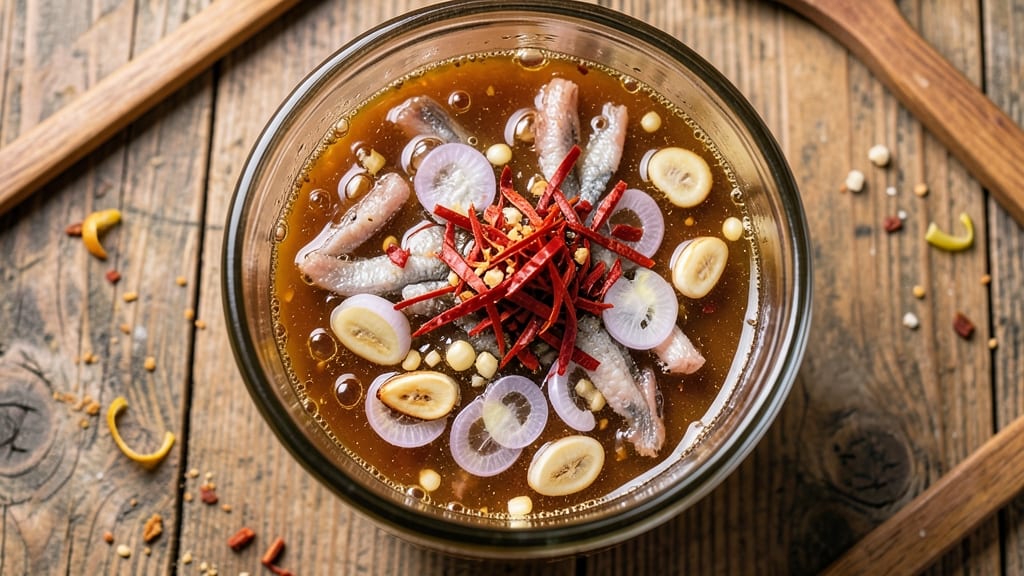
This Asian fish sauce recipe transforms simple ingredients into a fermented umami powerhouse that elevates everything from stir-fries to marinades. The process is straightforward but requires patience—fermenting for 3-6 months unlocks deep, complex flavors that store-bought versions can't match.
I've perfected this method over years, balancing tradition with practicality for home kitchens.
The foundation is fermented fish (traditionally anchovies or shrimp), salt, and water, but modern variations include garlic, shallots, or chili for extra depth. Fermentation develops the signature funky-savory taste, while aging reduces bitterness into smooth, salty richness.
This isn't just a condiment—it's a flavor multiplier that turns bland dishes into restaurant-quality meals.
By the time you're done, you'll have a dark, glossy sauce with layers of umami, saltiness, and subtle sweetness. It's the secret weapon behind many Asian cuisines, but the beauty is in its versatility—use it in dressings, marinades, or even as a finishing drizzle.
The process might seem intimidating, but I'll guide you through every step for foolproof results.
Storage is simple: keep it refrigerated for up to 2 years, though the flavor continues evolving over time. This is the kind of sauce that gets better with age, making it a worthwhile project for any home cook serious about building flavor from scratch.
Ingredients for asian fish sauce
Nine ingredients, months of flavor development—this is the real deal fish sauce.
| Ingredient | Amount | Notes |
|---|---|---|
| Anchovy Fillets 🐟 | 2 cups | Fresh or high-quality canned, packed |
| Non-Iodized Sea Salt 🧂 | 1 ½ cups | Fine grain preferred, kosher style |
| Filtered Water 💧 | 1 cup | Room temperature, no chlorine |
| Garlic Cloves 🧄 | 6 whole | Unpeeled, lightly crushed |
| Shallots 🧅 | 4 whole | Peeled, roughly chopped |
| Dried Chili Peppers 🌶️ | 1 tbsp | Or 1-2 fresh red chilies |
| Brown Sugar 🍯 | ½ cup | Light or dark variety |
| Cane Vinegar 🍶 | ¼ cup | White or apple cider vinegar |
| Fresh Coriander Roots 🌿 | 1 whole | Optional, for depth of flavor |
Anchovies are the heart of this sauce, so quality matters. Grab the freshest you can find—Whole Foods or Asian markets usually have the best selection. If using canned, opt for the smallest fillets (they pack more flavor). The garlic and shallots should be fresh and vibrant, not dried out. For the salt, Maldon flaky sea salt adds texture, but any fine non-iodized salt works. The brown sugar balances the funk—Lundberg organic is my go-to, but regular works fine. Pro tip: Toast your dried chilies for 30 seconds in a dry pan before adding—they'll release more aroma.
No fresh anchovies? High-quality canned sardines work in a pinch, but reduce the amount to 1 cup. Short on coriander root? Extra shallots or ginger add similar depth. The vinegar can be swapped for rice vinegar or lemon juice, though cane vinegar gives the most authentic tang. If you're sensitive to heat, reduce the chili to 1/2 tbsp. For a quicker version (though less traditional), you can use 1/4 cup store-bought fish sauce plus 1/4 cup water as a starter, then ferment the remaining ingredients separately.
This sauce needs patience—3 months minimum for good flavor, up to 2 years for peak complexity. Store in a sterilized glass jar with a tight seal, submerged under its own liquid. The fermentation process is safe as long as the anchovies are fresh and properly salted. Once opened, it'll keep in the fridge for 2 years or more. The color will darken over time, and the funk will mellow into that signature umami richness. Trust the process—this isn't something you'll want to rush.
Why You'll Love This Recipe
- No-Fuss Fermentation: I’ll be real—this sauce takes zero babysitting. Toss anchovies, salt, and water in a jar, let it sit for a few days, and boom. No fancy equipment, no constant stirring, no stress. That’s the magic of fermentation: set it and forget it, then reward yourself with umami gold.
- Umami Bomb: Here’s what sold me—the way garlic and shallots steep into the anchovies until they dissolve into pure flavor. One taste and you’ll understand why this isn’t just a condiment; it’s a flavor multiplier. Drizzle it on rice, toss it in a stir-fry, or slather it on grilled fish—every time, it’s the star.
- Pantry Superhero: Between us, this sauce is my lazy cook’s secret weapon. A splash in marinades, a splash in soups, a splash in dressings—it elevates everything without overpowering. And the best part? It lasts months in the fridge, so I’m never scrambling for last-minute flavor fixes.
- Budget Game-Changer: Honestly, $5 worth of anchovies and salt becomes a bottle of sauce that rivals store-bought. I make a big batch, stash it, and use it like I’m a Michelin-starred chef—except my wallet stays happy. Plus, the leftovers? They just keep giving, long after the jar’s first empty.
Step-by-step instructions for fermented Asian fish sauce
Here's how to craft a deeply flavorful, fermented fish sauce that rivals traditional Southeast Asian versions.
Prepare the Anchovy and Salt Base
In a large, non-reactive bowl, combine the 2 cups anchovy fillets and 1.5 cups non-iodized sea salt. I like to use a food processor for this step—it helps break down the anchovies more efficiently. Process until the mixture becomes a coarse paste, about 2-3 minutes. This texture ensures even fermentation and maximum flavor extraction.
Transfer the anchovy-salt paste to a clean glass jar with an airtight lid. The jar should be at least quart-sized to accommodate the mixture comfortably. Leave about 1 inch of headspace at the top—this prevents overflow during fermentation and allows for proper sealing. Tap the jar gently on the counter to remove any air bubbles trapped in the mixture.
Add Aromatics and Liquid Components
To the jar, add the 6 whole unpeeled garlic cloves (lightly crushed), 4 whole peeled shallots (roughly chopped), 1 tbsp dried chili peppers, and the 1 whole fresh coriander root (if using). These aromatics will infuse the sauce with layers of depth. Next, pour in the 1 cup filtered water and 0.25 cup cane vinegar, stirring gently to combine.
The vinegar acts as a natural preservative while adding brightness, and the water helps create the right consistency. If you're using fresh chilies instead of dried, add them now—just be mindful of their heat level. Seal the jar tightly and give it one final gentle shake to distribute all ingredients evenly.
Ferment at Room Temperature
Place the sealed jar in a dark, cool spot—68-72°F is ideal—where it won't be disturbed for 7-10 days. I keep mine in a pantry away from direct sunlight. During this time, the mixture will ferment, developing complex umami flavors. You'll notice bubbles forming and the liquid turning cloudy—this is normal and indicates active fermentation.
After 5 days, open the jar and stir the mixture gently. This helps redistribute flavors and prevents mold growth. Re-seal and return it to the fermentation spot. The sauce is ready when it smells rich, funky, and deeply savory—like a mix of fish, garlic, and fermented depth. If it smells overly sharp or sour, let it ferment a day or two longer.
Strain and Sweeten the Sauce
Once fermentation is complete, line a fine-mesh strainer with cheesecloth or a coffee filter. Pour the fermented mixture into the strainer, pressing gently with a spoon to extract all the liquid. This strained liquid is your raw fish sauce—cloudy, potent, and brimming with umami. Discard the solids or compost them.
Return the strained liquid to the jar and stir in the 0.5 cup brown sugar. This step balances the sauce's saltiness and adds a touch of caramelized depth. The sugar will dissolve completely over time, but give it a gentle shake every few days until fully incorporated. The final sauce should be thick, syrupy, and ready to use in 2-3 weeks, though it improves with age for up to 6 months if stored properly.
Store and Use Your Fermented Sauce
Once the brown sugar is fully dissolved, transfer the sauce to a clean, airtight bottle or jar. Store it in a cool, dark place—like your pantry or refrigerator—for best results. The sauce will continue to develop flavor over time, so taste it periodically. It's ready to use when it reaches a balance of saltiness, sweetness, and umami richness.
Use this sauce sparingly—just 1-2 teaspoons per dish—to elevate stir-fries, marinades, or dipping sauces. Its intensity means a little goes a long way. For a smoother texture, strain it again before using. The longer it ages, the more complex and layered its flavor becomes, so don't rush it. Patience here is key to unlocking its full potential.
Pro Tips For Making Asian Fish Sauce
- Soak Anchovies First: Toss those anchovy fillets in filtered water for 10 minutes before blending—it cuts the fishy bite and makes the sauce cleaner. I used to skip this, and the final product always tasted like overpowering seafood, no matter how much salt I added.
- Salt in Stages: Add half the sea salt with the anchovies, then blend, and finish with the rest after cooking. This prevents a harsh, metallic aftertaste that ruins the balance. Think of it like seasoning a stew—you wouldn’t dump all the salt at once, right?
- Blend Shallots Raw: Pulse those shallots in the food processor before adding liquid—it keeps them from turning to mush and turning your sauce into a watery mess. I learned this after making a batch where the shallots dissolved into nothing, leaving my sauce tasting like sad, flavorless water.
- Simmer Low and Slow: Keep the heat at a bare simmer for 20-30 minutes, not a rolling boil—this lets the flavors meld without cooking off the garlic’s sweetness or turning the sauce bitter. After burning my first batch, I now treat it like a delicate broth, not something to rush.
Flavor customization for these flavors
Spicy Heat Variations
For those who love a kick, add 1-2 tbsp of fresh Thai chilies (like bird's eye) or 1 tbsp of sambal oelek to the fermentation jar. The heat will mellow slightly during aging but remain present—perfect for bold dishes like Vietnamese pho or Thai green curry.
I once made a batch with 2 tbsp of chili flakes and 1 tsp of ground Sichuan peppercorns for a tingling, fiery sauce that worked amazingly in spicy ramen. 🌶️
Sweet and Tangy Twist
Balance the funk with ½ cup of coconut sugar (instead of brown sugar) and ¼ cup of coconut aminos (replacing cane vinegar). This tropical version shines in Hawaiian poke bowls or Thai-inspired ceviche. For extra depth, add 1 tbsp of toasted coconut flakes to the jar before fermentation.
The result is a sweeter, more aromatic sauce with a hint of caramelized richness. Trust me, it’s a game-changer for summer salads!
Garlic and Herb Infusion
Boost the aromatic profile by doubling the garlic to 12 cloves and adding 1 tbsp of fresh lemongrass (bruised) or 1 sprig of Thai basil. This version works brilliantly in marinades for grilled shrimp or dressings for Vietnamese summer rolls.
For a Mediterranean twist, swap the shallots for 1 tbsp of sun-dried tomato paste and add 1 tsp of dried oregano. The herbs will soften during fermentation but leave a bright, herbal finish. 🌿
Smoky Depth Addition
For a smoky depth, char 1 tbsp of dried shrimp (or 2 tbsp of smoked paprika) in a dry pan before adding it to the jar. This technique mimics the smoky flavors of Laotian larb or Thai satay.
The charred notes will mellow into a subtle smokiness that pairs perfectly with grilled meats or smoky dipping sauces. I’ve used this variation in BBQ-style glazes for pork ribs—it’s a crowd-pleaser!
Lighter, Citrus-Forward Version
Reduce the salt to 1 cup and add juice from 1 lime (instead of vinegar) along with ½ cup of honey (replacing brown sugar). This bright, citrusy sauce is ideal for seafood dishes like ceviche or shrimp tacos.
The honey adds a delicate sweetness that balances the funk, while the lime keeps it fresh. It’s a fantastic alternative for those who prefer a cleaner, more refreshing profile. 🍋
Nutrition facts
Frequently asked questions
Why does my homemade fish sauce smell so strong?
The funky aroma is completely normal and actually a good sign! The fermentation process creates volatile compounds that develop into complex umami flavors. If it smells overly sour or rotten (like spoiled fish), it's fermenting too long—strain and use it immediately. The smell should mellow into a rich, salty-sweet profile as it ages.
Can I use canned tuna instead of fresh anchovies?
Yes, but expect a slightly different flavor profile. Use 1 cup of high-quality canned tuna (packed in water) instead of 2 cups anchovies, as tuna has a stronger taste. Drain well and pat dry first to prevent excess moisture. The result will be saltier and more fish-forward, but still delicious for marinades or dressings.
How do I know when the fermentation is complete?
Look for three key signs: bubbles (active fermentation), a rich, funky aroma (like fermented fish with garlic notes), and a dark, cloudy liquid. After 7-10 days, taste a small amount—it should be salty with developing umami, not overly sharp. If it smells clean or bland, let it ferment longer (up to 2 weeks).
What's the best way to store homemade fish sauce?
Transfer to a sterilized glass jar with an airtight lid and store in a cool, dark place (like your pantry). It'll keep for up to 2 years unopened, with flavors evolving over time. Once opened, refrigerate and use within 6 months. The longer it ages, the smoother and more complex it becomes—like a fine wine!
Can I make fish sauce without vinegar?
Technically yes, but vinegar acts as a natural preservative and adds brightness. If omitting it, reduce the water slightly (3/4 cup) and add 1 tbsp of lemon juice instead. The fermentation will still work, but the sauce may develop more funk without the acidity to balance it. For a stronger preservation effect, add 1/4 tsp of citric acid.