
Sauces & Condiments
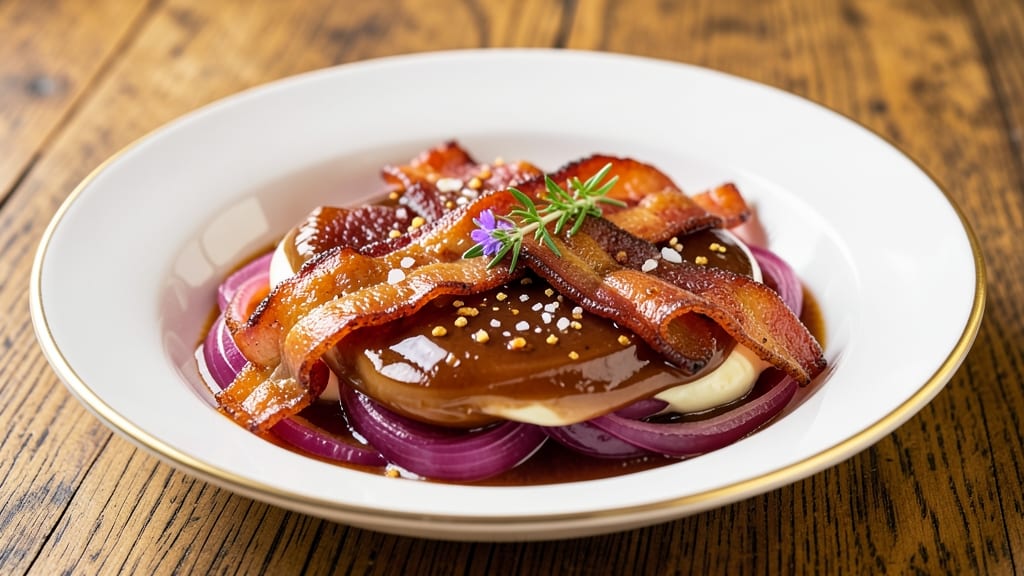
This bacon onion sauce recipe transforms simple ingredients into a rich, smoky-sweet glaze that elevates grilled meats, roasted vegetables, and even mashed potatoes. The secret lies in slow-cooked onions and crispy bacon rendered into a velvety base, then reduced into a thick, flavorful sauce.
I developed this recipe after years of perfecting caramelized onions and realized their full potential when paired with bacon fat—it’s the kind of sauce that makes every bite taste like a restaurant-worthy meal.
The process is straightforward but requires patience: onions are cooked until deeply caramelized, bacon is crisped to render fat, and the two are combined with a touch of cream or butter for richness. A simple flour slurry thickens the sauce without altering its natural depth, ensuring it coats proteins beautifully.
What you’ll end up with is a sauce that’s sweet, smoky, and irresistibly savory, perfect for drizzling over grilled chicken, pork chops, or even drizzled over a steak.
This sauce is incredibly versatile—use it as a glaze for grilled meats, a drizzle for roasted potatoes, or even a topping for burgers and sandwiches. The best part?
It keeps well in the refrigerator for up to a week, so you can make a big batch and enjoy it throughout the week. Whether you’re hosting a barbecue or simply want to add depth to a weeknight dinner, this sauce is a game-changer.
Store it in an airtight container in the fridge for up to seven days, or freeze it for longer storage. Reheat gently on the stovetop, stirring occasionally, until warmed through. The flavors only deepen over time, making it even more delicious with each use.
Let’s get started on creating this foolproof, restaurant-quality sauce that will become a staple in your kitchen.
Ingredients for bacon onion sauce
Nine simple ingredients create this smoky-sweet sauce that transforms grilled meats and roasted veggies.
| Ingredient | Amount | Notes |
|---|---|---|
| Yellow Onions 🧅 | 4 large | Thinly sliced, caramelized |
| Bacon 🥓 | 12 oz | Thick-cut, chopped into pieces |
| Unsalted Butter 🧈 | 4 tbsp | Full-fat for richness |
| All-Purpose Flour 🌾 | 1 tbsp | For thickening slurry |
| Heavy Cream 🥛 | ½ cup | Full-fat preferred |
| Granulated Sugar 🍚 | 1 tbsp | Balances flavors |
| Apple Cider Vinegar 🍏 | 1 tbsp | Brightens sauce |
| Salt 🧂 | 1 tsp | Kosher or sea salt |
| Black Pepper 🌶️ | ¼ tsp | Freshly ground |
The bacon and onions are the stars here. Thick-cut bacon renders the best fat for that rich, smoky flavor—skip the thin slices. For onions, yellow or sweet onions work, but yellow gives the deepest caramelization. I grab mine from the meat counter at Kroger for the best quality, but any grocery store bacon will do. The sugar isn't just for sweetness—it helps the onions caramelize faster and adds depth to the sauce. Don't skip it, even if you're not sweet-toothed.
No bacon? Smoked paprika plus extra butter can mimic that smoky flavor, though it won't be identical. Running out of heavy cream? Full-fat coconut milk works in a pinch, though the texture will be slightly different. The flour slurry is key for thickening—just whisk it with a little cold water before adding. If you're making this ahead, reduce the vinegar slightly since flavors deepen over time. The sauce should coat the back of a spoon but still be pourable when done.
This sauce keeps for up to 7 days in the fridge, and honestly, it tastes even better the next day as the flavors meld. For longer storage, freeze it in ice cube trays—just thaw and reheat in the microwave. I always make a double batch because it disappears fast. Store it in a glass jar with a tight lid to keep it fresh. Reheat gently on low heat, stirring occasionally, to avoid burning the onions.
Why You'll Love This Recipe
- Here’s what sold me: the onions get slow-cooked until they’re sweet and jammy, then crisped at the end. That contrast—soft, salty bacon bits against sticky, golden onions—is ridiculously good. (Yes, even on a Tuesday night.)
- Five-Ingredient Magic: I swear by this list—no weird spices, no last-minute grocery runs. Just onions, bacon, butter, flour, and cream. That’s it. The kind of recipe where you open the pantry and know you’ve got it.
- Caramel Crunch Perfection: Here’s what sold me: the onions get slow-cooked until they’re sweet and jammy, then crisped at the end. That contrast—soft, salty bacon bits against sticky, golden onions—is ridiculously good. (Yes, even on a Tuesday night.)
- Pantry to Plate Flex: This sauce turns pasta into a meal, but it’s also my go-to for dumping over roasted chicken or mashed potatoes. Honestly, I’ve even used it as a dip—no judgment. The beauty? It’s always welcome.
Step-by-step instructions for bacon onion sauce
This rich, caramelized sauce delivers perfect balance—sweet, smoky, and velvety smooth every time.
Cook the Bacon Until Crisp
Place the 12 oz thick-cut bacon in a large skillet over medium heat. Cook undisturbed for 8-10 minutes until the edges are deep golden brown and the fat begins to render. This is where the magic starts—those crispy bits will infuse the sauce with incredible depth of flavor.
Use a pair of tongs to gently flip the bacon pieces occasionally, letting the fat pool in the pan. Once the bacon is 80% cooked (still slightly pink in the center), remove it from the skillet with a slotted spoon and transfer to a paper towel-lined plate. Leave the rendered bacon fat in the pan—this golden liquid is the foundation of our sauce. If you have more than ½ cup of fat, you can pour off the excess into a small bowl for later use.
Caramelize the Onions Slowly
Reduce the heat to low and add the 4 large yellow onions, sliced thinly. Cook them gently for 25-30 minutes, stirring occasionally, until they're deep golden brown and almost jammy in texture. This slow caramelization process transforms simple onions into sweet, complex flavor bombs.
Here's the thing—don't rush this step. You'll know the onions are ready when they're soft enough to mash between your fingers but still hold their shape slightly. The edges should be almost blackened in spots, and the pan will have that irresistible caramelized onion aroma. If the onions start to stick too much, add a splash of water and scrape up those delicious browned bits from the bottom of the pan.
Build the Sauce Base
Increase the heat to medium and add the 4 tbsp unsalted butter to the pan with the caramelized onions. Stir to combine, letting the butter melt into the onions. After 1 minute, sprinkle in the 1 tbsp all-purpose flour and stir vigorously for 30 seconds to create a roux. This will thicken our sauce beautifully.
Next, pour in the 0.5 cup heavy cream, stirring constantly to prevent lumps from forming. Add the 1 tbsp granulated sugar and 1 tbsp apple cider vinegar, stirring well to distribute. The vinegar will brighten the flavors while the sugar balances the richness. Let the mixture simmer gently for 3-4 minutes until it thickens slightly and coats the back of a spoon.
Finish and Season
Return the crispy bacon to the skillet, breaking it into smaller pieces as you go. Stir everything together and let it heat through for 2 minutes. The bacon will release its remaining fat and melt into the sauce, creating that perfect smoky-sweet flavor profile.
Finally, season with the 1 tsp salt and 0.25 tsp black pepper. Taste and adjust if needed—you might want to add a pinch more salt to enhance all those rich flavors. For an extra touch, you can strain the sauce if you prefer a smoother texture, but I like to leave in some of those beautiful bacon bits for texture and flavor.
Rest and Serve
Remove the skillet from heat and let the sauce rest for 5 minutes. This allows all the flavors to meld together perfectly. The sauce will thicken slightly as it cools, which is exactly what we want.
Serve the bacon onion sauce immediately over grilled meats, drizzled over roasted vegetables, or spooned generously onto crispy potatoes. It's equally amazing as a dipping sauce for fries or a glaze for grilled corn. Store any leftovers in an airtight container in the refrigerator for up to 5 days, or freeze for up to 3 months. The flavors actually improve as it sits!
Pro Tips For Making Bacon Onion Sauce
- COOK BACON LOW AND SLOW: I learned this the hard way—crispy bacon is great, but for this sauce, render it gently over medium-low heat. If you crank it up, you’ll end up with burnt edges and grease that smokes like a fire hazard instead of cooking evenly.
- SLICE ONIONS THIN AND EVEN: Uneven slices mean some parts burn while others stay raw. Grab a sharp knife and cut the onions into ⅛-inch slices—yes, measure them if you’re new to this—so they cook through without turning to mush.
- WHISK FLOUR INTO CREAM: Dumping flour into cream and stirring usually leaves lumps, and nobody wants gritty sauce. Whisk the flour into a paste with a splash of cold butter first, then add it to the cream for a silky, lump-free finish.
- DON’T SKIP THE SIMMER: After adding the cream, let the sauce bubble gently for 3–4 minutes. Skipping this step means the flour won’t cook out fully, leaving a raw taste—like eating undercooked pasta sauce, but worse.
Flavor customization for this dish
Sweet Heat Boost
Add 1 tsp smoked paprika and ½ tsp cayenne pepper when cooking the onions for a smoky kick with subtle heat. For extra sweetness, increase the sugar to 2 tbsp and add 1 tsp maple syrup at the end.
This variation works perfectly as a glaze for ribs or pulled pork, where the sweetness caramelizes beautifully on the grill. 🌶️
Creamy Garlic Twist
Infuse the heavy cream with 2 minced garlic cloves and ½ tsp dried thyme by heating them together for 2 minutes before adding to the sauce. This adds an aromatic depth that pairs wonderfully with grilled chicken or fish.
For extra richness, stir in 1 oz cream cheese at the end for a velvety texture that balances the smokiness. 🧄
Spicy Mustard Cut
Replace the apple cider vinegar with 1 tbsp Dijon mustard and ½ tsp Worcestershire sauce for a tangy, umami-rich twist. The mustard cuts through the richness while adding complexity.
This version shines on burgers or as a dipping sauce for fries, where the bold flavors stand up to hearty bites. 🥓
Herb-Infused Version
Add 1 tbsp fresh rosemary or 1 tsp dried rosemary when caramelizing the onions for an earthy aroma. Finish with 1 tsp fresh parsley for brightness. This herbaceous take complements grilled lamb or roasted vegetables beautifully, adding a Mediterranean flair to the classic sauce. ✨
Cheesy Bacon Twist
Stir in ½ cup shredded sharp cheddar at the end for a creamy, cheesy sauce that’s perfect for mac and cheese or baked potatoes. The cheese melts into the sauce, creating a decadent, gooey texture that pairs perfectly with crispy bacon bits.
This version is a crowd-pleaser for comfort food lovers. 🧀
Low-Carb Adaptation
Swap the heavy cream for ½ cup unsweetened almond milk and reduce the sugar to ½ tbsp to create a lighter, keto-friendly version. Use 1 tbsp xanthan gum instead of flour for thickening, and add 1 tsp mustard powder for depth.
This adaptation keeps the rich flavor while fitting into low-carb diets. 🥑
Nutrition facts
Frequently asked questions about bacon onion sauce
Can I make this sauce without bacon?
Yes! For a vegetarian version, replace the bacon with 2 tbsp smoked paprika and 2 tbsp extra bacon fat substitute (like olive oil or coconut oil). Add the paprika when caramelizing the onions to mimic the smoky flavor. The sauce will still be delicious but with a slightly different profile. For extra richness, stir in 1 tbsp nutritional yeast at the end.
How do I prevent the sauce from getting too thick?
If your sauce thickens too much while cooking, simply add 1-2 tablespoons of warm water or heavy cream and stir until smooth. The sauce should coat the back of a spoon but still be pourable. For a smoother texture, strain it through a fine-mesh sieve before serving. If you prefer it thicker, reduce it longer on low heat, stirring occasionally to prevent sticking.
What are the best ways to use leftover bacon onion sauce?
This versatile sauce works perfectly as a glaze for grilled chicken, pork chops, or steak, a dipping sauce for fries or veggie sticks, or a topping for burgers and sandwiches. For extra flavor, spread it on toasted bread with a fried egg or use it as a base for loaded baked potatoes. It also pairs well with roasted Brussels sprouts or as a finishing sauce for tacos.
Can I make this sauce in a slow cooker?
Cook the bacon in a skillet first, then transfer the onions, bacon, butter, and sugar to the slow cooker. Cook on low for 4-5 hours, stirring occasionally. In the last 30 minutes, add the flour, cream, and vinegar. The slow cooker method creates a deeper, more concentrated flavor. For best results, use a 3-4 quart model to avoid overflowing.
Why did my onions burn before caramelizing?
Onions burn when cooked too quickly or at too high a temperature. Keep the heat at low and stir frequently to prevent sticking. If they start to brown too quickly, reduce the heat further or add a splash of water to deglaze the pan. The onions should take 25-30 minutes** to caramelize properly. Patience is key—rushing this step ruins the sauce's sweet, jammy texture.