
Sauces & Condiments
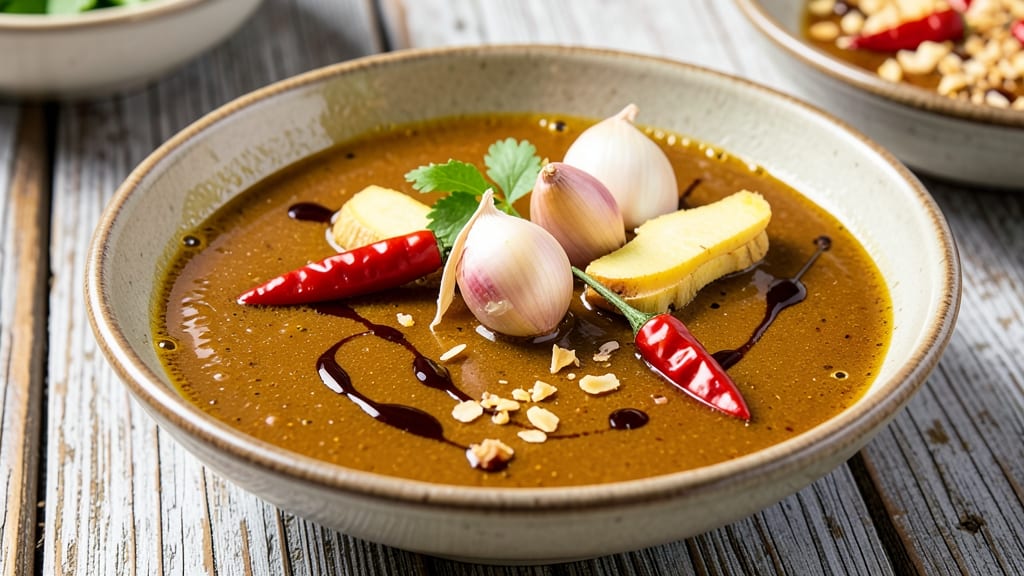
This bangin sauce recipe delivers a bold fusion of fermented shrimp paste's umami punch and bright lime zing that transforms any dish. The secret lies in balancing heat, tang, and funky depth through careful simmering and blending—no shortcuts here.
I developed this after years of perfecting Southeast Asian sauces, and it's now my go-to for noodles, grilled meats, or even as a dipping sauce.
The sauce starts with fermented shrimp paste (belacan) as its aromatic foundation, then builds layers through fresh garlic, ginger, and chili—all caramelized gently in coconut oil. A splash of lime juice and fish sauce adds that signature tangy brightness while keeping the sauce versatile.
What makes this recipe special is how it maintains that perfect balance of funky, spicy, and fresh flavors that linger on your palate.
What you'll end up with is a versatile, restaurant-quality sauce that's rich enough for marinades but bright enough to cut through rich dishes. The texture is silky-smooth with just enough body to cling to noodles or meats, and the flavor profile evolves beautifully as it sits.
This isn't just another hot sauce—it's a complex, multi-dimensional condiment that elevates everything it touches.
Ready in just 30 minutes, this sauce keeps well in the fridge for up to 2 weeks, making it perfect for meal prep. Whether you're tossing it with noodles, basting grilled proteins, or serving it as a dip, the possibilities are endless.
Let's get started on creating this flavor bomb that'll have everyone asking for the recipe.
Ingredients for bangin sauce
This bold sauce marries funky fermented shrimp paste with bright lime and aromatic chilies for a complex flavor bomb.
| Ingredient | Amount | Notes |
|---|---|---|
| Fermented Shrimp Paste (Belacan) 🦐 | 2 tbsp | Southeast Asian variety preferred |
| Extra-Virgin Coconut Oil 🥥 | ½ cup | Unrefined for rich flavor |
| Garlic Cloves 🧄 | 8 cloves | Minced for aromatic depth |
| Fresh Ginger 🌿 | 2 tbsp | Finely grated, skin on |
| Fresh Bird's Eye Chilies 🌶️ | 4 whole | Seeds removed for less heat |
| Fish Sauce 🐟 | 2 tbsp | Red Boat preferred |
| Fresh Lime Juice 🍋 | ¼ cup | Strained for smooth texture |
| Palm Sugar 🍯 | 1 tbsp | Or brown sugar if unavailable |
| Vegetable Oil 🫒 | ¼ cup | For blending consistency |
| Kosher Salt 🧂 | 1 tsp | Diamond Crystal preferred |
The fermented shrimp paste (belacan) is the soul of this sauce—look for the dark, block variety at Asian markets (not the bright red kind). Thai Kitchen or Soma brand are solid grocery store options if you can't find it specialty shopping. Freshness matters here: if your belacan smells overly pungent or has a grayish tint, it's past its prime. The garlic and ginger should be freshly minced—pre-minced jars lack the aromatic punch. For chilies, bird's eye or Thai chilies give that signature heat, but serranos work in a pinch. The fish sauce? Red Boat is the gold standard, but any reputable brand will do.
No fermented shrimp paste? Anchovy paste at half the amount gets you close, though it won't have the same funk. Swapping palm sugar? Brown sugar works identically, but you'll lose that subtle caramel note. Running low on coconut oil? Avocado oil maintains the neutral base, but coconut's toasty aroma is ideal. The lime juice is non-negotiable—bottled won't cut it. If you can't find palm sugar, agave syrup thinned with water mimics the viscosity. For heat control, remove chili seeds completely for mild sauce or keep them for maximum kick.
This sauce peaks after 24 hours in the fridge—let flavors meld before using. Store in a glass jar with a tight seal to preserve aromatics. Keeps for 2 weeks refrigerated or 3 months frozen. Freeze in ice cube trays for single-use portions—perfect for meal prep. The sauce thickens as it sits, so stir in a splash of water if it becomes too stiff. Trust me, the second day is when it truly shines.
Why You'll Love This Recipe
- Five-Ingredient Magic: This sauce is basically a flavor bomb with just five core ingredients—no fancy prep, no stress. I swear, the belacan alone (that funky shrimp paste) transforms everything with its deep umami punch, and the coconut oil keeps it rich without overpowering.
- Umami Heat Bomb: Honestly, the combo of belacan, garlic, and bird’s eye chilies hits different—savory, spicy, and just a little funky in the best way. That first taste? Instant craving. (Yes, even on a Tuesday night.)
- Pantry-to-Table Flex: Slather it on grilled fish, toss it with noodles, or drizzle it over rice—this sauce works for breakfast, lunch, or dinner. My lazy Sundays just got a whole lot easier.
- Budget-Friendly Staple: Belacan lasts forever, coconut oil is a pantry must, and garlic/ginger are cheap. I make a big batch, store it for weeks, and still have leftovers when guests drop by. Zero waste, all flavor.
Step-by-step instructions for fermented shrimp paste heat meets tangy lime zing
This bold sauce delivers complexity in every spoonful—umami depth from shrimp paste, bright acidity from lime, and a lingering spicy warmth.
Bloom the Fermented Shrimp Paste in Coconut Oil
Heat the 0.5 cup extra-virgin coconut oil in a small saucepan over medium-low heat until it just begins to shimmer—you should see tiny bubbles forming at the edges but not yet smoking. Add the 2 tbsp fermented shrimp paste (belacan) and stir constantly for 2-3 minutes until it dissolves completely and releases its signature nutty aroma.
Here's the thing—don't rush this step. The shrimp paste needs time to mellow out its intense flavor. You'll know it's ready when the mixture turns a rich amber color and smells like a cross between garlic and fermented seafood. If you smell something burning, immediately reduce the heat to low and keep stirring.
Add Aromatics and Build the Base
Increase heat to medium and add the 8 cloves minced garlic, 2 tbsp finely grated ginger, and 4 whole seeded bird's eye chilies. Cook for 3-4 minutes until the garlic turns golden and the chilies soften slightly—this prevents a harsh, raw bite in your final sauce. You should hear gentle sizzling but not aggressive popping.
Stir in the 1 tbsp palm sugar and cook for another 1 minute until it just begins to caramelize at the edges. This step creates the sauce's signature balance—sweetness to cut through the heat and umami. If you notice the sugar burning before fully melting, reduce heat to medium-low immediately and keep stirring.
Incorporate Wet Ingredients for Balance
Remove the saucepan from heat and let it cool for 2 minutes—this prevents sudden temperature shock when adding liquids. Then whisk in the 2 tbsp fish sauce and 0.25 cup fresh lime juice. The mixture will look slightly curdled at first, but don't worry—this is normal as the acidity reacts with the fats.
Return to low heat and simmer gently for 5 minutes, stirring occasionally. You're looking for the flavors to meld completely—when the sauce thickens slightly and the raw lime aroma gives way to a bright, tangy profile. Taste and adjust seasoning with the 1 tsp kosher salt, adding more if needed. The sauce should taste complex: salty, sweet, spicy, and umami all at once.
Finish with Oil for Silky Texture
Remove from heat and let cool to 100°F (about 10 minutes). This cooling step is crucial—it allows the sauce to emulsify properly. Slowly drizzle in the 0.25 cup vegetable oil while whisking vigorously. The sauce will transform from a thick paste to a glossy, silky consistency, ready to coat anything it touches.
For best results, store in an airtight container in the refrigerator for at least 4 hours before using. This resting period deepens the flavors and allows the heat to mellow slightly. The sauce will keep for up to 2 weeks—its complexity only improves with time.
Pro Tips For Making Bangin Sauce
- Bloom the Belacan: Heat your coconut oil until it shimmers but doesn’t smoke—then toss in the belacan and let it sizzle for 30 seconds before adding anything else. I learned this the hard way: rushing it makes the sauce taste raw and fishy. Give it that brief moment to deepen its umami punch.
- Mince Ginger Like Mad: Skip the grater—finely chop your ginger into a near-paste with a sharp knife. The more surface area, the faster it releases flavor, and it won’t turn your sauce into a mushy mess. (Yes, even if you’re impatient like me.)
- Control the Chili Heat: Slip the bird’s eye chilies into the sauce whole first, then remove them after 10 seconds. This infuses the oil with heat without turning your sauce into a flaming disaster. Strain them out afterward—no one wants a surprise spicy bite.
- Low and Slow Finish: Once everything’s cooked, drop the heat to the lowest setting and let the sauce simmer uncovered for 5 minutes. This evaporates excess moisture and lets the flavors marry without burning. (Your future self will notice the difference.)
Storing and reheating your bangin sauce
Fridge Storage Basics
Transfer your freshly made bangin sauce to a glass jar or airtight container—I swear by Le Parfait glass jars for their tight seals. Store it in the fridge at 40°F or below where it'll keep for up to 2 weeks.
The flavors actually deepen after 24 hours, so don't rush to use it immediately. Just give it a good stir before each use since the oils may separate slightly. 🥫
Freezing for Long-Term
For longer storage, freeze in ice cube trays for single-use portions or silicone molds for larger batches. Portion into quart-sized freezer bags, squeezing out excess air to prevent freezer burn.
This sauce stays good for 3 months frozen—perfect for meal prep! When ready to use, thaw overnight in the fridge and give it a whisk to restore its silky texture.
Reheating Perfectly
Never microwave this sauce directly—it'll break the emulsion and make it grainy. Instead, transfer to a small saucepan over low heat with 1-2 tbsp water to help it warm evenly. Stir constantly for 3-5 minutes until reaching 160°F.
The sauce should return to its glossy, smooth consistency. If it seems too thick after reheating, thin with a splash of lime juice or water.
Reviving Stored Sauce
If your sauce separates or thickens too much after storage, don't toss it! Whisk in 1-2 tsp water or lime juice to restore balance. For extra richness, add ½ tsp coconut oil while whisking vigorously.
The sauce should come back to its perfect silky-smooth texture. I've revived sauce that was stored for weeks this way—it's like new! 💫
Portion Control Tips
Use 1-2 tbsp per serving when tossing with noodles or drizzling over meats. For dipping sauces, reduce to ½ tbsp per person to avoid overwhelming flavors. Store leftovers in small containers (like 4-oz ramekins) so you can grab just what you need without thawing the whole batch.
This works especially well for meal prep when you're cooking multiple dishes at once.
Flavor Evolution
The first day your sauce might taste slightly raw, but day 2 is when it truly shines. The heat mellows, the umami deepens, and the tang becomes more refined. That's why I always make a double batch—one to use immediately and one to let mature.
If you're impatient, add ½ tsp extra fish sauce the next day to accelerate flavor development. Trust the process! ✨
Nutrition facts
Frequently asked questions
Can I make this sauce without fermented shrimp paste?
For a similar umami depth, use 1 tbsp anchovy paste instead—it won't have the same funky complexity, but works in a pinch. Alternatively, add 1 tsp soy sauce or miso paste to enhance the savory notes. Just remember, fermented shrimp paste is the secret weapon for that signature flavor.
How spicy will this sauce be?
The heat level depends on the chilies—bird's eye chilies make it medium-hot (like sriracha), while keeping seeds adds serious kick. For milder sauce, reduce to 2 chilies or remove seeds completely. Taste as you go and adjust! The lime and coconut oil help balance the heat beautifully.
What's the best way to use this sauce?
This versatile sauce works as a drizzle for noodles, marinade for grilled meats, or dipping sauce for spring rolls. Try it on pad thai, grilled shrimp skewers, or even as a pizza sauce base. The silky texture clings perfectly to foods. Start with 1 tbsp per serving and adjust to taste.
Why does my sauce look curdled after adding lime juice?
This is completely normal! The acidity reacts with the fats, creating temporary separation. Just simmer gently for 5 minutes and whisk in the oil at the end—this emulsifies everything for that perfect silky-smooth texture. Don't worry, it's not ruined! The final product will be glossy and cohesive.
Can I make this sauce vegan?
Not traditionally, but you can modify it! Replace the fermented shrimp paste with 1 tbsp vegan fish sauce or soy sauce, and use vegan coconut oil. For umami depth, add 1 tsp mushrooms powder or nutritional yeast. The flavor will be different but still delicious. The lime and chili balance will still shine!