
Sauces & Condiments
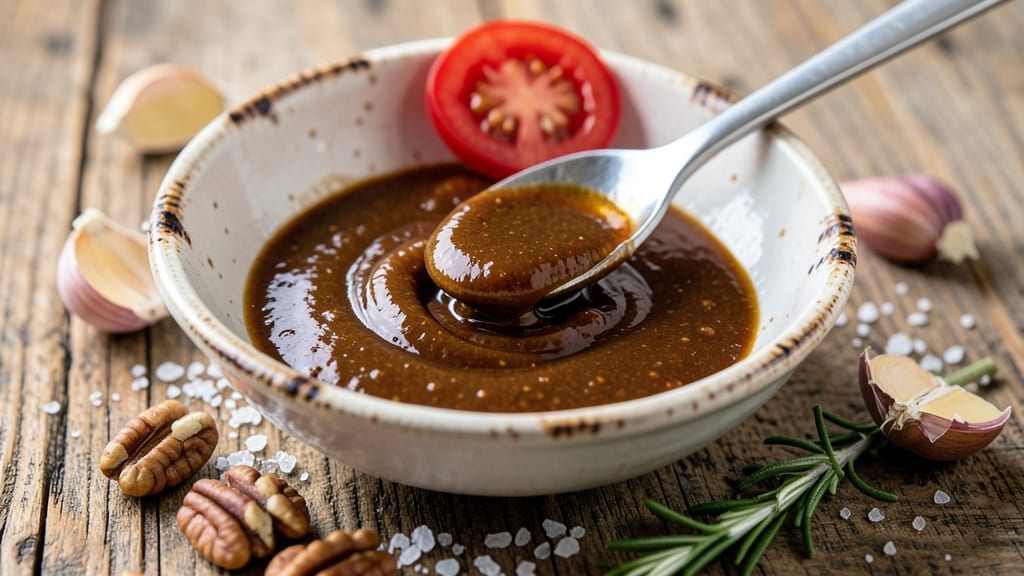
This barbecue basting sauce recipe transforms your grill into a flavor factory, creating a smoky caramelized glaze that locks in juices and builds irresistible bark. The secret lies in balancing sweet, tangy, and smoky elements—tomato base, apple cider vinegar, and a blend of spices—that caramelize beautifully during cooking.
I developed this sauce after years of experimenting with commercial glazes that never quite delivered the depth of homemade. What sets this sauce apart is its versatility—it works equally well on ribs, chicken, or even vegetables, and the 30-minute simmer reduces it to a thick, glossy consistency perfect for basting.
The combination of brown sugar and molasses adds natural sweetness while the liquid smoke brings that unmistakable barbecue aroma. Store it in the fridge for up to two weeks, making it perfect for meal prep.
The result is a sauce that doesn’t just sit on top but penetrates the meat, creating a deeply flavorful crust with every baste. The caramelization happens right on the grill, intensifying the smoky-sweet notes and creating that coveted bark.
This isn’t just a sauce—it’s the difference between good barbecue and restaurant-quality results. Use it as a basting sauce during cooking or as a finishing glaze after the meat comes off the heat.
The possibilities are endless, but the technique remains simple: baste frequently, let the sauce caramelize, and watch your flavors transform. Let’s get cooking!
Ingredients for barbecue basting sauce
Nine ingredients blend into a sauce that turns grilled meats into a smoky-sweet masterpiece.
| Ingredient | Amount | Notes |
|---|---|---|
| Tomato Paste 🍅 | ½ cup | High-quality, unsweetened preferred |
| Brown Sugar 🍯 | ¾ cup | Light or dark, packed firmly |
| Molasses 🍯 | ¼ cup | Unsulphured for best flavor |
| Apple Cider Vinegar 🍎 | ¼ cup | Raw, unfiltered preferred |
| Liquid Smoke 🔥 | 1 tbsp | Pure, no additives |
| Garlic Cloves 🧄 | 3 cloves | Fresh, minced finely |
| Onion Powder 🧅 | 1 tbsp | Freshly ground preferred |
| Smoked Paprika 🌶️ | 1 tbsp | High-quality, not sweet |
| Ground Black Pepper 🌶️ | ½ tsp | Freshly cracked |
| Kosher Salt 🧂 | 1 tsp | Diamond Crystal preferred |
| Water 💧 | ½ cup | Filtered or spring water |
The tomato paste is your flavor foundation—Trader Joe's or Mutti brands are my go-tos for that rich, concentrated taste. Brown sugar and molasses? Light brown sugar gives a cleaner caramelization, while molasses adds that deep, almost coffee-like richness. Skip the sulphured kind—it tastes like burnt rubber. Apple cider vinegar should be raw and unfiltered; Bragg is my default, but any organic brand works. Liquid smoke is where the magic happens—Queen City is the gold standard, but Kikkoman is a solid budget pick. The garlic and onion powder are non-negotiable for that classic barbecue depth, but if you're feeling fancy, fresh roasted garlic takes it to another level.
No tomato paste? Fresh tomato sauce reduced by half works in a pinch, but it won’t have the same intensity. Short on molasses? Maple syrup at half the amount mimics the sweetness, though it lacks that molasses depth. Vinegar substitute? Lemon juice or balsamic vinegar—both add tang, but balsamic brings extra complexity. Smoked paprika can be swapped for regular paprika, but you’ll lose that smoky aroma (unless you add extra liquid smoke). For a sweeter profile, add 1 tbsp honey at the end, but don’t skip the vinegar—the acidity is what balances everything. And if you’re making this ahead, reduce the water slightly to prevent thinning during storage.
This sauce is a flavor multiplier, so make a double batch—it’s worth freezing for up to 6 months. Store it in a glass jar with a tight seal in the fridge for 2 weeks, or freeze in ice cube trays for perfect single-use portions. Thicken it again by simmering for 5 minutes if it gets too loose. The caramelization happens on the grill, so don’t rush it—let that sauce bubble and reduce right on the heat. And trust me, the first time you baste ribs with this, you’ll never go back to store-bought again.
Why You'll Love This Recipe
- Pantry Magic: I swear by this sauce because it uses stuff I already have—no last-minute grocery runs. That thick, smoky molasses and liquid smoke combo? It turns whatever you're cooking into something that tastes like it simmered all day, even if you're basting while watching a movie.
- Smoky Sweet Fix: The brown sugar and molasses caramelize into this rich, almost buttery depth, while the apple cider vinegar cuts through it just enough to keep things balanced. Honestly, I’ve made it on ribs, chicken thighs, and even roasted potatoes—every time, people ask for the recipe.
- Weeknight Workhorse: This sauce doubles as a marinade, a glaze, or a quick pan sauce. I’ll throw it on brisket for Sunday dinner, then use the leftovers to drizzle over baked beans the next day. Between us, it’s the reason my slow cooker gets more action than my fancy air fryer.
- Budget-Friendly Upgrade: A single jar of tomato paste and a splash of molasses stretch across multiple meals. I’ll make a big batch, freeze half, and pull it out whenever I need that smoky-sweet punch without breaking the bank. Plus, it’s way cheaper than store-bought sauces with mysterious ingredients.
Step-by-step instructions for smoky caramelized basting sauce
Here's how to craft a rich, smoky glaze that'll transform your grill game.
Build the Flavor Base
In a heavy-bottomed saucepan, combine the 0.5 cup tomato paste, 0.75 cup brown sugar, 0.25 cup molasses, and 0.25 cup apple cider vinegar. Stir over medium heat for 5 minutes until the sugar begins to dissolve and the mixture thickens slightly. You're creating a deep, complex foundation here—the molasses and vinegar will add that signature tangy sweetness that makes this sauce so addictive.
Here's the thing—don't rush this step. You want the sugars to caramelize just enough to start developing those rich, amber tones. If you see the mixture separating or getting too thick too quickly, add 1 tablespoon of water to help it come together smoothly. The goal is a thick, syrupy consistency that coats the back of a spoon.
Infuse with Smoky Depth
Add the 3 minced garlic cloves, 1 tablespoon onion powder, 1 tablespoon smoked paprika, 0.5 teaspoon ground black pepper, and 1 teaspoon kosher salt to the saucepan. Stir well to distribute the spices evenly. Now, here's where the magic happens: pour in the 1 tablespoon liquid smoke and the 0.5 cup water. The liquid smoke will give you that authentic barbecue aroma without needing to actually smoke the sauce.
Bring the mixture to a gentle simmer over medium-low heat, then reduce the heat to maintain a steady bubble. Let it cook uncovered for 15-20 minutes, stirring occasionally. You'll notice the sauce darkening and thickening as it reduces. This is when those deep, smoky flavors really start to develop. The sauce should reduce by about half, becoming syrupy and glossy—almost like a thick caramel.
Finish and Test for Perfection
Once the sauce has thickened to your desired consistency (it should coat the back of a spoon but still be pourable), taste and adjust the seasoning. You might need a bit more salt or a splash of vinegar to balance the sweetness. The sauce should have a perfect harmony of smoky, sweet, and tangy flavors—like a cross between a classic barbecue sauce and a rich molasses glaze.
For the best results, let the sauce cool slightly before using it. This allows the flavors to meld even more. If the sauce thickens too much as it cools, simply whisk in a splash of water to loosen it up. This glaze is incredibly versatile—use it to baste meats during grilling, drizzle over finished dishes, or even reduce it further for a sticky, caramelized finish.
Store for Future Use
Transfer the cooled sauce to a clean, airtight container. It'll keep in the refrigerator for up to 2 weeks, or you can freeze it for up to 3 months for later use. The flavors actually deepen as it sits, so if you can, let it rest in the fridge for a day before using it for the best results. This sauce is perfect for locking in flavor during grilling, but it's also fantastic as a marinade or even a glaze for roasted vegetables.
Real talk: This sauce is worth the effort. The combination of molasses, vinegar, and liquid smoke creates a depth of flavor that'll make your grilled dishes unforgettable. Whether you're basting ribs, chicken, or even vegetables, this glaze will elevate everything to the next level.
Pro Tips For Making Barbecue Basting Sauce
- STIR CONSTANTLY AT FIRST: The first 2 minutes after adding tomato paste and brown sugar will make or break your sauce. I learned this the hard way—lumps form fast when you walk away. Keep the heat medium and stir like you’re trying to win a race with a timer.
- USE REAL MOLASSES, NOT SYRUP: That "molasses-flavored syrup" in the back of your pantry? Skip it. Real molasses (unsulphured, if you’re picky) has depth and viscosity that cut-through sauce syrup can’t match. If you’re in a pinch, reduce blackstrap by half with water, but it won’t be the same.
- DILUTE LIQUID SMOKE FIRST: Pouring liquid smoke straight into hot sauce turns it bitter. Mix it with a splash of vinegar or water first, then add it gradually while tasting. You’re aiming for "campfire aroma," not "charred tire." Start with ½ teaspoon, adjust as you go.
- SIMMER LONG ENOUGH: Rushing this sauce means ending up with a gloppy mess. Simmer uncovered for at least 15 minutes—20 if you’re using thick tomato paste—to let the sugars caramelize and the flavors meld. The longer it reduces, the richer it gets. (Yes, even if you’re impatient like me.)
Troubleshooting this dish
Sauce Too Thin
If your sauce isn’t thickening enough during simmering, you’re likely not reducing it long enough. The goal is to reduce by about half—this takes 20-30 minutes of steady simmering. I’ve found that using a heavy-bottomed saucepan prevents scorching while allowing proper reduction.
If it’s still too thin after simmering, remove from heat and simmer uncovered for an extra 5-10 minutes—the evaporation will work its magic. 🔥
Sauce Too Thick
Over-reducing can turn your sauce into a sticky mess. If it’s too thick, whisk in 1 tablespoon of water at a time until it reaches a syrupy consistency that coats the back of a spoon but still flows easily.
For future batches, reduce heat slightly earlier or cover the pan loosely with a lid to slow evaporation. I’ve also had success thinning with 1 teaspoon apple cider vinegar for extra tang while adjusting thickness.
Burnt or Scorched Sauce
This happens when the sugars caramelize too quickly without enough moisture. Always stir occasionally and keep heat at medium-low. If you see dark spots forming, immediately remove from heat and whisk in 1 tablespoon water to deglaze.
For next time, add the ½ cup water upfront and stir more frequently. A wooden spoon helps prevent scorching better than metal.
Lacking Smoky Flavor
The liquid smoke is crucial here—don’t skimp! If your sauce tastes flat, add an extra ½ teaspoon liquid smoke and simmer for 5 more minutes to let it integrate. For deeper smoke, try 1 teaspoon smoked paprika instead of the standard amount.
Pro tip: Let the sauce rest 10 minutes after cooking—this allows the smoke flavor to fully develop and meld with the other ingredients.
Sauce Separates
If your sauce splits into oil and liquid, it’s likely from too much heat or insufficient stirring. Bring it back together by whisking vigorously while adding 1 tablespoon water at a time.
For prevention, stir every 2-3 minutes during simmering. I’ve also had success adding ½ teaspoon cornstarch mixed with 1 tablespoon water as a stabilizer if separation occurs.
Too Sweet or Tangy
Balance is key—if it’s too sweet, add 1 tablespoon apple cider vinegar and simmer for 2 minutes. For extra tang, a splash of lemon juice works well. Conversely, if it’s too sharp, stir in 1 teaspoon brown sugar and simmer until dissolved.
Taste as you go—this sauce should sing with harmony, not dominance from one flavor. 💫
Nutrition facts
Frequently asked questions about barbecue basting sauce
Can I make this sauce without liquid smoke?
Yes, but the smoky flavor will be milder. For a smoky alternative, add 1 teaspoon smoked paprika and ½ teaspoon chipotle powder to the spices. You can also try ½ teaspoon smoked salt for a subtle smokiness. The sauce will still taste delicious but won't have that authentic barbecue aroma.
How often should I baste meat with this sauce?
Baste every 5-10 minutes during grilling for best results. The sauce needs time to caramelize and develop flavor, so don't overdo it early on. For thicker cuts like ribs, focus on basting during the last 30 minutes of cooking when they're closer to being done.
Can I use this sauce on vegetables?
This sauce works beautifully on grilled vegetables like bell peppers, zucchini, and mushrooms. Brush it on lightly and grill until tender. The sweet and smoky flavors complement vegetables perfectly, especially when paired with grilled chicken or fish.
Will this sauce work in a slow cooker?
Not for basting, but you can use it as a marinade or finishing sauce. For slow-cooked meats, apply the sauce during the last 30-60 minutes of cooking. The sauce won't reduce properly in a slow cooker, so it's better suited for grilling or broiling where you can control the heat and caramelization.
How do I adjust the sweetness level?
For less sweetness, reduce the brown sugar to ½ cup and molasses to 2 tablespoons. For more sweetness, add 1 tablespoon honey or 1 extra tablespoon molasses during the final simmer. Always taste as you go to achieve the perfect balance.