
Sauces & Condiments
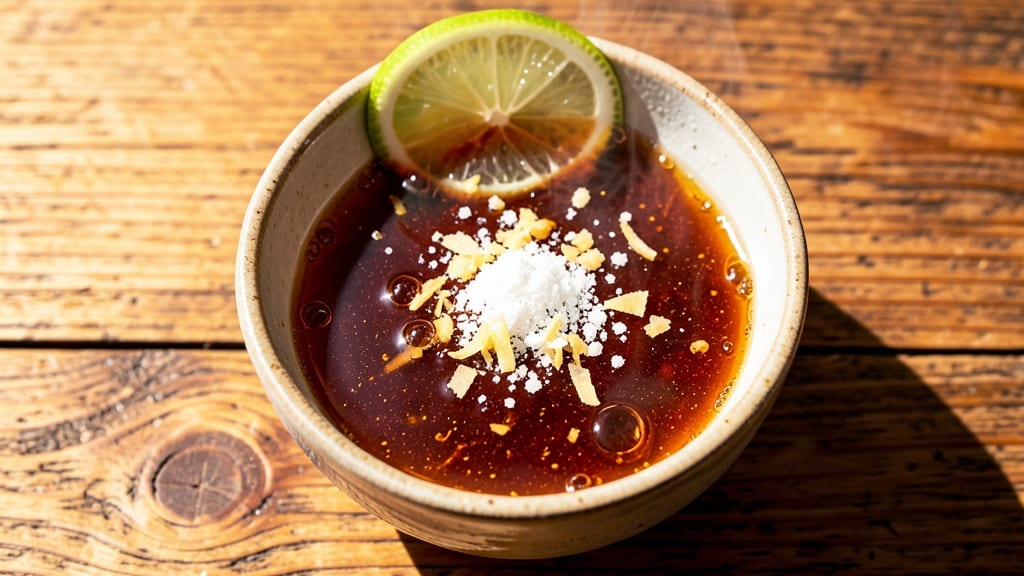
This basic ponzu sauce recipe delivers the perfect balance of bright citrus, salty umami, and subtle sweetness in just 10 minutes—no yuzu fruit required.
The secret lies in combining rice vinegar, soy sauce, and a touch of sugar to mimic the complex flavor of traditional Japanese ponzu while keeping it accessible for home cooks. I developed this version after realizing how often I reached for store-bought versions that fell flat compared to homemade.
What sets this ponzu apart is its versatility—it elevates everything from grilled fish and sushi to noodles and even fried rice. The key technique is whisking the ingredients together while warm, which helps dissolve the sugar completely and creates a smooth, cohesive sauce.
Unlike many recipes, this version skips the hard-to-find yuzu citrus, using lemon juice instead for a similarly vibrant tang without compromising authenticity.
The result is a glossy, slightly thick sauce with a perfect balance of acidity and depth, ready to drizzle or dip. It keeps well in the fridge for up to two weeks, making it ideal for meal prep.
Whether you're serving it over seared scallops, drizzling on ramen, or using it as a marinade, this ponzu transforms simple dishes into something restaurant-worthy.
For extra complexity, try adding a pinch of grated ginger or a splash of mirin—both enhance the sauce's natural sweetness and depth. The beauty of this recipe is its adaptability, so feel free to adjust the sweetness or acidity to suit your taste. Let's get started!
Ingredients for basic ponzu sauce
Nine essential ingredients transform into a vibrant ponzu sauce with restaurant-quality depth.
| Ingredient | Amount | Notes |
|---|---|---|
| Rice Vinegar 💧 | ½ cup | Seasoned variety preferred |
| Fresh Lemon Juice 🍋 | ¼ cup | Freshly squeezed preferred |
| Light Soy Sauce 🍶 | ¼ cup | Kikkoman preferred for balance |
| Granulated Sugar 🍚 | 2 tbsp | White or light brown |
| Dashi Powder 🍜 | 1 tbsp | High-quality brand recommended |
| Fresh Ginger 🧄 | 1 tbsp | Finely grated, aromatic |
| Extra-Virgin Olive Oil 🫒 | 1 tbsp | For glossy finish |
| Mirin 🍷 | 1 tbsp | Sweet cooking wine |
| Diamond Crystal Kosher Salt 🧂 | ½ tsp | Adjust to taste |
| Water 💧 | ½ cup | Room temperature |
The rice vinegar serves as the sauce's backbone—seasoned rice vinegar adds subtle sweetness, while plain rice vinegar delivers sharper acidity. For optimal flavor, Kikkoman or Mitsukan brands shine, available at most Asian markets or well-stocked grocery stores. Fresh lemon juice is non-negotiable; bottled versions lack the brightness needed to mimic yuzu's tang. Grate your ginger just before mixing—freshly grated releases aromatic oils that bottled versions can't replicate. The dashi powder provides umami depth; Marukome or Honten brands offer superior quality, though any high-quality brand works. Store your rice vinegar in a cool, dark place to preserve its delicate flavor for up to 12 months.
No mirin? Substitute with 1 tbsp honey plus 1 tbsp water—though the sauce will lack mirin's subtle sweetness and complexity. Short on fresh ginger? Ground ginger at half the amount works, but the flavor will be less vibrant. The olive oil isn't just for richness—it creates that signature glossy finish. Use extra-virgin olive oil with fruity notes for best results. For a vegetarian version, omit the dashi powder and replace with 1 tbsp vegetable bouillon powder dissolved in the water. The sugar should dissolve completely when whisked with warm water; if it doesn't, gently heat the mixture until fully integrated.
This ponzu sauce thickens slightly as it cools, developing a silky texture ideal for drizzling. Store in an airtight container in the fridge for up to two weeks, though the flavor peaks within the first week. For longer storage, freeze in ice cube trays—perfect for single-portion use. The sauce's acidity intensifies over time, so adjust salt levels to taste before each use. If the sauce separates, simply whisk vigorously to recombine. For extra brightness, add a splash of fresh lemon juice before serving.
Why You'll Love This Recipe
- Here’s what sold me: it costs pennies to make, but it feels like a restaurant-quality upgrade. A little goes a long way, so you’re not drowning in leftovers (though I’ve been known to finish the whole jar). Plus, dashi powder is cheap, and you’ll use it for so much more.
- Five-Ingredient Magic: I swear, this sauce is the kind of recipe that makes you question why you ever bought store-bought. Just rice vinegar, lemon juice, soy sauce, a pinch of sugar, and dashi powder—no fancy techniques, no waiting for reductions. The umami from the dashi and the bright citrus cut through everything like a knife.
- Bright & Tangy: That first sip? It’s like sunshine in a bottle. The lemon juice gives it this zesty punch, while the soy and dashi keep it deep and savory. Honestly, it’s the kind of flavor that makes you want to drizzle it on everything—grilled fish, noodles, even a simple salad.
- Weeknight Workhorse: Between us, this is my go-to sauce for when I’m too tired to think. A quick stir, a taste, maybe an extra squeeze of lemon, and boom—it’s ready. I keep a bottle in the fridge for when I’m prepping meals for the week, and it never lets me down.
Step-by-step instructions for bright citrus-yuzu zing sauce
Here's how to craft a vibrant ponzu sauce with perfect balance and depth in minutes.
Grate and Bloom the Fresh Ginger
Using a fine grater or microplane, grate the 1 tablespoon fresh ginger into a small bowl. The finer you grate it, the more aromatic the sauce will be. Set aside for now—we'll use it to infuse the vinegar base. Real talk: fresh ginger makes all the difference here, so don't substitute with powdered. The aromatic oils need time to release their zesty punch.
While you grate, take a moment to smell the ginger. That citrusy, slightly peppery aroma? That's what you're capturing. Fresh ginger should smell bright and lively, not musty or stale. If it does, it's past its prime—start fresh for the best results.
Whisk Together the Vinegar and Aromatics
In a medium saucepan, combine the 0.5 cup rice vinegar, 0.25 cup fresh lemon juice, 0.5 cup water, 1 tablespoon mirin, and the freshly grated ginger. Bring this mixture to a gentle simmer over medium heat. You're looking for small bubbles forming at the edges—this ensures the ginger's essential oils infuse properly without scorching.
Simmer for 3-4 minutes until the mixture reduces slightly and the aroma becomes more concentrated. You'll notice the liquid will darken slightly and the scent will deepen—this is when the flavors start melding. Don't walk away; ginger burns quickly once it reaches a full boil. Here's the thing—this reduction step is crucial for building the sauce's complexity.
Add Sugar and Dashi Powder
Remove the pan from heat and whisk in the 2 tablespoons granulated sugar and 1 tablespoon dashi powder. Let the mixture cool for 5 minutes while you stir occasionally. The sugar will begin to dissolve, and the dashi will start to bloom, creating a subtle umami foundation. This is where the sauce's balance begins to take shape—sweetness to cut the acidity, umami to round out the flavors.
I like to taste at this stage to gauge the balance. It should be tangy with a touch of sweetness and a hint of saltiness from the dashi. If it's too sharp, we'll adjust later. The dashi powder is key here—it's what gives ponzu its signature depth. Don't skip this step; it's what transforms this from a simple citrus vinegar into a sophisticated sauce.
Incorporate Soy Sauce and Olive Oil
Once the mixture has cooled slightly, whisk in the 0.25 cup light soy sauce and 1 tablespoon extra-virgin olive oil. The soy sauce adds saltiness and a deeper color, while the olive oil provides a silky texture and glossy finish. Stir well to combine everything thoroughly. You'll notice the sauce will darken and take on a rich, amber hue—this is exactly what you want.
Taste again and adjust the seasoning. At this point, you might need to add the 0.5 teaspoon kosher salt to balance the flavors. The sauce should be bright, tangy, and slightly sweet with a touch of saltiness. If it's too sharp, add a pinch more sugar. If it's too mild, add a splash more soy sauce. This is where ponzu becomes truly yours—adjust to your taste preferences.
Strain and Let It Rest
Strain the sauce through a fine-mesh sieve into a clean bowl or jar, pressing gently on the solids to extract all the liquid. This removes the ginger fibers, leaving you with a smooth, silky sauce. Let it cool completely to room temperature before serving. The flavors will continue to meld and deepen as it sits—this resting period is essential for developing the sauce's full character.
Your ponzu sauce is now ready to use. It should have a vibrant, citrus-forward flavor with a touch of sweetness and umami depth. The texture should be smooth and glossy, with a perfect balance of acidity and saltiness. Use it immediately for dipping sushi or grilled fish, or store it in the refrigerator for up to 5 days—the flavors will only improve with time.
Pro Tips For Making Basic Ponzu Sauce
- STIR CONSTANTLY: Mix the rice vinegar, lemon juice, and soy sauce first—don’t just dump everything in and call it done. I used to let the sugar sit at the bottom like a sad, grainy lump, but stirring while dissolving it (even for just 30 seconds) makes the sauce silky smooth from the start.
- USE YUKA OR DAIDAI: Skip the generic citrus if you have it—fresh yuzu or daidai peel (zest + juice) adds that authentic umami tang no bottled lemon can match. No access? At least zest the lemon rind—it’s the only part that brings real depth to this sauce.
- DILUTE THE DASHI: That powdered dashi is potent. Mix it with 1 tablespoon of hot water first, then stir it into the sauce—otherwise, you’ll end up with clumps that ruin the texture. (Yes, I’ve learned this the hard way.)
- SWEETEN LAST: Add the sugar after the sauce has cooled slightly—if you mix it in while hot, it’ll caramelize and turn the ponzu bitter. Stir in the sugar when the mixture is just warm to the touch, then let it sit for 2 minutes before tasting. Patience here makes all the difference.
Essential equipment for this dish
Whisking Essentials
You don’t need fancy tools—just a heatproof whisk (like the OXO Good Grips) and a small saucepan work perfectly. The whisk helps dissolve the sugar completely and emulsify the olive oil for that signature glossy finish.
I like to use a stainless steel whisk because it’s durable and won’t scratch your pan. For extra smoothness, a French whisk with tight wire spacing works wonders. 💡
Measuring Tools
Precision matters with ponzu, so grab a liquid measuring cup for the vinegar, lemon juice, and water. A fine-mesh strainer (like the Hamilton Beach) is key for removing ginger fibers without losing flavor.
For the dashi powder and sugar, a small measuring spoon set ensures accuracy. I keep my tools in a cork-backed cutting board to stay organized during prep. ✨
Heat Control
A medium saucepan with low-to-medium heat is ideal for simmering the vinegar mixture. Avoid high heat—ginger burns quickly, turning bitter. I use a stainless steel saucepan (like All-Clad) because it heats evenly.
A digital thermometer (such as Thermoworks Thermapen) helps monitor the simmer—aim for 180–190°F to infuse flavors without scorching. 🌡️
Storage Containers
Once made, store ponzu in an airtight glass jar (like Le Parfait) to preserve freshness. Glass won’t absorb flavors like plastic. For quick use, a small mason jar fits perfectly in the fridge.
Label it with the date—this sauce peaks within 5 days but lasts up to 2 weeks. Pro tip: Freeze in ice cube trays for single-serving portions. ❄️
Optional Extras
Want to elevate your ponzu further? A mortar and pestle (for grinding whole spices) or a microplane (for finer ginger) adds texture. For blending, a handheld immersion blender (like Ninja) ensures a silky texture if you prefer no straining.
I also keep a small funnel handy for transferring strained sauce into jars without spills. 💫
Nutrition facts
Frequently asked questions
Can I make ponzu sauce without fresh ginger?
Yes, but the flavor will be less vibrant. Use 1 teaspoon ground ginger instead, but reduce the amount by half since it's more concentrated. For extra depth, add a pinch of white pepper to mimic ginger's warmth. The sauce will still taste good, but fresh ginger's aromatic oils are irreplaceable for that signature zing.
How do I adjust the sweetness or tanginess?
Start by tasting after Step 3 (when sugar and dashi are added). For more sweetness, add ½ teaspoon sugar at a time. For extra tang, add 1 tablespoon lemon juice while warm. If the sauce is too sharp, stir in ½ teaspoon sugar or a pinch of salt to balance. Adjust gradually—you can always tweak it later!
Can I substitute mirin with something else?
Mix 1 tablespoon honey plus 1 tablespoon water to mimic mirin's sweetness. For a more acidic substitute, use 1 tablespoon rice vinegar plus ½ teaspoon sugar. However, mirin adds subtle complexity—its unique sweetness and slight acidity are hard to replicate. If you can find it, use 1 tablespoon sweet cooking wine as a decent alternative.
Why did my ponzu sauce separate?
This happens when the ingredients aren't fully emulsified. Whisk vigorously to recombine, then let it rest for 10 minutes before using. For prevention, ensure the sugar dissolves completely (warm the mixture slightly if needed) and whisk in the olive oil slowly. If separation persists, add 1 teaspoon cornstarch mixed with water to stabilize it.
What are the best ways to use ponzu sauce?
Drizzle it over grilled fish, sushi, or sashimi for instant brightness. Use as a marinade for shrimp or chicken, or mix into mayo for a tangy dip. It also elevates ramen, udon, or fried rice. For a modern twist, reduce it slightly and use as a glaze for seared scallops. The possibilities are endless—don't be afraid to experiment!