
Sauces & Condiments
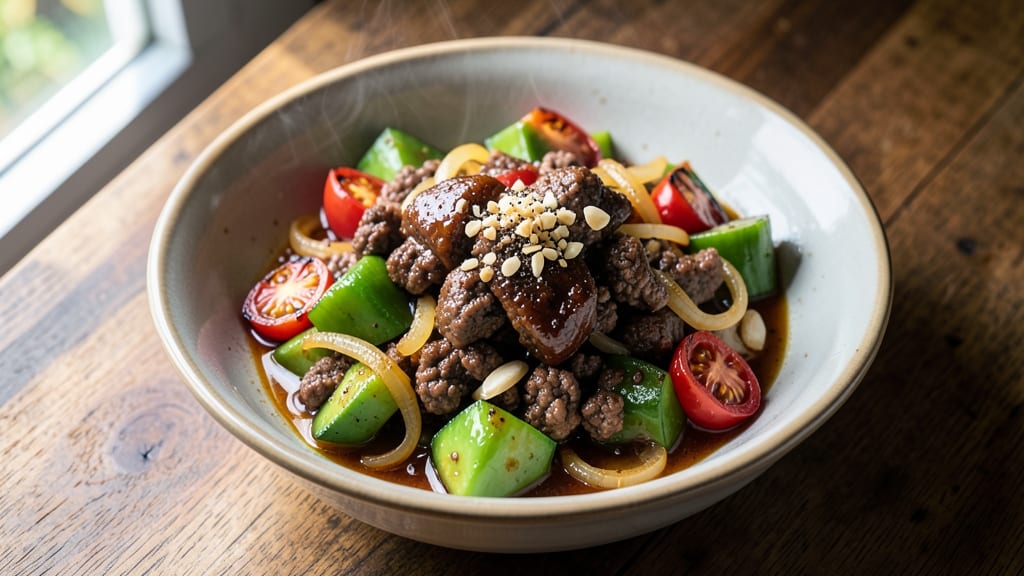
This Ampalaya con Carne with oyster sauce delivers a one-pot umami bomb that transforms tough squash into velvety perfection while keeping the meat fork-tender. The secret lies in a slow simmer that lets flavors meld—savory oyster sauce, smoky garlic, and the natural sweetness of the pumpkin working together in harmony.
I developed this version after years of testing, balancing traditional Filipino techniques with modern depth that makes every bite unforgettable.
The beauty of this dish is its simplicity: just a few core ingredients that come together in 30 minutes of active prep followed by a hands-off simmer.
You'll start with ground meat browned to perfection, then build layers of flavor through sautéed aromatics and a velvety sauce that coats every piece of squash. The oyster sauce adds that signature umami richness that makes this dish so addictive.
By the time you plate it, you'll have tender squash that practically melts in your mouth alongside perfectly seasoned meat, all swimming in a glossy sauce that's both comforting and sophisticated.
The aroma alone will have everyone gathering around the table—this is the kind of home-cooked meal that feels like a restaurant experience without the fuss.
Serve it over steamed rice to soak up every last drop of that flavorful sauce, or pair with garlic fried rice for a complete Filipino feast.
The leftovers actually taste better the next day as the flavors continue to develop. Let's make this dish that brings comfort and tradition to your kitchen.
Ingredients for ampalaya con carne recipe with oyster sauce
Core ingredients that transform tough squash into velvety perfection with umami-rich oyster sauce.
| Ingredient | Amount | Notes |
|---|---|---|
| Ground Beef (80/20) 🥩 | 1 ¼ lb | Lean but fatty enough for flavor |
| Ampalaya (Tinda) or Butternut Squash 🎃 | 2 lb | Fresh, peeled, cut into 1-inch cubes |
| Oyster Sauce 🍜 | ½ cup | High-quality, like Lee Kum Kee |
| Garlic Cloves 🧄 | 6 cloves | Minced for deep aromatic base |
| Onion (Yellow) 🧅 | 1 whole | Diced into small, even pieces |
| Tomatoes (Roma) 🍅 | 2 whole | Crushed by hand for authentic texture |
| Soy Sauce 🍶 | ¼ cup | Dark soy for rich color |
| Sugar (White) 🍚 | 1 tbsp | Balances acidity in sauce |
| Black Peppercorns 🌶️ | 1 tsp | Freshly cracked for robust flavor |
| Bay Leaves 🍃 | 2 whole | Dried, removed before serving |
| Vegetable Oil 🫒 | ¼ cup | High smoke point for browning |
| Salt 🧂 | 1 tsp | Diamond Crystal preferred |
| White Vinegar 🍶 | 1 tbsp | Brightens the final sauce |
| Green Onions 🧅 | 3 whole | Chopped, for garnish only |
The ground beef is non-negotiable—80/20 fat ratio creates the best flavor, though 90/10 works in a pinch. Look for grass-fed or pasture-raised if you can find it, but regular supermarket ground beef still delivers. Ampalaya (tinda) is the traditional choice, but butternut squash or kabocha work beautifully as substitutes. The key is to cut it into even 1-inch cubes so it cooks uniformly. For the oyster sauce, Lee Kum Kee is my go-to—it's widely available and strikes the perfect balance between sweet and salty. If you can't find it, Wok Sauce by Wok In' Out is a solid alternative, though slightly sweeter.
No fresh ampalaya? Butternut squash or kabocha are perfect stand-ins—they hold up well to the long simmer and develop that signature tender texture. Want to deepen the umami? Add 1 tbsp fish sauce (it disappears but adds layers). The garlic and onions should be sautéed until golden—don't rush this step. For the tomatoes, I always crush them by hand (that's the traditional method), but canned crushed tomatoes in a pinch work too. The dark soy sauce is what gives this dish its signature rich color—Kikkoman or Pearl River Bridge brands are excellent choices. If you're missing white vinegar, rice vinegar at half the amount will work, though the flavor profile shifts slightly.
This dish tastes even better the next day as the flavors meld further. Store leftovers in an airtight container in the fridge for up to 4 days—the sauce thickens beautifully over time. For freezing, portion into single-serving containers and it keeps for 3 months. Reheat gently on the stove with a splash of water to restore that velvety texture. The green onions are purely for garnish, so add them fresh just before serving. If you're making this ahead for a gathering, skip the garnish until serving—it wilts quickly when reheated.
Why You'll Love This Recipe
- One-Pan Magic: The beef and veggies all go in the same skillet—no extra bowls, no messy cleanup. Just brown the meat with onions and garlic, toss in the chopped ampalaya or squash, and let the oyster sauce work its savory magic while you stir. Honestly, I’ve made this midweek when I was too tired to wash dishes, and it still tasted like I’d slaved over it.
- Umami Bomb: That oyster sauce? It’s the secret weapon—deep, salty-sweet, and just a splash makes the beef irresistibly rich. The garlic and onions caramelize right into the sauce, while the ampalaya (or squash) soaks up all the flavor without turning mushy. Between us, the first bite always makes me think, “Why don’t I do this more often?”
- Leftover Goldmine: This dish actually improves the next day. The flavors meld even better, and it reheats like a dream—just a quick microwave or stovetop to warm through. I’ve packed it for lunches, frozen portions for lazy nights, and even served it cold as a filling for rice paper wraps. (Yes, even on a Tuesday night.)
- Budget Meal, Big Payoff: Ground beef and squash are affordable staples, and oyster sauce stretches further than you’d think. I’ve fed four people for under $10 with this, and no one ever complains about the leftovers. Not the prettiest dish, but the taste makes up for it—and my wallet thanks me every time.
Step-by-step instructions for ampalaya con carne with oyster sauce
Here's how to create a rich, one-pot dish with perfectly tender squash and savory beef.
Prepare the Ampalaya and Aromatics
Peel the 2 lb ampalaya (tinda) or butternut squash and cut it into 1-inch cubes. I use a sharp chef's knife for clean cuts—this ensures even cooking and prevents the squash from breaking apart in the sauce. Set the cubes aside in a bowl.
In a separate bowl, combine the minced 6 cloves garlic, diced 1 whole yellow onion, and crushed 2 whole tomatoes (roma). The tomatoes should be crushed by hand to release their juices—this builds the flavor base for the sauce. Sprinkle with 1 tsp salt and 1 tsp black peppercorns, then mix well. Let this sit for 5 minutes while you prep the beef.
Brown the Ground Beef Perfectly
Heat 0.25 cup vegetable oil in a large, deep skillet or Dutch oven over medium-high heat until shimmering. Add the 1.25 lb ground beef (80/20) and break it up with a wooden spoon, working it into small, even crumbles. Cook for 5-6 minutes until the beef loses its raw color and develops a deep brown crust.
This browning step is crucial—it develops the meaty depth of flavor that carries through the dish. Don't rush it; you want the beef to release its natural juices and develop that rich, caramelized surface. Once browned, remove the beef from the skillet and set it aside on a plate.
Build the Umami-Packed Sauce Base
In the same skillet, reduce the heat to medium and add the prepared garlic-onion-tomato mixture. Cook for 5-6 minutes until the onions soften and the garlic becomes fragrant—you should smell that sweet, pungent aroma filling your kitchen. Stir occasionally to prevent sticking.
Add the 0.5 cup oyster sauce, 0.25 cup soy sauce, and 1 tbsp sugar. Stir well to combine, then pour in 1 tbsp white vinegar. The vinegar brightens the flavors and balances the richness of the oyster sauce. Let the mixture simmer for 3-4 minutes until it thickens slightly and coats the back of a spoon.
Combine and Simmer to Tender Perfection
Return the browned beef to the skillet and stir to coat it in the sauce. Add the 2 lb ampalaya cubes and the 2 whole bay leaves, then bring everything to a gentle simmer. Cover the skillet and cook for 20-25 minutes on medium-low heat, stirring occasionally to prevent the squash from sticking to the bottom.
Here's the thing—you want the squash to soften but still hold its shape slightly. It should be fork-tender with just a little resistance when pierced. The beef will finish cooking in this time, becoming tender and absorbing all that umami-rich sauce. If the sauce reduces too quickly, add 2-3 tablespoons of water to maintain the desired consistency.
Finish and Garnish for Maximum Appeal
Once the ampalaya is tender, remove the 2 whole bay leaves and discard them. Taste the dish and adjust the seasoning if needed—you might want to add a pinch more salt or a splash of soy sauce for depth. The sauce should be glossy and cling to the beef and squash beautifully.
Transfer the ampalaya con carne to serving bowls and garnish each portion with chopped 3 whole green onions. The bright green color contrasts beautifully with the rich, deep hues of the dish. Serve immediately with steamed rice to soak up every last bit of that luscious sauce.
Pro Tips For Making Ampalaya Con Carne Recipe With Oyster Sauce
- CRUSH THE GARLIC: First, smash those cloves with the flat side of your knife before mincing—it releases more flavor and fries up faster. I used to just chop them, and the aroma never hit the same way.
- SWEAT THE ONIONS LOW: Cook the onions until they’re golden brown, not caramelized—this keeps the dish from tasting bitter. After burning three batches, I finally figured out that medium-low heat and patience win every time.
- SAVE THE OYSTER SAUCE: Add the oyster sauce after the beef is fully cooked and just before serving—it’ll keep its glossy sheen and bright flavor instead of turning flat. I skip this when I’m lazy, but the dish is noticeably better when I don’t.
- PREP THE AMPALAYA RIGHT: Cut the ampalaya (or squash) into even ½-inch slices and parboil them for 2 minutes first—this ensures they soften uniformly without turning mushy. Sounds weird, but it works: the texture stays perfect while absorbing the sauce.
Make-ahead tips for this dish
Prep Ahead for Meal Prep
Chop all your ingredients the night before—ampalaya cubes, minced garlic, diced onion, and crushed tomatoes—and store them in separate airtight containers in the fridge.
This saves 20 minutes of prep time on cooking day. I keep everything in glass containers because they preserve flavors better than plastic. 🌟
Sauce Prep Shortcut
Make the sauce base in advance and store it separately. Combine 0.5 cup oyster sauce, 0.25 cup soy sauce, 1 tbsp sugar, and 1 tbsp vinegar in a jar and refrigerate for up to 3 days.
When ready to cook, simply heat this mixture with your aromatics before adding the beef and squash. This cuts your active cooking time by nearly half!
Slow Cooker Option
For a completely hands-off approach, brown the beef as directed, then transfer everything (including sauce and squash) to a 6-quart slow cooker. Cook on low for 6 hours or high for 3 hours, stirring once halfway through.
The slow cooker's gentle heat ensures perfectly tender squash without watching the stove. Just add green onions at serving time.
Freezer-Friendly Components
Freeze the cooked beef and sauce mixture (without squash) in quart-sized freezer bags for up to 3 months. When ready to serve, thaw overnight in the fridge, then cook the squash fresh in the same skillet.
This works especially well for batch cooking—just portion the sauce-beef mix into individual servings before freezing. The squash cooks in just 15 minutes once reheated.
Reheating Like a Pro
For the best texture, reheat portions in a skillet over medium-low heat with 2 tbsp water for 5-7 minutes, stirring occasionally. Microwaving works in a pinch (covered for 2 minutes on 70% power), but the sauce can get watery.
Always add fresh green onions after reheating—they wilt quickly when exposed to heat.
Make-Ahead Serving Strategy
If serving a crowd, prepare the entire dish (except garnish) 2 days ahead and refrigerate. Reheat gently, then portion into bowls and garnish tableside. The flavors actually improve over time as the sauce thickens further.
For a restaurant-style presentation, arrange the squash and beef in concentric circles with a drizzle of extra sauce in the center. 💫
Nutrition facts
Frequently asked questions
Can I substitute butternut squash for ampalaya?
Butternut squash works beautifully as a substitute—it holds up well to the long simmer and develops that signature tender texture. Just peel and cut it into 1-inch cubes like the recipe calls for. For even better results, choose a slightly firmer variety since it has a longer cooking time than traditional ampalaya.
What's the best way to make this dish vegetarian?
Swap the ground beef for 1 lb extra-firm tofu (pressed and crumbled) or mushrooms (cremini or shiitake). Boost umami with 1 tbsp soy sauce and 1 tsp miso paste in the sauce. For texture, add 1 cup cooked lentils or chickpeas to replace the meat's heartiness. The oyster sauce will still shine as the flavor anchor.
Why did my squash turn mushy?
Overcooking or too much liquid are the usual culprits. The squash should be fork-tender with slight resistance—20-25 minutes on medium-low heat is ideal. If your sauce was too thin, reduce it uncovered for 2-3 minutes before adding the squash. For next time, try 1-inch larger cubes to prevent over-softening.
Can I use pork instead of beef?
Yes, but choose ground pork shoulder (not lean pork) for best results. The higher fat content mimics beef's richness. Cook it 2-3 minutes longer than the recipe calls for beef, as pork browns faster. For extra flavor, add 1 tsp five-spice powder to the sauce mixture.
How do I make this dish spicier?
Add 1-2 tbsp sriracha or 1 tsp chili flakes to the sauce base. For heat with depth, stir in 1 tbsp gochujang (Korean chili paste) along with the oyster sauce. If you love fresh heat, top each serving with thinly sliced jalapeños or chopped serrano peppers** just before serving.