
Sauces & Condiments
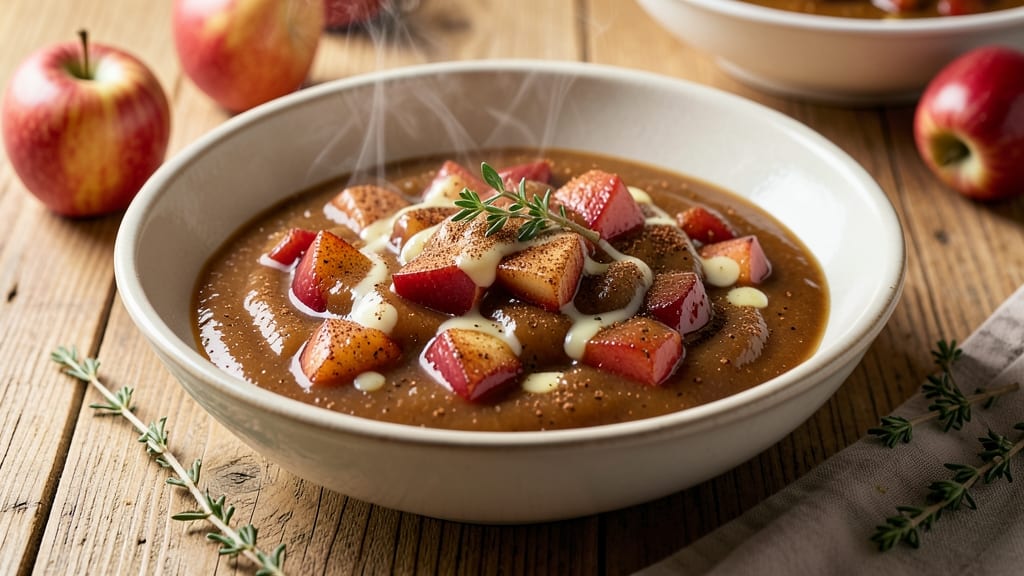
Slow-cooked apple sauce transforms humble cooking apples into a velvety, spiced condiment that elevates everything from Sunday roasts to crumbles. This UK-friendly recipe uses Bramley apples—naturally tart and perfect for cooking—to create a smooth, aromatic sauce with just a hint of cinnamon and a touch of brown sugar. The slow cooking process caramelizes the fruit naturally, so you don’t need to add extra sweetness unless you prefer it. What makes this recipe stand out is its versatility. You can blend it for a silky texture or leave it slightly chunky for rustic appeal, all while keeping the process simple with just 30 minutes of hands-on time. The spices—cinnamon, nutmeg, and a pinch of clove—add warmth without overpowering the apple’s natural flavor, making it a perfect accompaniment to pork, game, or even as a topping for pancakes or yogurt. The result is a sauce that’s rich, fragrant, and just sweet enough to balance the tartness of the apples. It keeps well in the fridge for up to a week, so you can make a big batch and use it throughout the season. Whether you’re serving it alongside a Sunday roast or spreading it on toast with a sprinkle of oats, this apple sauce is a pantry staple that’s impossible to resist.
For those who prefer a smoother finish, simply blend the cooked apples until completely smooth, while a slightly chunky texture adds rustic charm and texture. The slow-cooking method ensures the apples break down evenly, creating a sauce that’s naturally thick and velvety without needing thickeners.
This recipe is designed to be foolproof, with no risk of scorching or overly sweet results—just pure, comforting apple flavor.
Storage is effortless: transfer the cooled sauce to an airtight container and refrigerate for up to a week, or freeze for up to three months. The flavors deepen over time, making it even more delicious as it sits.
Serve it warm alongside roasted meats, drizzle it over vanilla ice cream, or use it as a natural sweetener in baked goods. This apple sauce is the ultimate versatile condiment, perfect for any occasion.
Ingredients for apple sauce recipe uk
Eight simple ingredients transform tart Bramley apples into velvety, spiced sauce perfect for roasts or pancakes.
| Ingredient | Amount | Notes |
|---|---|---|
| Bramley Cooking Apples 🍎 | 4 lb | Peeled, cored, cut into chunks |
| Brown Sugar 🍚 | ¼ cup | Light or dark, packed |
| Ground Cinnamon 🍃 | 1 ½ tsp | Freshly ground preferred |
| Ground Nutmeg 🌿 | ½ tsp | Freshly grated for warmth |
| Ground Cloves 🌶️ | ¼ tsp | Pinch for depth, optional |
| Lemon Juice 🍋 | 1 tbsp | Freshly squeezed, brightens flavor |
| Water 💧 | ½ cup | Enough to cover apples |
| Extra-Virgin Olive Oil 🫒 | 1 tbsp | For glossy finish, optional |
Bramley apples are the star here—Tesco or Sainsbury's stock them year-round, but local markets have fresher batches in autumn. Look for firm, unblemished fruit; they’ll cook down beautifully. If you can’t find Bramleys, Granny Smiths work in a pinch—they’re tart enough to stand up to the spices. The brown sugar is just for balance; skip it if your apples are naturally sweet. For the spices, Penzeys or local spice shops carry freshly ground cinnamon and nutmeg that’ll make this taste like a proper British pantry staple.
No Bramleys? Cox’s or Braeburn apples are great substitutes—they’re sweeter but still hold up well. Running low on brown sugar? Honey or maple syrup works at the same amount, though it’ll add extra moisture. Want to skip the cloves? Double the nutmeg for warmth. The lemon juice is key—it brightens the sauce, so don’t skip it. For a smoother texture, blend after cooking; for rustic charm, leave it slightly chunky. The olive oil at the end adds a lovely sheen and richness, but it’s totally optional if you’re keeping this budget-friendly.
This sauce keeps for up to a week in the fridge, with flavors deepening over time—perfect for batch cooking. For longer storage, freeze in ice cube trays for single-serving portions. Reheat gently on the stove or microwave until warm. Serve it warm with roasted pork, drizzle over yogurt, or spread on toast with a sprinkle of oats for crunch. The slow-cooked method means no added thickeners—just pure, comforting apple flavor that gets better as it sits.
Why You'll Love This Recipe
- Five-Ingredient Magic: I swear, that’s all it takes—peel, core, chop, and simmer. No fancy techniques, no last-minute grocery runs. Bramleys soften into perfect mush while the spices work their warmth without needing a watch.
- Spiced Like Christmas: Honestly, the nutmeg and cloves take this from "nice" to "holiday-worthy" in seconds. That deep, earthy warmth from the brown sugar? It’s the kind of flavor that lingers—like a hug for your taste buds.
- Pantry Staple Power: Between us, this sauce is my go-to for lazy Sundays or when the kids demand something "special." Stir it into porridge, dollop on toast, or even mix into oatmeal—it’s the ultimate "I’ve got nothing" fix.
- Fridge Goldmine: Make a big batch and thank me later. It keeps for weeks in the fridge, freezes beautifully, and turns bland roasts or mashed potatoes into something memorable. Zero waste, all flavor.
Step-by-step instructions for slow-cooked spiced apple sauce
Here's how to transform tart Bramleys into velvety, fragrant apple sauce with perfect spice balance.
Prepare the Apples for Cooking
Start by peeling, coring, and cutting the 4 lb Bramley Cooking Apples into even 1-inch chunks. I like to keep them consistent in size so they cook uniformly. Place them in a large, heavy-bottomed saucepan—you'll want room for them to simmer without crowding.
Add the 0.5 cup Water and bring to a gentle boil over medium-high heat. Let it bubble for 5 minutes until the apples begin to soften slightly and release their juices. You'll know they're ready when they start to collapse a bit and release their natural liquid—this creates the perfect base for your sauce.
Sweeten and Spice the Apples
Reduce the heat to medium-low and stir in the 0.25 cup Brown Sugar, 1.5 tsp Ground Cinnamon, 0.5 tsp Ground Nutmeg, and 0.25 tsp Ground Cloves. Let the mixture simmer for 10 minutes, stirring occasionally, until the sugar dissolves and the spices begin to infuse. You'll notice the aroma becoming rich and warm—this is where the magic happens.
Here's the thing—don't rush this step. The spices need time to bloom and meld with the apples. If you see the mixture thickening too quickly, add a splash of water to keep it loose. The goal is a smooth, velvety texture, not a thick paste.
Simmer Until Perfectly Soft
Continue simmering for 15-20 minutes until the apples are fork-tender and easily mashable. You'll know they're done when a knife slides in smoothly with minimal resistance. The sauce should coat the back of a spoon and have a glossy sheen—this indicates the apples have broken down just enough to release their natural sweetness.
I press down on a few apple pieces with a fork to test doneness. If they're still slightly firm, give them another 5 minutes. Overcooking can turn the sauce grainy, so keep an eye on it. The longer you cook, the thicker the sauce becomes, but we want it to stay smooth and spreadable.
Finish with Lemon and Olive Oil
Once the apples are tender, stir in the 1 tbsp Lemon Juice and 1 tbsp Extra-Virgin Olive Oil. The lemon brightens the flavors and cuts through the richness of the sugar and spices, while the olive oil adds a subtle richness and helps create a silky texture. Let the mixture simmer for another 2-3 minutes to let the flavors meld.
Taste and adjust the seasoning if needed. You might want to add a pinch more cinnamon or a touch more sugar to suit your taste. The sauce should be sweet, spiced, and balanced—not cloying, but deeply flavorful. If it's too thick, whisk in a little water to reach your desired consistency.
Blend and Serve Warm
Use an immersion blender to purée the sauce until smooth and velvety. If you don't have one, you can mash the apples with a potato masher or transfer the mixture to a food processor and blend until creamy. The texture should be thick but still spreadable—like a luxurious, spiced apple butter.
Serve the apple sauce warm, straight from the pot, with roasted meats, pancakes, or even as a filling for pastries. It keeps well in the refrigerator for up to 5 days and freezes beautifully for 3 months, so you can make a big batch and enjoy it all season long. The aroma alone will make your kitchen smell like autumn.
Pro Tips For Making Apple Sauce Recipe Uk
- PEEL AND CORE FAST: Use a paring knife instead of a peeler—it’s quicker and leaves fewer bruised patches. I learned this the hard way after peeling 12 Bramleys only to find half still had skin clinging on.
- STIR AT THE END: Let the sauce simmer uncovered for the last 5 minutes—this thickens it naturally without burning. I used to rush and cover it early, ending up with a gluey mess instead of that perfect, spoonable texture.
- SWEETEN GRADUALLY: Add the brown sugar in two batches: half at the start, the rest when the apples soften. This balances sweetness without making it cloying—my first attempt dumped it all in and tasted like dessert, not sauce.
- SKIP THE CLOVES: If you’re not a fan of their sharp bite, swap the ground cloves for a pinch of allspice. It’s subtler but still adds warmth—after burning my tongue on a clove-heavy batch, I never looked back.
Storing and reheating this recipe
Refrigerator Storage
Let your apple sauce cool to room temperature before transferring it to an airtight container—I use glass jars with snap-on lids from Tupperware or Le Creuset. Store it in the fridge for up to 5 days, where the flavors deepen beautifully.
The sauce thickens slightly as it cools, so you can easily thin it with a splash of water if needed. Always leave about ½ inch of headspace to prevent spills when reheating. 💧
Freezer Storage
For longer storage, portion the sauce into quart-sized freezer bags or silicone molds—these prevent freezer burn and make thawing easier. Label with the date and freeze for up to 3 months.
When ready to use, thaw overnight in the fridge or reheat directly from frozen using the stovetop method. The texture remains smooth, though it may separate slightly—just stir it back together before serving. 🧊
Reheating Methods
For best results, reheat apple sauce on the stovetop over low heat with a splash of water or apple juice to restore its silky texture. Cover the pot and warm for 5-7 minutes, stirring occasionally.
Avoid microwaving unless necessary—it can make the sauce grainy. If using the microwave, heat in 30-second intervals, stirring between each, until warmed through. Always check the temperature reaches 165°F for safety. ✨
Reviving Texture
If your refrigerated sauce has thickened too much, whisk in 1-2 tbsp water or apple cider until it reaches your preferred consistency. For freezer-thawed sauce that’s lost its smoothness, blend again with an immersion blender or food processor.
A pinch of cinnamon or nutmeg can also help revive faded flavors. The key is gentle heat and patience—never rush reheating, or you’ll risk breaking down the sauce’s structure. 🍎
Portioning for Convenience
Divide the sauce into small 4-ounce portions in mini jars or ramekins for easy grab-and-go use. These are perfect for spreading on toast, drizzling over yogurt, or packing in lunchboxes. Store portions in the fridge for 3-4 days or freeze for 1 month.
The smaller containers also make reheating quicker, so you can enjoy warm apple sauce anytime without waiting for a full batch. 🥄
Nutrition facts
Frequently asked questions
Can I use regular eating apples instead of Bramleys?
You can, but Bramleys are ideal because their tartness balances the spices perfectly. For eating apples like Granny Smiths, you may need to add 1-2 extra tablespoons of brown sugar to compensate for their sweetness. The texture will be slightly less firm, but still delicious!
How do I adjust the sweetness level?
The recipe uses just 0.25 cup brown sugar to let the apples' natural sweetness shine. For a sweeter sauce, add 1-2 extra tablespoons at the end and simmer for 2 minutes. For less sweetness, reduce the sugar by 1 tablespoon or add 1 extra tablespoon lemon juice to brighten flavors.
Can I make this sauce without a blender?
Simply mash the cooked apples with a fork or potato masher for a rustic, slightly chunky texture. For extra smoothness, press the apples through a fine-mesh sieve or use a ricer. The sauce will be thicker but still delicious—just stir in a splash of water if needed.
What's the best way to use leftover apple sauce?
This versatile sauce works perfectly with roasted pork or chicken, as a topping for pancakes or French toast, or even as a natural sweetener in baked goods like muffins. Spread it on toast with cinnamon and oats, or mix it into oatmeal for a fruity breakfast boost!
Why did my apple sauce turn out too thick?
Overcooking or using too many apples can make the sauce too thick. Thin it with 1-2 tablespoons of water or apple cider while reheating. If it's still too thick after cooking, next time reduce the apples by ½ lb or add 1 extra tablespoon of water at the start.