
Sauces & Condiments
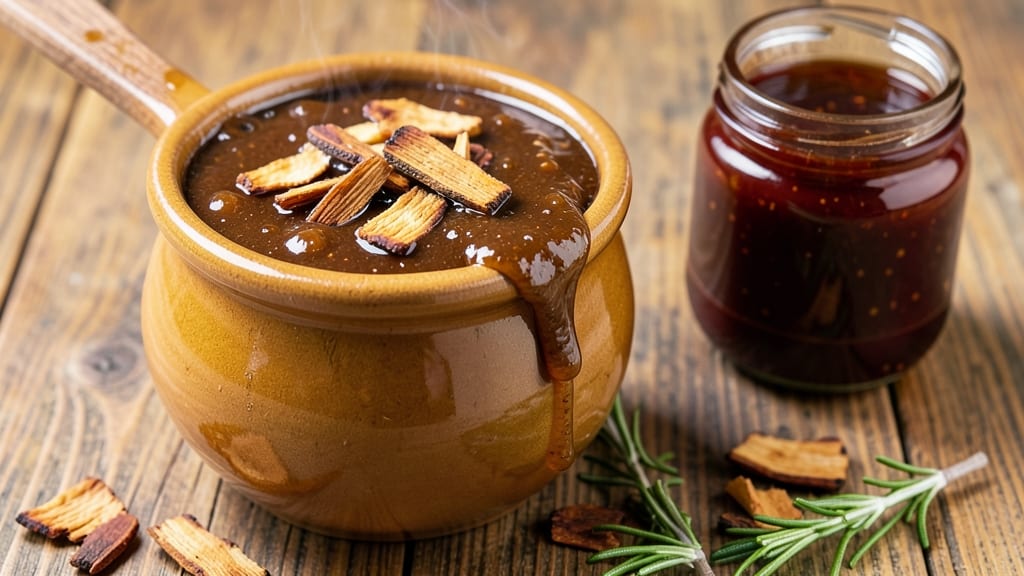
This applewood BBQ sauce recipe delivers the perfect balance of smoky depth and caramelized sweetness that elevates grilled meats and dipping applications to restaurant-quality levels. The secret lies in infusing applewood smoke through a combination of smoked vinegar and applewood chips, creating a rich, aromatic base that's both complex and approachable. What sets this sauce apart is the careful reduction process that intensifies flavors while maintaining a smooth, velvety texture.
This sauce begins with a tomato foundation enhanced by molasses and brown sugar, creating that signature caramelized sweetness that's balanced by tangy apple cider vinegar and a touch of applewood smoke. The spices—garlic, onion, and mustard—add layers of savory warmth that complement the smoky notes beautifully.
What you'll end up with is a versatile sauce that works equally well as a glaze for ribs, a marinade for chicken, or a dipping sauce for fries.
The cooking process involves simmering the ingredients until the sauce thickens and reduces to a perfect consistency, then blending for a smooth finish. This method ensures every spoonful delivers that perfect harmony of sweet, smoky, and tangy flavors.
The result is a sauce that's rich enough to stand alone but balanced enough to enhance any dish it touches.
Perfect for grilling season or as a year-round pantry staple, this applewood BBQ sauce transforms ordinary meals into extraordinary experiences. Once you taste the depth of flavor this sauce brings, you'll never go back to store-bought versions again.
Ingredients for applewood bbq sauce
Twelve ingredients, infinite smoky-sweet possibilities—this sauce transforms grilling into an art form.
| Ingredient | Amount | Notes |
|---|---|---|
| Applewood Smoked Vinegar 🍶 | ½ cup | Infuses smoky depth (or substitute smoked paprika) |
| Applewood Chips 🌲 | ¼ cup | Crumbled for smoky infusion (or smoked salt) |
| Ketchup 🍅 | 1 cup | High-quality, no artificial colors |
| Molasses 🍯 | ¼ cup | Unsulphured for rich caramel notes |
| Brown Sugar 🍚 | ½ cup | Light or dark, packed tightly |
| Apple Cider Vinegar 🍎 | ¼ cup | Raw and unfiltered preferred |
| Garlic Cloves 🧄 | 4 cloves | Freshly minced for aromatic punch |
| Yellow Onion 🧅 | ½ whole | Finely diced, sweet variety |
| Dijon Mustard 🌶️ | 1 tbsp | High-quality, no additives |
| Chipotle Pepper in Adobo 🔥 | 1 tbsp | Mild or hot, minced finely |
| Salt 🧂 | 1 ½ tsp | Diamond Crystal kosher salt |
| Black Pepper 🌶️ | ½ tsp | Freshly cracked for warmth |
| Water 💧 | ½ cup | For thinning if needed |
The applewood smoked vinegar is non-negotiable—it’s the soul of this sauce. Trader Joe’s and Penzeys carry it, but if you can’t find it, smoked paprika plus a splash of liquid smoke gets you close. Applewood chips add another layer of depth, so don’t skip them. For the ketchup, Heinz or Hunt’s are fine, but if you’re ambitious, make your own from San Marzano tomatoes. The molasses should be unsulphured—Grandma’s or Brer Rabbit brands are pantry staples. Brown sugar? Light or dark, but pack it tightly—Domino or Florida Crystals work perfectly.
No smoked vinegar? Substitute apple cider vinegar plus a teaspoon of smoked salt—it’s not identical, but it’s better than nothing. Swapping chipotle for cayenne? Use half the amount—it’s hotter. The onion can be yellow or red, but Vidalia adds a touch of sweetness. Mustard is key—Dijon mustard gives that tangy kick, but whole-grain mustard works too. For a smoother sauce, blend in a splash of water or apple cider vinegar at the end. And if you’re feeling fancy, infuse the vinegar with a few applewood chips for 10 minutes before using—game-changer.
This sauce keeps like a dream. Store it in a glass jar in the fridge for up to 3 months, or freeze it for 6 months in ice cube trays for single-use portions. The flavors actually deepen over time, so if you make a big batch, you’ll thank yourself later. Double the recipe—it disappears fast—and use the extra for brining ribs or basting chicken. Trust me, you’ll want to make this again.
Why You'll Love This Recipe
- Pantry Magic: I’ll bet you’ve got every single ingredient already—no last-minute grocery runs. That smoky vinegar and applewood chips? They’re the secret weapon here, turning basic ketchup into something special with almost no effort.
- Smoky-Sweet Obsession: The molasses and brown sugar caramelize just enough to coat everything in a glossy, finger-licking layer, while the applewood chips add this unexpected depth—like a campfire in a jar. Honestly, I’ve never met a BBQ sauce I liked better.
- Weeknight Superstar: Slather it on burgers, drizzle it over baked beans, or toss it with grilled chicken—it’s the one sauce that makes everything feel like a Sunday supper. (Yes, even on a Tuesday night when you’re exhausted.)
- Lasts Like a Champ: A full batch keeps in the fridge for weeks, and the flavor only gets richer over time. I’ve used this same jar for ribs, pulled pork, and even as a marinade—no waste, just pure versatility. My wallet thanks me.
Step-by-step instructions for smoky chipotle BBQ sauce
Here's how to craft a rich, balanced sauce where smoky depth meets caramelized sweetness—every step matters.
Build the Smoky Base with Applewood Chips
In a heavy-bottomed saucepan over medium heat, add the 0.25 cup applewood chips and toast them for 3-4 minutes until they release their aromatic oils and develop a rich, smoky fragrance. You'll see the chips darken slightly and smell that unmistakable wood-fired essence—this is your flavor foundation.
Once the chips are fragrant, immediately remove them from the pan with a slotted spoon and set them aside. Don't let them burn—they should be dark brown but not blackened. We're not making char here, just extracting that deep applewood character. Keep these toasted chips nearby; we'll use them later to infuse the sauce with even more complexity.
Sauté Aromatics Until Deeply Caramelized
In the same pan (no need to wipe it clean—those flavorful bits matter), add 0.5 cup finely diced yellow onion and 4 cloves minced garlic. Cook over medium heat for 8-10 minutes until the onions are deeply caramelized—edges should be golden brown and the mixture should smell sweet and nutty. This slow cooking develops the natural sugars in the onion, creating a rich, complex base for your sauce.
Here's where it gets good: when the onions are about halfway cooked, add 1 tbsp minced chipotle pepper in adobo and stir it in. The heat will mellow slightly as it cooks, but you'll still get that subtle smoky heat that defines this sauce. If you prefer milder heat, reduce the amount slightly—this is where you can adjust to your taste.
Combine Wet Ingredients for Flavor Development
Pour in the 0.5 cup applewood smoked vinegar, 0.25 cup apple cider vinegar, and 0.25 cup molasses, stirring constantly to deglaze the pan. You'll see the browned bits lift from the bottom—this is flavor gold, capturing all that caramelized goodness. Let the mixture simmer for 5 minutes until it reduces slightly and the raw vinegar smell mellows into something more complex.
Next, add the 1 cup ketchup, 0.5 cup brown sugar, 1 tbsp Dijon mustard, 1.5 tsp salt, and 0.5 tsp black pepper. Stir well to combine—you're essentially making a wet slurry that will cook down into a thick, glossy sauce. The molasses and brown sugar will start to dissolve, creating a syrupy base that will deepen in flavor as it simmers.
Simmer and Thicken to Perfect Consistency
Bring the mixture to a gentle boil, then reduce heat to low and let it simmer uncovered for 20-25 minutes, stirring occasionally. You're looking for a sauce that coats the back of a spoon but isn't gluey—it should be thick enough to cling to ribs or pulled pork but still pourable. If it thickens too quickly, add the 0.5 cup water 1 tablespoon at a time until you reach the ideal consistency.
Here's the secret: during the last 5 minutes of simmering, crush the toasted applewood chips between your fingers and stir them into the sauce. This infuses the sauce with even more smoky depth—you'll notice the aroma become more intense and complex. The chips will dissolve slightly, leaving behind their essence without making the sauce gritty.
Strain and Rest for Maximum Flavor
After simmering, let the sauce cool slightly, then strain it through a fine-mesh sieve into a clean bowl to remove any solids. This step ensures a silky-smooth texture without compromising flavor—you're keeping the essence while eliminating any unwanted texture. The strained sauce should be deep red with a glossy sheen, and you should be able to smell layers of smoky, sweet, and slightly tangy notes.
Let the sauce rest at room temperature for 30 minutes before using. This resting period allows all the flavors to meld together, creating a cohesive sauce that's even more complex than when it first came off the heat. Store any leftovers in an airtight container in the refrigerator for up to 2 weeks, or freeze for up to 3 months. The flavor actually improves over time as the ingredients continue to marry.
Pro Tips For Making Applewood Bbq Sauce
- Simmer Slow and Low: That applewood smoky flavor needs time to marry with the sweetness—don’t rush it. After combining everything, reduce heat to a gentle simmer (barely bubbles) and let it cook uncovered for at least 20 minutes. I used to crank it up, and the sauce would turn bitter. Trust me, low and slow is where the magic happens.
- Toast the Chips First: Those applewood chips aren’t just for flavor—they’re for depth. Lightly toast them in a dry pan for 1-2 minutes until fragrant before crushing them into the sauce. This concentrates their smoky aroma and prevents them from turning to mush. (Yes, even if you’re impatient like me.)
- Balance the Vinegar: Applewood smoked vinegar is potent—add it gradually while tasting. Start with half the recipe’s amount, then adjust. I learned this the hard way when I dumped it all in and ended up with a sauce that tasted like a campfire gone wrong. Taste as you go.
- Skip the Molasses Clumps: Molasses loves to seize into sticky lumps. Warm it in a separate small saucepan with a splash of water (1-2 tbsp) until fully liquid before adding it to the pot. Stir it into the sauce last to keep the texture smooth. (Your future self will thank you.)
Serving suggestions for applewood bbq sauce
Grilled Meat Glazes
This applewood BBQ sauce transforms grilled meats into showstoppers. Brush it on ribs during the last 10 minutes of cooking at 225°F for a caramelized crust. For pulled pork, slather it on thickly before wrapping in butcher paper and slow-smoking.
I love using it on chicken thighs too—apply it in the final 5 minutes of grilling for a sticky, smoky finish. 🔥
Dipping Sauces
Serve this sauce warm as a dip for crispy fries, onion rings, or smoked brisket sandwiches. The smoky-sweet balance cuts through greasy foods beautifully. For extra appeal, garnish with chopped cilantro or a sprinkle of crushed applewood chips.
I keep a small bowl of this sauce on the table during cookouts—it disappears faster than the main dishes!
Sandwich Spread
Use it as a sandwich spread for pulled pork sliders or grilled chicken wraps. The sauce's thickness holds up perfectly between slices of Texas toast or ciabatta rolls.
I like to add a thin layer of mayonnaise first to help the sauce adhere better. For a smoky twist, lightly toast the bread with applewood chips before assembling.
Basting Sauce
For smoked brisket or whole chickens, use this sauce as a basting liquid. Apply it every 30-45 minutes during the smoking process to build layers of flavor. The sauce's natural stickiness helps create a glossy bark on meats.
I find it works especially well when combined with a dry rub—the sauce enhances the spices while adding moisture.
Pizza Topping
Drizzle this sauce over pizza dough before adding toppings for a smoky-sweet base. It pairs perfectly with pepperoni, sausage, or grilled chicken. For extra depth, add a sprinkle of crumbled feta or caramelized onions after baking.
The sauce's tangy notes balance the richness of melted cheese beautifully. 🍕
Breakfast Applications
Don't limit this sauce to savory mains—use it on breakfast sandwiches with scrambled eggs and bacon. The smoky-sweet flavor complements the saltiness of breakfast meats perfectly. I also love drizzling it over pancakes or waffles for a unique, savory-sweet twist.
Try it with crumbled sausage and sharp cheddar for a hearty breakfast dish.
Nutrition facts
Frequently asked questions
Can I substitute applewood chips if I can't find them?
Yes! If you can't find applewood chips, use 1 teaspoon of smoked paprika plus ½ teaspoon of liquid smoke for a similar smoky depth. For extra authenticity, toast ½ cup of applewood sawdust (available at specialty stores) in a dry pan for 2 minutes to release its aroma before adding to the sauce. The chips are key for that authentic wood-fired flavor, but these substitutes work in a pinch.
How do I adjust the sweetness or heat level?
For less sweetness, reduce the brown sugar to ¼ cup and molasses to 2 tablespoons. For more heat, add an extra ½ teaspoon of chipotle powder or a dash of cayenne. Always taste as you go—simmering time lets you adjust flavors gradually. The sauce thickens as it cooks, so thin with water if needed for consistency.
Why does my sauce look too thin or too thick?
Sauce consistency depends on simmering time. For a thicker sauce, simmer uncovered for 5-10 extra minutes or reduce heat to low and cook longer. If too thin, mix 1 tablespoon of cornstarch with 2 tablespoons water, stir into the sauce, and simmer for 2 minutes until thickened. Never rush this—proper reduction develops deeper flavors.
Can I make this sauce without vinegar?
Vinegar is crucial for tangy balance, but you can substitute ½ cup apple juice plus 1 teaspoon lemon juice for a milder acidity. For smokiness, add an extra ½ teaspoon of liquid smoke. The sauce will be sweeter, so reduce the brown sugar by 1 tablespoon to maintain balance. The vinegar's acidity helps cut through fat and enhances other flavors.
How long will this sauce keep, and can I freeze it?
Store in an airtight container in the fridge for up to 3 months, where flavors actually deepen over time. For freezing, portion into ice cube trays or small jars—thaw overnight in the fridge. Frozen sauce lasts 6 months but may separate slightly. Stir well before using, and if too thick after thawing, thin with 1 teaspoon of water or apple cider vinegar per ¼ cup of sauce.