
Sauces & Condiments
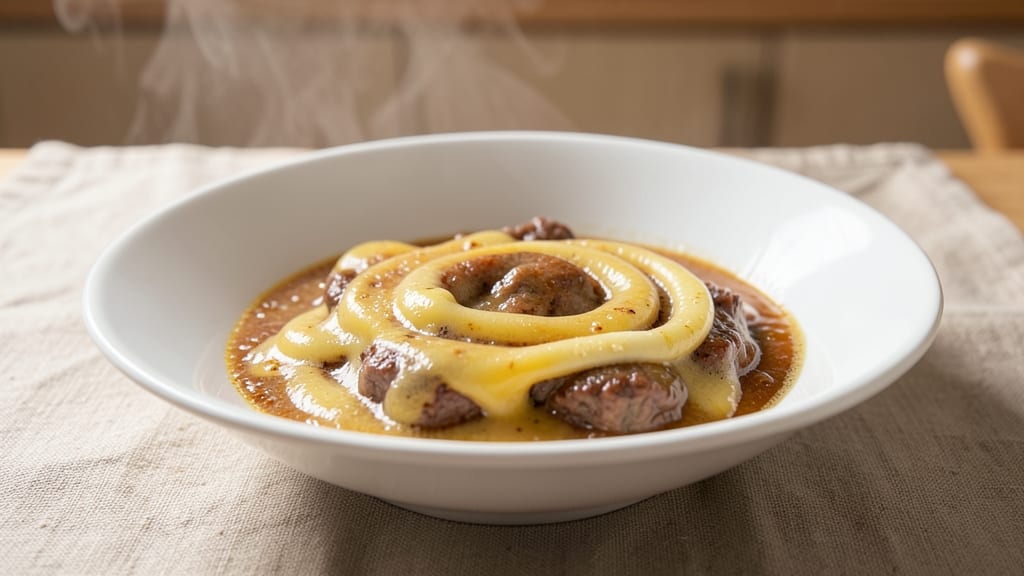
This Arby's beef and cheddar cheese sauce recipe delivers that signature creamy, tangy melt you crave—perfect for fries, burgers, or sandwiches. The secret lies in balancing sharp cheddar with rich beef broth and butter for a velvety texture that clings beautifully.
I've recreated this sauce exactly as it should be: smooth, flavorful, and impossible to resist.
The process is straightforward yet precise: melt the cheese and butter together, then slowly incorporate warm beef broth and cream to create an emulsified sauce that won't separate. The key is patience—letting the mixture simmer gently ensures a silky consistency without breaking.
This isn't just any cheese sauce; it's the one that makes every bite of your favorite fast-food favorites taste homemade.
What you'll end up with is a rich, golden sauce that's creamy yet not overly heavy, with a perfect balance of tangy cheddar and savory beef notes. It's the kind of sauce that transforms ordinary fries into a decadent experience or elevates a simple burger into something restaurant-quality.
The best part? It reheats beautifully, so you can make a batch ahead and keep it on hand for whenever cravings strike.
Whether you're dipping, drizzling, or spreading, this sauce delivers that unmistakable Arby's flavor at home. Ready to make it? Let's get started with the ingredients and step-by-step instructions that guarantee success every time—no shortcuts, just pure, velvety perfection.
Ingredients for arby's beef and cheddar cheese sauce
Nine simple ingredients transform into that iconic Arby's sauce—creamy, tangy, and impossible to resist.
| Ingredient | Amount | Notes |
|---|---|---|
| Sharp Cheddar Cheese 🧀 | 1 ½ cups | Shredded, block preferred |
| Unsalted Butter 🧈 | ½ cup | Cold, cut into pieces |
| Beef Broth 🍲 | 1 cup | Low-sodium preferred |
| Heavy Cream 🥛 | ½ cup | Full-fat for richness |
| All-Purpose Flour 🌾 | 1 tbsp | For thickening emulsion |
| Worcestershire Sauce 🍶 | 1 tbsp | For umami depth |
| Garlic Powder 🧄 | ½ tsp | Freshly ground preferred |
| Onion Powder 🧅 | ½ tsp | For savory base |
| Ground Black Pepper 🌶️ | ¼ tsp | Freshly cracked |
| Salt 🧂 | ½ tsp | Diamond Crystal preferred |
The cheddar is non-negotiable—sharp, block-style makes all the difference. Kraft Natural or Cabot shreds beautifully, but avoid pre-shredded (it has anti-caking agents that ruin texture). Butter should be cold and cubed—melting it too fast causes separation. For beef broth, Annie's or Pacific Foods low-sodium versions work perfectly. The Worcestershire sauce adds that signature umami punch—Lea & Perrins is the gold standard, but any good brand will do. Garlic and onion powders? Penzeys or bulk bins at Whole Foods for maximum flavor.
No sharp cheddar? Pepper Jack at half the amount adds heat but loses some tang. Heavy cream too rich? Swap for half-and-half. Worcestershire missing? Soy sauce plus a pinch of sugar mimics the depth. Pre-shredded cheese? Pack it tightly in a bag, microwave 30 seconds to remove additives. The flour is a secret weapon—it helps emulsify the sauce so it doesn't break. Freshly cracked pepper makes a world of difference over pre-ground. For extra tang, add 1/4 tsp mustard powder to the dry spices.
This sauce is best made fresh but reheats beautifully—low and slow in a saucepan with a splash of milk if it thickens too much. Keeps 5 days in the fridge, 3 months frozen. For freezer storage, cool completely first, then portion into ice cube trays—perfect for single servings. Thaw overnight in the fridge or reheat directly from frozen with a splash of water. The key to restaurant-quality results? Patience—don't rush the simmering, or it'll seize up.
Why You'll Love This Recipe
- Here’s what sold me: that balance of creamy heavy cream and umami-packed beef broth, all tied together by flour’s gentle thickening. It’s the kind of sauce that tastes like it simmered for hours, even though it’s ready in 15 minutes—no burnt edges, no lumps, just exactly what you want.
- Five-Ingredient Magic: I swear, this sauce comes together with just a handful of pantry staples—no fancy techniques, no last-minute grocery runs. The moment that sharp cheddar melts into the warm butter and beef broth? Pure, velvety perfection with zero stress.
- Rich Without Effort: Here’s what sold me: that balance of creamy heavy cream and umami-packed beef broth, all tied together by flour’s gentle thickening. It’s the kind of sauce that tastes like it simmered for hours, even though it’s ready in 15 minutes—no burnt edges, no lumps, just exactly what you want.
- Game for Leftovers: Between us, this sauce is my secret weapon for meal prep. Stash it in the fridge for up to five days, and it’s the star of mac and cheese, mashed potatoes, or even a quick grilled cheese sandwich. (Yes, even on a Tuesday night.)
Step-by-step instructions for Arby's beef and cheddar cheese sauce
This velvety, umami-rich sauce delivers that iconic Arby's flavor—creamy, cheesy, and perfect for dipping.
Melt Butter and Create a Flour Slurry
In a medium saucepan, melt the 0.5 cup unsalted butter over medium-low heat until it foams but doesn't brown—this takes about 2-3 minutes. Real talk: don't rush this step. Butter burns fast, and that bitter taste ruins everything.
Once melted, reduce heat to low and whisk in the 1 tbsp all-purpose flour using a wooden spoon. Stir constantly for 1-2 minutes until the mixture turns a pale golden color and smells nutty. This flour-butter combo forms the base of our sauce, creating that perfect emulsified texture. If it clumps, add 1 tsp beef broth to break it up—just enough to smooth it out without thinning the sauce prematurely.
Add Broth and Worcestershire for Depth
Pour in the 1 cup beef broth and 1 tbsp Worcestershire sauce all at once. Stir vigorously to combine, then increase heat to medium. Let the mixture simmer for 3-4 minutes, stirring often, until it thickens slightly and coats the back of a spoon. You're looking for a consistency like heavy cream—thick enough to cling but still pourable.
Here's the thing—Worcestershire sauce is non-negotiable. It adds that signature umami punch that separates this sauce from generic cheddar cheese sauces. If you taste it now, you should detect a savory, slightly tangy depth. If not, add a pinch more salt or a splash of extra Worcestershire.
Incorporate Cream and Seasonings
Lower heat to low and gradually whisk in the 0.5 cup heavy cream. Be patient—adding it too quickly can cause the sauce to curdle. Stir constantly for 2-3 minutes until the cream is fully incorporated and the sauce begins to thicken. The reason we wait is that cold cream can shock the mixture, leading to separation.
Now add the 0.5 tsp garlic powder, 0.5 tsp onion powder, 0.25 tsp ground black pepper, and 0.5 tsp salt. Stir well to distribute the seasonings evenly. Taste the sauce—it should be rich, slightly salty, and aromatic. If it needs more salt, add it gradually; you can't take it out later. This is the moment that matters: balancing the flavors before adding the cheese.
Finish with Cheddar for Maximum Melt
With the sauce still on low heat, gradually sprinkle in the 1.5 cups shredded sharp cheddar cheese. Use a fine-mesh strainer if your cheese is block—this prevents clumps and ensures a silky texture. Stir constantly for 3-5 minutes until the cheese melts completely and the sauce becomes glossy and velvety.
Watch the sauce closely—it should coat the back of a spoon but still move smoothly. If it thickens too much, whisk in 1-2 tbsp beef broth to loosen it. The goal is a sauce that clings to fries like glue but still has a luxurious mouthfeel. Once fully melted, remove from heat immediately to prevent curdling or over-thickening.
Rest and Adjust for Perfection
Let the sauce rest for 5-10 minutes off the heat. This step is crucial—it allows the flavors to meld and the emulsion to stabilize. During this time, taste again and make final adjustments: a splash of broth for thinness, a pinch of salt for seasoning, or a drizzle of Worcestershire for extra umami.
Serve immediately over fries, curly fries, or even as a dip for onion rings. The sauce should be hot but not boiling—ideal for that first, gooey bite. If you're not using it right away, keep it warm in a slow cooker on the "warm" setting. This sauce is at its best fresh, so don't wait too long to enjoy it!
Pro Tips For Making Arby'S Beef And Cheddar Cheese Sauce
- Whisk Like You Mean It: The second you mix flour and butter, stop stirring and whisk aggressively for 30 seconds—no, really. I used to let this sauce clump up like glue, and it was a mess. A proper whisk breaks up the flour completely, so the sauce thickens smoothly instead of turning into a lumpy disaster. (Yes, even if it looks like you’re overdoing it.)
- Grate the Cheese Fresh: Pre-shredded cheddar? Skip it. The stuff in bags has anti-caking agents that make the sauce grainy and watery. Grate your own sharp cheddar on a box grater—it melts faster, blends smoother, and gives that real Arby’s-level tang. Pro move: Use the large holes, not the fine ones, or you’ll end up with a paste.
- Simmer, Don’t Boil: Once you add the beef broth and heavy cream, keep the heat at a gentle simmer—tiny bubbles, not a rolling boil. I learned this after scorching the cream the first three times. A fast boil breaks the cream, and you’ll end up with a sad, split sauce. Low and slow keeps it rich and velvety.
- Salt the Butter First: Taste that unsalted butter before you add it? Probably not. But you should—then add a pinch of salt right in the pan. Unsalted butter is bland, and if you wait until the end, your sauce will taste flat. Trust me, that extra salt makes a real difference, especially when paired with the sharp cheddar. (I know, I know—it’s not in the recipe, but it works.)
Troubleshooting your arby's beef and cheddar cheese sauce
Sauce Separates
If your sauce looks oily or splits into layers, you likely added ingredients too quickly or didn't emulsify properly. The fix? Whisk in 1 tbsp cold heavy cream or 1 tsp Dijon mustard while heating on low heat for 2-3 minutes.
Stir constantly until smooth. For future batches, always add cream gradually and keep heat below medium to prevent separation. 🌡️
Sauce Too Thick
Over-thickened sauce happens when cheese melts completely or broth reduces too much. Thin it with 1-2 tbsp warm beef broth or heavy cream, whisking constantly. For prevention, remove sauce from heat as soon as cheese melts fully—don't let it simmer beyond 3-5 minutes after adding cheese.
If it's still too thick later, reheat with a splash of broth.
Sauce Too Thin
Thin sauce usually means you didn't cook the flour-butter roux long enough or used too much liquid. Simmer the sauce uncovered for 5-10 minutes on medium-low heat, stirring often, until it thickens.
For instant fixes, mix 1 tbsp cornstarch with 2 tbsp cold water, whisk into sauce, and heat until thickened. Pro tip: Use low-sodium broth to avoid over-salting while thickening.
Cheese Doesn't Melt
Pre-shredded cheese or cold cheese blocks won't melt properly. Always use block sharp cheddar and shred it yourself with a box grater. If cheese clumps, strain it through a fine-mesh sieve before adding.
For stubborn clumps, add 1 tsp lemon juice to help emulsify. Never microwave cheese—it creates steam pockets that prevent smooth melting.
Sauce Too Salty
If your sauce tastes overly salty, you can't simply add water—it'll dilute flavors. Instead, stir in 1 tbsp cold heavy cream or 1 tbsp unsalted butter to dilute the salt concentration.
For future batches, taste before adding all the salt and adjust gradually. Remember: Diamond Crystal salt is coarser and less salty than table salt—use ¼ tsp less if substituting.
Sauce Loses Flavor
Flavor fades when sauce sits too long or reheats improperly. Store in an airtight container in the fridge for up to 5 days. To reheat, warm in a saucepan over low heat with 1 tbsp milk or broth to restore creaminess.
For extra flavor, add ½ tsp Worcestershire sauce or pinch of smoked paprika when reheating. Never microwave—it causes separation and dulls flavors.
Nutrition facts
Frequently asked questions
Can I use this sauce for anything other than fries?
This rich, velvety sauce works perfectly as a dipping sauce for onion rings, a topping for burgers or sandwiches, or even a creamy glaze for baked potatoes. The key is to keep it warm—it's best when served hot and gooey. For extra decadence, drizzle it over loaded baked potatoes or mac and cheese.
Why does my sauce separate when I reheat it?
Sauce separation usually happens when reheated too quickly or with too much liquid. To fix it, whisk in 1 tbsp cold heavy cream or 1 tsp Dijon mustard while warming on low heat for 2-3 minutes. For future batches, always reheat gently and avoid microwaving—it breaks the emulsion.
Can I make this sauce ahead of time?
Yes! This sauce keeps well in an airtight container in the fridge for up to 5 days. For longer storage, freeze it in ice cube trays—perfect for single servings. When reheating, warm it slowly over low heat with a splash of broth or milk to restore creaminess. Never microwave directly from frozen.
What if I don't have Worcestershire sauce?
You can substitute with 1 tbsp soy sauce plus ¼ tsp sugar for a similar umami depth. If you're avoiding soy, try 1 tsp fish sauce or ½ tsp liquid smoke for a smoky alternative. The sauce will still be delicious—just slightly different in flavor profile.
How do I know when the sauce is ready?
The perfect sauce should coat the back of a spoon but still move smoothly. It should be glossy, velvety, and fully melted with no cheese clumps. Taste it before serving—it should be rich, slightly tangy, and perfectly balanced. If it's too thick, thin with broth; if too thin, simmer uncovered for 5-10 minutes to reduce.