
Sauces & Condiments
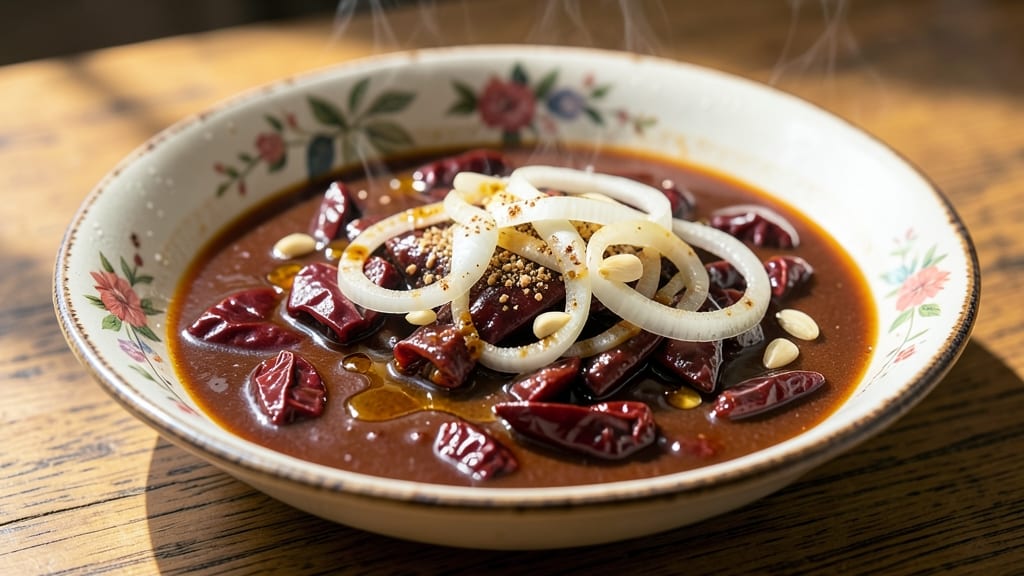
This authentic guajillo enchilada sauce brings the smoky, earthy soul of Mexican home cooking to your table—no shortcuts, just tradition. The secret lies in properly toasting and soaking dried guajillo chilies, which unlocks their deep, complex flavors that transform ordinary dishes into something extraordinary.
I first learned this technique from Nana Mae's old cookbook, where she'd patiently explain how proper preparation makes all the difference.
The sauce begins with charring the chilies over an open flame, then soaking them in hot broth to soften while releasing their natural oils and smoky aroma. Blending these with garlic, onion, vinegar, and spices creates a velvety, balanced sauce that's rich yet never overpowering.
This isn't just any enchilada sauce—it's the kind that makes your tortillas taste like they were made yesterday.
What makes this recipe truly special is its versatility. Use it for classic enchiladas, as a taco sauce, or drizzled over grilled meats and vegetables. The sauce keeps beautifully in the refrigerator for up to two weeks, allowing you to make a big batch and enjoy it throughout the week.
Each spoonful delivers that perfect balance of heat, acidity, and depth that defines authentic Mexican cuisine.
With just a few simple ingredients and some patience, you'll have a sauce that rivals what you'd find in the best Mexican restaurants. The process might seem lengthy, but trust me—every step is worth it for that restaurant-quality result at home. Let's get started on creating something truly special.
Ingredients for authentic enchilada sauce recipe guajillo
Nine ingredients transform into the soul of Mexican home cooking—smoky, rich, and full of tradition.
| Ingredient | Amount | Notes |
|---|---|---|
| Dried Guajillo Chilies 🌶️ | ½ oz | Stems and seeds removed |
| Chicken Broth 💧 | 2 cups | Homemade or low-sodium |
| White Onion 🧅 | ½ whole | Peeled, quartered |
| Garlic Cloves 🧄 | 3 cloves | Peeled, rough chopped |
| Apple Cider Vinegar 🍋 | 1 tbsp | For tangy brightness |
| Ground Cumin 🌿 | ½ tsp | Toasted for depth |
| Dried Oregano 🍃 | ½ tsp | Mexican preferred |
| Salt 🧂 | ½ tsp | Kosher or sea salt |
| Olive Oil 🫒 | 1 tbsp | For blending |
| Dark Brown Sugar 🍚 | 1 tbsp | Balances heat |
The guajillo chilies are the heart of this sauce, so pick plump, vibrant ones—none of that shriveled, dried-out stuff. Mexican specialty stores or the international aisle at your grocery store usually carry them, but if you can't find them, ancho chilies work in a pinch. Toast them over an open flame or under a broiler until they smell smoky and char slightly—this step unlocks their deep flavor. I always toast mine in a dry skillet over medium heat, turning them until fragrant. Don't skip this part—it's what makes this sauce taste authentic.
No chicken broth? Vegetable broth works just as well, though the flavor will be slightly different. The onion and garlic can be adjusted—more onion for sweetness, more garlic for punch. If you're short on time, jarred minced garlic saves steps, but fresh is always better. The apple cider vinegar adds that bright, tangy kick that cuts through the richness. For extra depth, toast the cumin seeds whole in a dry pan before grinding them—it makes a huge difference. And if you're worried about heat, the brown sugar helps balance it out beautifully.
Once blended, the sauce keeps for 2 weeks in the fridge, so make a big batch. I like to freeze portions in ice cube trays for easy use later—just thaw and reheat. The sauce tastes even better the next day as the flavors meld together. If it thickens too much, just add a splash of broth or water. And trust me, every spoonful is worth the effort—this isn't just any enchilada sauce, it's the kind that makes your tortillas taste like they were made yesterday.
Why You'll Love This Recipe
- Foolproof Simplicity: I swear by this—just toast the guajillos, soak them, and blend with the onion and garlic. No peeling, no fussing, just a quick pulse in the blender while the broth simmers. That vinegar? One splash, and you’re done.
- Smoky Depth Magic: The charred guajillos release this earthy, slightly sweet heat that wraps around everything—like a hug from a Mexican abuela. The vinegar cuts through the richness, leaving that perfect balance of tang and smolder.
- Meal Prep MVP: Make a double batch and freeze half. Thaw it for tacos, drizzle it over grilled chicken, or use it as a soup base. It’s my go-to for busy nights when I need flavor without the last-minute stress.
- Budget-Friendly Powerhouse: Guajillos last forever, and a few dried chilies stretch into gallons of sauce. No need for expensive jars of pre-made stuff—this costs pennies and tastes like a restaurant. (Yes, even on a Tuesday night.)
Step-by-step instructions for authentic guajillo enchilada sauce
Here's how to transform simple ingredients into rich, smoky enchilada sauce worthy of a Mexican abuela's kitchen.
Toast the Guajillo Chilies Until Fragrant
Begin by toasting the 0.5 oz dried guajillo chilies in a dry skillet over medium heat for 30-45 seconds until you smell their deep, earthy aroma. Watch closely—they're done when they darken slightly and smell intensely smoky. This step removes their raw bitterness and intensifies their natural sweetness.
Remove the chilies from heat immediately and transfer them to a bowl of hot water for 10 minutes. This soaking softens them enough to blend smoothly while preserving their vibrant color. I like to use a small bowl just big enough to cover them completely—this makes straining easier later.
Blend the Chilies with Aromatics and Vinegar
Drain the softened chilies and transfer them to a blender along with the 0.5 whole peeled, quartered white onion, 3 peeled garlic cloves, and 1 tablespoon apple cider vinegar. The vinegar adds bright acidity that cuts through the sauce's richness. Add 1 tablespoon olive oil to help emulsify the blend.
Blend until completely smooth, scraping down the sides as needed. You should have about 1 cup of vibrant red purée. The sauce should be thick but pourable—if it's too thick, add 1-2 tablespoons water to loosen it. Taste at this stage: you should detect sweet, smoky chile with bright onion and garlic notes.
Build the Sauce with Spices and Broth
Heat the 2 cups chicken broth in a saucepan over medium heat until it's steaming. Add the chile purée and stir to combine. Bring to a gentle simmer, then reduce heat to low and let it cook uncovered for 10 minutes to allow flavors to meld.
Stir in the 0.5 teaspoon toasted ground cumin, 0.5 teaspoon dried oregano, and 0.5 teaspoon salt. Add the 1 tablespoon dark brown sugar—this balances the heat while adding subtle caramel notes. The sugar also helps prevent the sauce from becoming too acidic. Simmer for another 5-7 minutes until the sauce thickens slightly and coats the back of a spoon.
Strain and Adjust for Perfect Texture
Line a fine-mesh strainer with cheesecloth or a coffee filter and strain the sauce into a clean bowl. This removes any fibrous bits for silky smoothness. The strained sauce should be deep red with a glossy sheen. If it's too thick, thin with 1-2 tablespoons warm water until it reaches a consistency like heavy cream.
Taste and adjust seasoning—you might need a pinch more salt or sugar to balance the flavors. The sauce should be rich, smoky, and slightly sweet with underlying heat. Transfer to a clean jar and let it cool to room temperature. It will thicken further as it cools, so don't worry if it looks perfect now—it'll be ideal when reheated.
Pro Tips For Making Authentic Enchilada Sauce Recipe Guajillo
- REMOVE STEMS FIRST: I learned this the hard way—skipping this step leaves sandpaper grit in your sauce. Use a paring knife to scrape off the thick veins and stems from each guajillo chile before toasting. (Yes, even if they look clean—those little fibers are stubborn.)
- TOAST CHILES UNTIL DARK: Low and slow won’t cut it here. Toast the guajillos over medium-high heat for 30-45 seconds per side until they’re nearly black and smell like campfire smoke. That’s when their natural sweetness kicks in—rushed toasting just burns the edges.
- BLEND WITH LIQUID FIRST: Dump dry chiles into your blender? Bad idea. Soak them in warm broth for 10 minutes first, then blend with a splash of vinegar. This prevents a thick, clumpy mess and ensures every particle breaks down smoothly—no pulsing required.
- ACIDIFY BEFORE SIMMERING: Add the vinegar before the broth hits the heat. The acid helps dissolve the chile oils faster, and the sauce won’t curdle when you later add cream or cheese. (Trust me, you’ll notice the difference if you skip this.)
Dietary considerations for this authentic enchilada sauce recipe guajillo
Gluten-Free Adaptation
This sauce is naturally gluten-free, but always double-check your broth and spices for hidden gluten. I use Better Than Bouillon gluten-free chicken base when making homemade broth. The apple cider vinegar and olive oil are also gluten-free, so no substitutions are needed here.
Just ensure your tortillas are corn-based if serving with enchiladas—Mission brand makes excellent gluten-free corn tortillas. 🌱
Vegetarian Option
Skip the chicken broth and replace it with 2 cups vegetable broth for a fully vegetarian version. I recommend Imagine brand for a rich, flavorful base.
The umami depth from mushrooms or soy sauce can enhance the sauce further—add 1 tablespoon soy sauce or ½ cup sautéed mushrooms to the blend for extra depth. The sauce remains just as vibrant and versatile. 🍄
Low-Sodium Version
Reduce the salt to ¼ teaspoon and use a low-sodium vegetable broth instead of chicken broth. To compensate for the reduced saltiness, add an extra ½ teaspoon dark brown sugar and ¼ teaspoon smoked paprika for complexity. This keeps the sauce flavorful without relying on excess sodium. 💡
Spice-Level Control
For a milder sauce, remove the stems and seeds from the guajillo chilies before toasting. If you prefer more heat, keep the seeds in and add ½ teaspoon cayenne pepper to the blend.
I find that 2-3 guajillo chilies (about 0.3 oz) provide a perfect balance of smoky flavor with gentle heat. 🌶️
Allergy-Friendly Notes
This sauce is free from common allergens like dairy, eggs, and nuts. If you're sensitive to sulfites, use organic guajillo chilies, as conventional ones may contain preservatives. For nut-free kitchens, ensure your olive oil is processed in a nut-free facility—Bertolli brand is a safe choice.
Always check labels on spices and broths for cross-contamination warnings. ✨
Nutrition facts
Frequently asked questions
Why do we toast the guajillo chilies before using them?
Toasting the chilies unlocks their deep, smoky flavor and removes any raw bitterness. When you char them slightly in a dry skillet, you're essentially caramelizing their natural sugars, which creates that authentic, complex taste that makes this sauce so special. It's a crucial step that transforms ordinary dried chilies into something truly extraordinary.
Can I substitute ancho chilies for guajillo in this recipe?
Yes, ancho chilies work beautifully as a substitute—they're actually the dried form of poblano peppers and have a similar earthy, slightly sweet profile. For best results, use the same amount (0.5 oz) and follow the same toasting instructions. The sauce will have slightly different flavor notes but still deliver that rich, smoky depth you're looking for.
How do I adjust the heat level in this sauce?
For milder heat, remove the stems and seeds before toasting the chilies. For extra spice, keep the seeds in and add ½ teaspoon cayenne pepper to the blend. Remember that guajillo chilies are naturally mild to medium in heat—this recipe is designed to be versatile for all palates while still delivering that authentic Mexican flavor profile.
What's the best way to store leftover sauce?
Store the sauce in an airtight container in the refrigerator for up to 2 weeks. For longer storage, freeze portions in ice cube trays—just thaw and reheat as needed. The sauce actually tastes better after sitting overnight as the flavors meld together, so making a big batch is always a good idea!
Can I use this sauce for dishes other than enchiladas?
This versatile sauce works perfectly for tacos, quesadillas, grilled meats, or even as a marinade. The rich, balanced flavor enhances any Mexican-inspired dish. I've used it as a drizzle for grilled shrimp or chicken, and it adds wonderful depth to rice dishes too.