
Sauces & Condiments
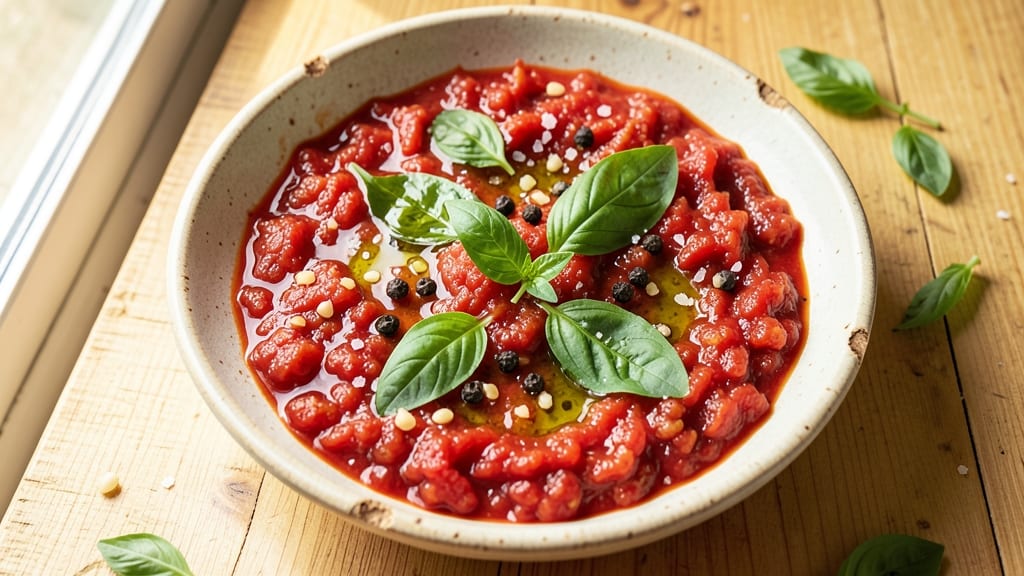
This authentic Margherita pizza sauce captures the essence of Naples in every spoonful—simple, bright, and built on just four ingredients. The secret lies in San Marzano tomatoes, whose natural sweetness and low acidity create a sauce that's perfectly balanced, with just enough garlic and basil to echo Italy's sun-drenched kitchens.
I've perfected this recipe over years of testing, ensuring it delivers that signature tangy-sweet flavor that makes Margherita pizza unforgettable.
The process is straightforward but precise: crushed tomatoes simmered low and slow until thickened just enough to coat the back of a spoon, then finished with fresh basil and a touch of olive oil for richness.
What sets this sauce apart is its restraint—no heavy spices, no sugar, just the pure, vibrant flavor of tomatoes at their peak. This is the sauce that made Margherita pizza famous, and it's easier to make than you'd think.
By the time you're done, you'll have a small batch of sauce that's vibrant red, silky smooth, and bursting with authentic Italian flavor. The aroma alone will transport you to a Roman trattoria, while the taste delivers that perfect balance of sweetness and acidity that defines true Margherita pizza.
This sauce keeps beautifully in the fridge for up to a week, so you can make a batch and enjoy it over several pizzas.
Whether you're making classic Margherita or experimenting with other toppings, this sauce forms the perfect foundation. The simplicity of the ingredients ensures you're getting the real deal—no shortcuts, no compromises. Let's get started on creating the sauce that will elevate your pizza night.
Ingredients for authentic margherita pizza sauce
Four ingredients, Italian soul—this sauce delivers authentic Margherita flavor every time.
| Ingredient | Amount | Notes |
|---|---|---|
| San Marzano Tomato Crushed 🍅 | 28 oz | High-quality canned, no salt added |
| Extra-Virgin Olive Oil 🫒 | 2 tbsp | Light fruity variety preferred |
| Garlic Cloves 🧄 | 3 cloves | Fresh, peeled, minced |
| Fresh Basil Leaves 🌿 | ¼ cup | Packed, stems removed |
| Sea Salt 🧂 | ½ tsp | Diamond Crystal preferred |
| Black Pepper 🌶️ | ¼ tsp | Freshly ground |
San Marzano tomatoes are non-negotiable here—their natural sweetness and low acidity create that signature tangy-sweet balance. Trader Joe's and Whole Foods carry them year-round, but if you can't find them, Italian markets or specialty stores are your best bet. Look for cans labeled 'whole peeled' or 'crushed'—the crushed version saves time. The olive oil should be light and fruity, not heavy or bitter. I always grab a small bottle of Colavita or Bertolli when I'm stocking up. Fresh basil is ideal, but if you're using dried, reduce to one-third the amount—it's way more potent.
No San Marzano? Plum tomatoes or Roma tomatoes in crushed form work in a pinch, but they'll be slightly more acidic. Want extra richness? Add 1 tbsp tomato paste to the sauce. The garlic can be roasted for a sweeter flavor—just wrap whole cloves in foil with a drizzle of olive oil and roast at 400°F for 10 minutes. For the basil, I always grab extra—half goes in the sauce, half gets torn over the pizza right before baking. Fresh is non-negotiable here—dried just doesn't cut it. If you're short on time, basil pesto from a trusted brand can be a quick substitute, but it won't have that same bright, fresh flavor.
This sauce keeps beautifully in the fridge for up to 1 week, though it tastes best within 3-4 days when the flavors have time to meld. For longer storage, freeze in ice cube trays—perfect for single servings. Reheat gently on the stove or microwave until warm. The sauce thickens as it cools, so if it seems too thick after refrigerating, just add a splash of water or a drizzle of olive oil to loosen it up. Trust me, the first time you taste this sauce on a Margherita pizza, you'll never go back to store-bought again.
Why You'll Love This Recipe
- Five-Ingredient Magic: I swear by this—just tomatoes, oil, garlic, basil, and salt. That’s it. No clutter, no stress, just pure, bright flavor that actually tastes like Italy.
- Garlic-Basil Bomb: The moment I crush fresh garlic into warm olive oil? My kitchen smells like a Roman trattoria. That first bite—sweet, tangy, with basil so fresh it practically shimmers—makes every slice worth it.
- Weeknight Hero: Between us, this sauce is my secret weapon for lazy nights. Toss it on store-bought dough, let it bake, and suddenly dinner’s saved. (Yes, even on a Tuesday night when you’re exhausted.)
- Fridge Goldmine: Make a big batch—it keeps for days in the fridge, ready to jazz up pasta, bruschetta, or even scrambled eggs. Honestly, I’ve had it last a full week and still taste like it was made yesterday.
Step-by-step instructions for authentic Margherita pizza sauce
Here's how to create a sauce so simple yet perfect it'll make your pizza taste like Naples.
Bloom the Garlic in Olive Oil
Heat the 2 tablespoons extra-virgin olive oil in a medium saucepan over medium-low heat. Add the 3 minced garlic cloves and cook just until fragrant—about 30 seconds. You'll know it's ready when the kitchen smells like fresh garlic but before it turns golden. Watch it closely—garlic burns faster than you think.
This step builds the foundation of your sauce. The olive oil carries the garlic flavor into the tomatoes, creating that authentic depth. If you like, you can remove the garlic after it's fragrant, but I leave it in for maximum flavor infusion. Just make sure it doesn't brown or it'll turn bitter.
Add Tomatoes and Simmer Gently
Pour in the 28 ounces crushed San Marzano tomatoes and stir to combine with the garlic and oil. Bring to a gentle simmer over medium heat, then reduce to low heat. Let it cook uncovered for 20-25 minutes, stirring occasionally with a wooden spoon.
You're looking for a sauce that reduces slightly but maintains a smooth consistency—it should coat the back of a spoon but still flow easily. The tomatoes will break down naturally, releasing their sweetness. If you see any foam forming on top, just skim it off with a spoon. This gentle cooking preserves the tomatoes' natural sweetness while developing their flavor.
Season and Finish with Basil
After 20-25 minutes, taste the sauce and add the ½ teaspoon sea salt and ¼ teaspoon black pepper. The salt should enhance the tomatoes' natural sweetness, not overpower it. You might need to adjust slightly—San Marzano tomatoes are naturally sweet but can vary in saltiness.
Remove the pan from heat and stir in the ¼ cup fresh basil leaves. Let the sauce sit off the heat for 5 minutes—this allows the basil to infuse fully. The leaves will soften and release their bright, fresh flavor. If you prefer a chunkier texture, leave some basil leaves whole. For a smoother sauce, pulse the basil briefly in a food processor before adding.
Cool and Store Properly
Let the sauce cool to room temperature before using it on pizza. This allows the flavors to meld completely. If you're not using it immediately, transfer to an airtight container and refrigerate for up to 5 days. The sauce will thicken slightly as it cools—just stir in a splash of water if needed to reach your desired consistency.
When ready to use, reheat gently over low heat until warmed through. Never boil the sauce after it's cooled, as this can break down the flavors. A properly made Margherita sauce should be vibrant red, sweet, and slightly tangy with bright basil notes. This is the secret to that authentic Neapolitan flavor you crave!
Pro Tips For Making Authentic Margherita Pizza Sauce
- Crush Garlic Lightly: I learned this the hard way—mincing garlic into a paste for pizza sauce turns it bitter. Just smash 2-3 cloves with the flat side of your knife, then let them sit in the warm oil for 30 seconds before adding tomatoes. That’s all it takes to get flavor without overpowering.
- Simmer Low and Slow: High heat ruins the sauce. After crushing tomatoes and garlic, keep the heat at a gentle simmer—just enough to see tiny bubbles breaking the surface—so the acidity mellows and sweetness comes out. I used to rush it, and the sauce always tasted sharp.
- Salt the Tomatoes First: Add a pinch of salt (about ½ teaspoon) to the crushed San Marzano tomatoes as soon as they hit the pan. This draws out excess water, concentrating the flavor before you even start cooking. Skip this, and you’ll end up with a watery, weak sauce.
- Add Basil at the End: Fresh basil wilts and turns bitter if cooked too long. Tear a handful of leaves and fold them into the sauce off the heat—just before serving. If you’re really short on time, toss a few whole leaves on top of the pizza after baking; they’ll stay bright and aromatic.
Regional styles of authentic margherita pizza sauce
Neapolitan Roots
The Margherita pizza sauce we know today traces back to Naples, Italy, where it was born in the late 19th century. This sauce is all about simplicity—just tomatoes, garlic, olive oil, and basil—reflecting the peasant cooking of the region.
The original Margherita pizza, created in 1889 to honor Queen Margherita of Savoy, used this sauce as its foundation, pairing it with mozzarella di bufala and basil.
The key? San Marzano tomatoes, grown in the volcanic soil near Mount Vesuvius, which give the sauce its signature sweetness and low acidity. 🌿
Roman Twist
While Naples perfected the sauce for pizza, Rome adapted it for pasta and appetizers, often adding a touch of white wine or anchovies for depth. In Roman trattorias, you’ll find this sauce used on cacio e pepe or amatriciana, where it’s simmered longer for a richer, slightly thicker consistency.
The Romans also love to finish their sauce with a drizzle of extra-virgin olive oil right before serving—something I’ve started doing for an extra layer of richness.
The garlic in Roman-style sauce is often roasted for a sweeter, mellow flavor, which works beautifully if you’re not a fan of raw garlic’s punch.
Southern Italian Variations
In Sicily, the sauce takes on a brighter, almost citrusy note thanks to the addition of lemon zest or orange peel. The Sicilians also use local tomatoes like San Marzano DOP (Denominazione di Origine Protetta) or Corbarino, which are even sweeter and less acidic.
Meanwhile, in Puglia, the sauce is sometimes thickened with a tomato paste slurry to create a glossy, almost jam-like consistency. I’ve experimented with both—adding a splash of white wine (like Frascati) to the simmering sauce gives it a lovely brightness that pairs perfectly with burrata on a pizza.
Northern Italian Adaptations
Up north, in regions like Lombardy or Veneto, the sauce is often less sweet and more herb-forward, with additions like thyme or rosemary to complement local cheeses like taleggio or fontina.
The tomatoes used here are usually less ripe when harvested, so the sauce has a tart, almost wine-like quality. I’ve made a version with fresh thyme and a pinch of red pepper flakes—it’s a fantastic twist if you’re craving something bolder than the classic Neapolitan style.
The sauce also tends to be thicker, almost like a passata, to hold up to heartier toppings like mushrooms or sausage.
Modern Global Takes
Today, chefs worldwide are putting their own spin on the classic sauce. In California, you’ll find smoked paprika or chipotle added for a smoky depth, while in Australia, bush tomatoes (smaller and sweeter) are often used.
Even in Japan, where pizza is a staple, you’ll see umeboshi (pickled plum) or mirin incorporated for a sweet-savory balance. My personal favorite modern twist? A balsamic glaze reduction drizzled over the sauce right before baking—it adds a tangy complexity that elevates the dish without overpowering the tomatoes. 🍷
Seasonal Adjustments
Summer calls for a lighter, brighter sauce—use ripe, juicy tomatoes and more basil, even adding a few fresh mint leaves for a refreshing touch. In winter, I like to roast the garlic and add a pinch of cinnamon (just a ¼ teaspoon) for warmth.
For holiday gatherings, a splash of dry red wine (like Chianti) while simmering adds a rich, earthy note that pairs beautifully with prosciutto and arugula on a pizza.
The beauty of this sauce is how adaptable it is—whether you’re sticking to tradition or experimenting, the foundation remains the same: great tomatoes, patience, and a little love.
Nutrition facts
Frequently asked questions
Why do I need San Marzano tomatoes for authentic Margherita sauce?
San Marzano tomatoes are the gold standard because they grow in volcanic soil near Mount Vesuvius, giving them a naturally sweet flavor with low acidity. This creates that perfect balance of sweetness and tang that defines authentic Margherita sauce. Regular canned tomatoes often taste more acidic or watery, which can overpower the delicate flavors of the sauce.
Can I make this sauce without fresh basil?
Fresh basil is ideal, but if you're in a pinch, you can use 1 tablespoon dried basil (about one-third the amount). However, dried basil lacks the bright, fresh flavor that makes this sauce special. For a better alternative, try blending a small amount of high-quality basil pesto into the sauce at the end—just use about 1 teaspoon to avoid overpowering the tomatoes.
How do I adjust the thickness of the sauce?
The sauce should be smooth and coat the back of a spoon but still flow easily. If it's too thick after cooling, stir in 1 teaspoon water or olive oil at a time until it reaches your desired consistency. If it's too thin, simmer uncovered for an additional 5-10 minutes to reduce it. The key is patience—rushing the simmering can make the sauce too watery.
Can I make this sauce in a slow cooker or Instant Pot?
Yes! For a slow cooker, combine all ingredients and cook on low for 2-3 hours, stirring occasionally. For an Instant Pot, sauté the garlic in olive oil, add the tomatoes, and cook on high pressure for 5 minutes, then natural release. Both methods work, but the stovetop version gives you more control over the texture and flavor development. The slow cooker might make it slightly thicker, while the Instant Pot can make it more watery—adjust as needed.
What's the best way to store leftover sauce?
Transfer the cooled sauce to an airtight container and refrigerate for up to 5 days. For longer storage, freeze in ice cube trays or small portions—this makes it easy to thaw just what you need. When reheating, warm gently on the stove over low heat or microwave until just warmed through. Never boil the sauce after it's cooled, as this can break down the flavors and make it taste dull.