
Sauces & Condiments
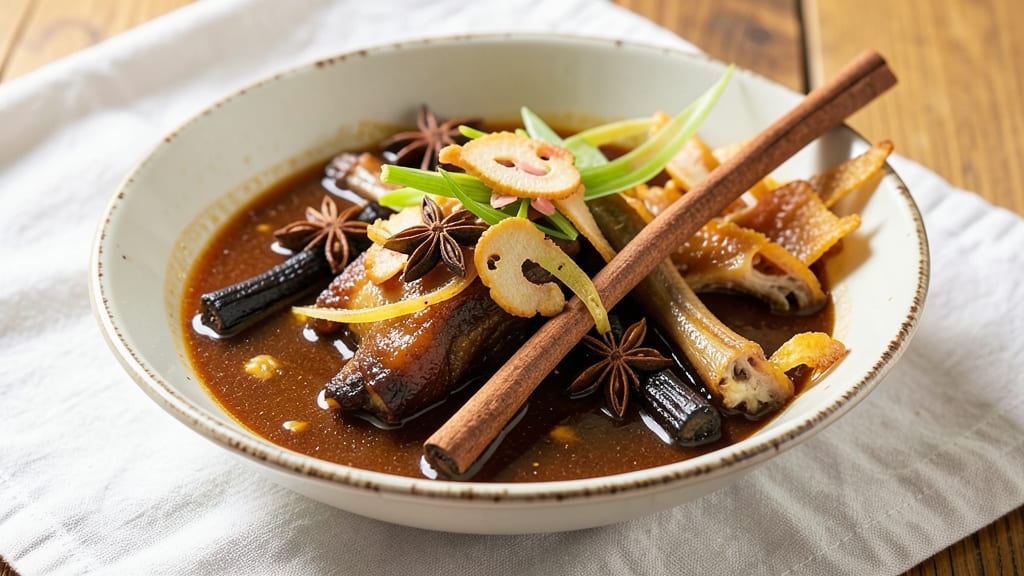
This Bak Kut Teh sauce recipe unlocks the deep, complex umami that makes Singapore's signature pork bone soup unforgettable. The secret lies in slow-simmering pork bones with aromatic spices like star anise and cinnamon until the broth develops a rich, gelatinous depth that clings to every spoonful.
I've refined this traditional method over years, balancing authenticity with time-saving techniques for modern kitchens.
The sauce begins with pork bones that release collagen during hours of simmering, creating a velvety texture that's impossible to replicate quickly. Star anise and lemongrass infuse the broth with their signature warmth, while pandan leaves add a subtle floral note that rounds out the flavors.
The key is patience—this isn't a quick sauce, but the results are worth every minute of simmering time.
What you'll end up with is a deep amber broth that's fragrant with spices and rich with meaty depth. It's the kind of sauce that transforms simple ingredients into something extraordinary—perfect for serving with rice, noodles, or even as a dipping sauce for dumplings.
The traditional version requires hours on the stove, but I'll show you how to adapt it for slow cookers without sacrificing flavor.
This recipe bridges tradition and convenience, delivering restaurant-quality results at home. Whether you're making it for a special occasion or a weeknight dinner, the process is straightforward once you understand the core principles. Let's create this flavor-packed sauce that's become a staple in Singaporean homes.
Ingredients for bak kut teh sauce
Ten aromatic ingredients. Hours of simmering. One sauce that transforms ordinary meals into something extraordinary.
| Ingredient | Amount | Notes |
|---|---|---|
| Pork Bones 🍖 | 2 lb | Marinated overnight for depth |
| Star Anise Pods 🌿 | 4 whole | Whole, not ground |
| Cinnamon Sticks 🌿 | 2 whole | 2-inch pieces preferred |
| Lemongrass Stalks 🌿 | 4 whole | Bruised for maximum flavor |
| Pandan Leaves 🌿 | 4 whole | Tied in bundle for infusion |
| Ginger Root 🧄 | 2 oz | Freshly peeled and sliced |
| Garlic Cloves 🧄 | 8 cloves | Peeled, rough chopped |
| Dried Shallots 🧅 | 2 tbsp | For umami depth |
| Dark Soy Sauce 🍶 | ½ cup | Kecap manis preferred |
| Water 💧 | 8 cups | Filtered preferred |
The pork bones are non-negotiable—look for knuckle bones at your local Asian market or butcher shop. Trader Joe's often carries them pre-packaged, but if you're at a regular grocery store, ask the meat department to set aside some for you. The star anise and cinnamon should smell vibrant and fresh; if they're stale, toss them. Lemongrass is best when it's still plump and green—avoid anything dry or yellowing. For pandan leaves, check the international aisle at Whole Foods or any Asian grocery store; they're usually sold in bundles. The ginger and garlic can be regular grocery store quality, but freshness matters here—bruise the ginger with the side of your knife to release those oils.
No star anise? Anise seeds at double the amount work in a pinch, though it won't be identical. Running out of lemongrass? Substitute 1 tbsp lemongrass paste (check the Asian aisle) or even a splash of lime juice, though the flavor won't be the same. Dried shallots hard to find? Use 1 tbsp onion powder plus 1 tsp sugar for a similar umami hit. The dark soy sauce is crucial—Kecap manis is ideal, but regular dark soy sauce will work if you can't find it. If you're short on time, marinate the bones in soy sauce overnight before simmering to jumpstart the flavor. And trust me, don't skip the pandan—it's what gives that signature floral note.
This sauce tastes even better the next day—plan ahead. Store it in an airtight container in the fridge for up to 5 days or freeze for 3 months. I like to freeze it in ice cube trays for easy portions—just pop out what you need and toss it into soups or stir-fries. The bones can be simmered down to just the broth, or you can strain and use the bones for another round of broth if you're feeling ambitious. Label everything—this sauce is worth repeating, and you'll want to keep track of your batches.
Why You'll Love This Recipe
- Pantry-Friendly Magic: I swear by this sauce because it pulls flavor from spices I already have—star anise, cinnamon, even dried pandan—no last-minute grocery runs needed. The pork bones simmer into rich, gelatinous goodness while I chop veggies for stir-fry, turning scraps into something luxurious without extra effort.
- Umami Bomb: That first sip of the reduced sauce? Pure satisfaction. The pork bones melt into a deep, savory base while lemongrass and pandan weave in citrusy warmth—like a hug for your taste buds. Honestly, the balance of sweet, spicy, and herbal hits every time, even when I forget to adjust the salt.
- Leftovers That Shine: This sauce doesn’t just taste better the next day—it transforms. I’ve used it to glaze roasted chicken, drizzle over noodles, or even toss with tofu for a quick lunch. Between us, the second-day flavor is where it really shines, especially when I reheat it with a splash of water for that glossy finish.
- Budget Soul Food: Pork bones are cheap, and this recipe stretches them into meals for days. I’ll be real: my version isn’t fancy, but the depth of flavor makes it feel like a restaurant dish. Plus, the spices are affordable, and a little goes a long way—perfect for feeding the family without breaking the bank.
Step-by-step instructions for bak kut teh sauce
Here's how to build authentic umami depth with aromatic spices and tender pork bones.
Prepare the Pork Bones for Maximum Flavor
Start by examining the 2 lb pork bones for any remaining meat or connective tissue. Using a sharp knife, trim away any excess fat but leave about ¼ inch of fat cap on the bones—this will render flavor as it cooks. The bones should be clean but retain their natural marrow channels for rich infusion.
Rinse the bones thoroughly under cold water to remove any blood or impurities, then pat them completely dry with paper towels. This drying step is crucial—it prevents the bones from steaming instead of rendering their collagen. Place the dried bones in a large stockpot and set aside. The clean, dry surface will allow the spices to adhere better during the next steps.
Build the Spice Bundle for Layered Aromatics
In a small bowl, combine the 4 whole star anise pods, 2 whole cinnamon sticks, 4 whole lemongrass stalks, and 4 whole pandan leaves. The lemongrass should be bruised by pounding it lightly with the flat side of a knife—this releases its essential oils without breaking the stalks. Tie these spices together with kitchen twine to form a bundle that can be easily removed later.
Add the 2 oz ginger root (peeled and sliced into ¼-inch thick rounds) and 8 cloves garlic (roughly chopped) to the stockpot with the pork bones. Sprinkle in the 2 tbsp dried shallots and 0.5 cup dark soy sauce. The dark soy sauce will add a deep, molasses-like richness that's characteristic of authentic bak kut teh. Stir everything gently to coat the bones with the spices and sauce.
Simmer the Bones for Collagen Extraction
Pour in the 8 cups water until the bones are completely submerged by at least 2 inches. Bring the mixture to a rolling boil over high heat, then immediately reduce to a gentle simmer. The water should bubble softly with occasional small bubbles breaking the surface—this indicates proper simmering, not a vigorous boil that would cloud the broth.
Skimming is essential here. As the broth simmers, a white foam will rise to the surface—this is impurities from the bones. Use a fine-mesh skimmer to remove this foam every 5-10 minutes during the first 30 minutes of cooking. This step ensures a crystal-clear broth with maximum flavor concentration. The simmering time should be at least 4 hours, but I recommend 6-8 hours for deeply gelatinous results.
Infuse and Reduce for Concentrated Umami
After the initial 4 hours of simmering, the pork bones should be fork-tender and the broth should have reduced slightly, taking on a rich, amber color. If the liquid level drops below 2 inches above the bones, add hot water (not cold) to maintain proper coverage. The spice bundle should be removed now—its job is done.
Continue simmering uncovered for another 2-4 hours until the broth reduces to about 3-4 cups—this concentrated liquid is what gives bak kut teh its signature depth. The longer you reduce, the more intense the flavor becomes. Taste the broth occasionally; it should be deeply savory with notes of star anise, lemongrass, and ginger. If it needs balancing, add a splash of dark soy sauce or a pinch of salt to taste.
Strain and Finish the Sauce
Once the broth reaches your desired consistency, remove the stockpot from heat and let it cool slightly. Line a fine-mesh strainer with cheesecloth or a coffee filter to catch any fine particles. Strain the broth carefully, pressing gently on the solids to extract every last drop of flavor without releasing sediment.
The finished bak kut teh sauce should be a deep amber color with a gelatinous texture when chilled. Store it in airtight containers in the refrigerator for up to 5 days or freeze for 3 months. This sauce is incredibly versatile—use it as a base for soups, braises, or even as a dipping sauce for dumplings. The umami depth from the rendered pork bones and fermented soy sauce makes it a pantry staple worth its weight in gold.
Pro Tips For Making Bak Kut Teh Sauce
- Split the Bones Properly: Use a cleaver or heavy knife to crack pork bones lengthwise—don’t crush them into tiny pieces. I learned this the hard way when my first batch turned into a mushy, bone-heavy sludge instead of rich, marrow-infused sauce. Aim for 1-2 inch chunks; they’ll render slower but release flavor deeper.
- Toast Spices Before Boiling: Dry-toast star anise, cinnamon, and lemongrass over medium heat for 30 seconds—just until fragrant, not burning. My grandmother swore by this, and she was right: it cuts bitterness and makes the aromatics sing. Skip this, and your sauce tastes like medicine.
- Simmer Slow and Low: After the initial boil, drop heat to a gentle simmer—barely bubbling—and cover partially. I used to rush this, and the sauce either split (from too much agitation) or turned cloudy (from high heat). Two hours at 180°F (75°C) is non-negotiable for collagen breakdown.
- Strain Twice for Clarity: First pass through a fine-mesh sieve removes big debris; second pass through cheesecloth catches the fine grit. Sounds tedious, but trust the process—your future self will thank you for that silky, restaurant-quality sauce. (Yes, even if you’re impatient like me.)
Make-ahead tips for this bak kut teh sauce
Prep Ahead
Start your marinade the night before—place the 2 lb pork bones in a bowl with 0.5 cup dark soy sauce, 2 tbsp dried shallots, and 8 cups water.
Cover and refrigerate overnight. This jumpstarts the flavor extraction, cutting your cooking time by 1-2 hours. The bones will absorb the marinade, ensuring a richer broth from the start. 💡
Slow Cooker Adaptation
For hands-off cooking, transfer the marinated bones and all spices to a 6-quart slow cooker. Add 4 cups water (enough to cover bones) and cook on LOW for 8-10 hours. After 4 hours, carefully skim foam from the surface.
The slow cooker maintains gentle heat, preventing the broth from boiling over while still extracting collagen. I use my Hamilton Beach slow cooker with the lid slightly ajar for the last hour to reduce excess liquid. ⏰
Freezer-Friendly Batches
Make large batches and freeze in 1-cup portions using silicone ice cube trays. Once frozen, transfer cubes to a ziplock freezer bag and flatten to save space. Thaw overnight in the fridge before using—no microwave needed!
These portions work perfectly for instant noodles, stir-fries, or braising proteins. Label each bag with the date; frozen sauce keeps its quality for up to 3 months. 🧊
Double Broth Technique
After removing the first batch of bones, don't discard them! Return the bones to the pot with 4 cups fresh water and simmer for another 3-4 hours. This second extraction yields a lighter, clearer broth perfect for soups or rice dishes.
Store it separately from the first batch—its milder flavor complements lighter meals. I've made three batches from the same bones this way! 🔄
Fridge Storage Hacks
Store your finished sauce in glass mason jars with tight-sealing lids. Leave 1 inch headspace to prevent oxidation. When reheating, warm directly in the jar over low heat—no need to transfer.
The sauce thickens as it cools, so add 1-2 tbsp water if it seems too viscous. I keep a jar in my fridge at all times for quick weeknight meals. ✨
Spice Bundle Reuse
Save your spice bundle after the first simmer! Rinse it thoroughly and use it to infuse 2 cups water with 1 tbsp soy sauce for a quick aromatics base. Simmer for 10 minutes to create a fragrant broth for rice or noodles.
This technique maximizes your ingredients and adds depth to simple dishes. Just don't reuse the bundle more than twice—flavor diminishes after that. 🌿
Nutrition facts
Frequently asked questions
Can I make this sauce without star anise?
Yes, but the flavor will differ slightly. Replace the 4 star anise pods with 2 teaspoons ground anise seeds or 1 teaspoon fennel seeds for a similar licorice-like warmth. If unavailable, omit it entirely—the sauce will still be delicious, just missing that signature aromatic depth.
How do I know when the pork bones are done?
Fork-tender is the goal! After 4-6 hours of simmering, the bones should separate easily when pierced with a fork. The broth will also develop a rich, amber color and a gelatinous texture when chilled. If the bones still feel tough, continue simmering uncovered for another 1-2 hours.
Can I use chicken or beef bones instead?
While pork bones are traditional, you can adapt this recipe with chicken bones (for a lighter broth) or beef marrow bones (for extra richness). Chicken bones require 3-4 hours of simmering, while beef bones can go up to 8 hours. The flavor will differ—chicken becomes milder, beef more robust—but the technique remains the same.
Why does my sauce taste too salty?
Dark soy sauce is naturally salty, so taste as you go! If your sauce is too strong, dilute it with 1-2 tbsp hot water or add ½ cup fresh broth (chicken or vegetable) to balance the saltiness. For future batches, reduce the soy sauce by 1-2 tablespoons and adjust to taste at the end.
How can I make this sauce faster?
For a quicker version, use a pressure cooker: Simmer the bones for 1 hour, then pressure cook on high for 90 minutes. Alternatively, marinate the bones in soy sauce overnight—this jumpstarts flavor extraction. Just know the broth may lack the deep gelatinous texture of the traditional method.