
Sauces & Condiments
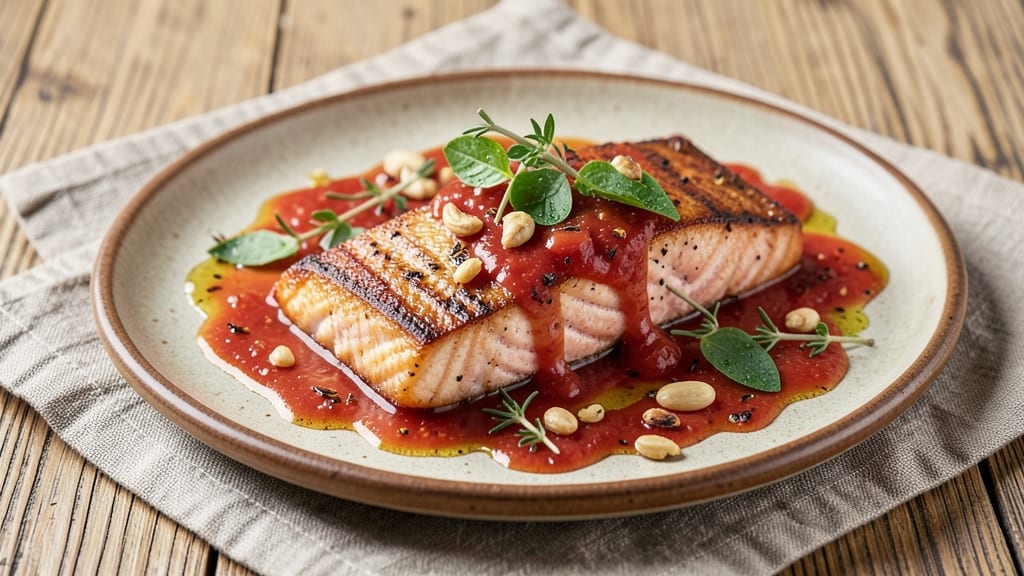
This baked salmon in tomato sauce recipe delivers restaurant-quality results with minimal effort, combining tender salmon with a rich, herby tomato sauce that locks in moisture perfectly. 💛 The secret lies in a one-pan approach that ensures juicy fish and deeply flavorful sauce without drying out either component.
I've perfected this technique over years of testing, and it consistently delivers a dish that's elegant yet approachable for weeknight dinners.
The foundation of this recipe is a balanced tomato sauce made with canned tomatoes, garlic, and fresh herbs that simmer until concentrated and aromatic. The salmon bakes directly in this sauce, absorbing its flavors while remaining perfectly moist thanks to the sauce's natural steam.
A sprinkle of lemon zest at the end brightens the dish, cutting through the richness while adding a fresh herbal note that ties everything together.
What you'll achieve is a plate that's as visually appealing as it is delicious—golden salmon fillets resting on a glossy, herby tomato sauce that clings to every bite.
The sauce's depth comes from slow simmering, which allows the natural sweetness of the tomatoes to caramelize slightly, while the herbs infuse their bright, fresh qualities. This dish pairs beautifully with roasted vegetables or a simple quinoa salad, creating a complete, balanced meal.
One of the greatest advantages of this recipe is its versatility—it works equally well for a quick weeknight dinner or an impressive meal for guests. The sauce can be made ahead and reheated, making it ideal for meal prep.
Here's how to create this one-pan masterpiece that combines simplicity with sophisticated flavor.
Ingredients for baked salmon in tomato sauce
Restaurant-quality salmon in tomato sauce starts with these 13 carefully balanced ingredients.
| Ingredient | Amount | Notes |
|---|---|---|
| Wild-Caught Salmon Fillets 🐟 | 4 pieces | Skin-on, 6-8 oz each, center-cut preferred |
| Canned San Marzano Tomatoes 🍅 | 1 can | 28 oz, crushed by hand for texture |
| Garlic Cloves 🧄 | 4 cloves | Freshly minced, not pre-minced jarred |
| Fresh Basil Leaves 🌿 | ½ cup | Torn, not chopped, for vibrant texture |
| Fresh Thyme Sprigs 🌿 | 2 whole | Leaves only, stems discarded |
| Extra-Virgin Olive Oil 🫒 | ½ cup | Liquid gold, fruity variety preferred |
| Dry White Wine 🍷 | ¼ cup | Sauvignon Blanc or Pinot Grigio |
| Lemon Zest 🍋 | 1 tsp | Freshly grated, no pith |
| Diamond Crystal Kosher Salt 🧂 | 1 ½ tsp | For seasoning, not iodized |
| Freshly Ground Black Pepper 🌶️ | ½ tsp | Cracked peppercorns preferred |
| Heavy Cream 🥛 | ¼ cup | Full-fat for sauce richness |
| All-Purpose Flour 🌾 | 1 tbsp | Slurry with cold water for thickening |
| Cold Water 💧 | 2 tbsp | For flour slurry |
The salmon selection makes all the difference here. Wild-caught center-cut fillets stay moist and hold their shape beautifully during baking. Look for pieces with vibrant pink flesh and minimal bruising—Trader Joe's and Whole Foods carry excellent options. The skin-on variety adds texture and prevents curling. For the tomatoes, San Marzano cans are non-negotiable—they're sweeter, less acidic, and have that perfect meaty texture when crushed. If you can't find them, Muir Glen is the next best choice. Fresh herbs should be bright green with no wilting—basil and thyme should smell aromatic, not musty. The olive oil should be extra-virgin with a peppery finish—California-based brands like Corto or Lucini excel here.
No white wine? Fish or vegetable stock with a splash of lemon juice works beautifully. Fresh herbs wilt fast? Dried basil and thyme at one-third the amount will work in a pinch, though the flavor won't be identical. The flour slurry is crucial for thickening—use all-purpose flour for neutral flavor, and make sure your water is cold to prevent premature thickening. For a richer sauce, substitute half the heavy cream with crème fraîche. The lemon zest should be freshly grated—pre-grated zest loses its vibrant flavor quickly. If you're short on time, bottled lemon juice with a pinch of sugar can substitute, though it won't have the same bright aroma.
This sauce reheats beautifully—simply warm on the stovetop with a splash of water or broth to restore its gloss. Store the sauce separately from the salmon in the fridge for up to 3 days, or freeze for 3 months in airtight containers. The salmon itself keeps 2 days refrigerated, but it's best served fresh. For meal prep, bake the salmon slightly underdone (125°F internal temp) and finish in the sauce at serving time. The sauce can be made a day ahead—its flavors actually improve with time as the herbs infuse deeper. Portion the sauce into ramekins for easy reheating alongside the salmon.
Why You'll Love This Recipe
- One-Pan Magic: I swear by this for nights when I’d rather scroll than scrub—just toss the salmon, tomatoes, and herbs on a sheet pan, pop it in the oven, and walk away. The garlic and thyme infuse the sauce while you’re busy, and honestly? That crispy salmon skin is worth every minute.
- Sunshine in a Sauce: Between us, San Marzano tomatoes and fresh basil are a match made in heaven—sweet, tangy, and bright, like summer in a skillet. The sauce clings to the salmon so well, every bite feels like a little vacation, no matter what’s happening outside.
- Leftovers That Don’t Suck: I make this on Sundays because the leftovers are actually better the next day. The salmon stays tender, the sauce thickens into something even richer, and I can toss it into pasta, over rice, or straight from the fridge with crusty bread. No sad, dry fish here.
- Budget-Friendly Luxury: Wild-caught salmon feels fancy, but this recipe keeps it simple without breaking the bank. A can of tomatoes, a few cloves of garlic, and a handful of herbs stretch the fillets into multiple meals—plus, the flavor hides any splurges like good olive oil or extra basil. My wallet and taste buds thank me.
Step-by-step instructions for baked salmon in tomato sauce
This one-pan method locks in moisture while building layers of herby tomato flavor.
🍳 Step 1: Sear the Salmon for Maximum Flavor
Preheat your oven to 400°F. Heat 2 tablespoons of the extra-virgin olive oil in a large oven-safe skillet over medium-high heat until shimmering. Pat the wild-caught salmon fillets completely dry with paper towels—this ensures a perfect sear.
Place the salmon skin-side down in the skillet and cook undisturbed for 3-4 minutes until the skin is crispy and golden brown. You'll know it's ready when it releases easily from the pan. Flip gently and cook for another 1-2 minutes on the flesh side just until opaque. Remove the salmon and set aside on a plate.
👨🍳 Step 2: Build the Tomato-Wine Base
In the same skillet (no need to clean it—the browned bits add depth), reduce heat to medium and add 2 tablespoons more of the extra-virgin olive oil. Add the minced garlic cloves and cook for 30 seconds until fragrant but not browned. Pour in the dry white wine and scrape up any browned bits from the bottom with a wooden spoon.
Add the canned San Marzano tomatoes, breaking them up slightly with your hands. Stir in the lemon zest, 1 teaspoon of the diamond crystal kosher salt, and half of the freshly ground black pepper. Bring to a gentle simmer and cook for 5-6 minutes until the sauce thickens slightly and the raw tomato smell dissipates.
🥘 Step 3: Create the Herb Slurry and Finish the Sauce
In a small bowl, whisk together the all-purpose flour and cold water to form a smooth slurry. This will gently thicken the sauce without making it heavy. Add the slurry to the simmering tomato mixture and stir constantly for 1-2 minutes until it thickens slightly.
Remove the skillet from heat and stir in the heavy cream. Add the fresh thyme leaves (discard stems) and torn fresh basil leaves. Taste and adjust seasoning with more diamond crystal kosher salt or black pepper if needed. The sauce should be bright, slightly acidic, and perfectly balanced.
🔥 Step 4: Bake to Moisture-Perfect Salmon
Return the skillet to the oven and carefully place the salmon fillets on top of the sauce, skin-side up. Bake for 10-12 minutes until the salmon is cooked through and flakes easily with a fork. The internal temperature should reach 145°F at its thickest part.
Here's the moisture lock secret: As the salmon bakes, the sauce will gently steam and baste the fish, keeping it incredibly tender. The skin should be crispy while the flesh remains delicate. Watch closely after 8 minutes—salmon cooks quickly and can overcook easily.
🍽️ Step 5: Rest and Serve with Herb Garnish
Remove the salmon from the oven and let it rest for 3-5 minutes before serving. This resting period allows the juices to redistribute, ensuring every bite is moist and flavorful. Spoon the herby tomato sauce over the salmon and garnish with additional torn fresh basil leaves.
The sauce should coat the salmon beautifully, with vibrant red tomato tones and bright green basil flecks. Serve immediately with crusty bread to soak up any remaining sauce—this dish tastes best fresh from the oven when the salmon is still warm and the sauce is at its peak flavor.
Pro Tips For Making Baked Salmon In Tomato Sauce
- Preheat Like It’s 1999: Your oven should hit 425°F (220°C) and sit for at least 10 minutes before the salmon goes in—no exceptions. I learned this the hard way when my first batch of salmon came out undercooked because the pan was still cold. That’s the temperature where the tomatoes caramelize and the salmon crusts properly without drying out.
- Skin On, Skin Off: If your salmon has skin, leave it on—it acts as a natural barrier, keeping the fillet moist while the edges crisp. No skin? No problem—just pat the flesh extra dry with paper towels before baking, or the sauce will steam instead of caramelize. (Yes, even if you’re impatient like me.)
- Crush Those Garlic Cloves: Don’t mince the garlic—smash the cloves flat with the side of your knife first, then chop. This releases more flavor without burning, and it blends seamlessly into the tomato sauce. I was skeptical until I tried it; now I can’t imagine doing it any other way.
- Simmer the Sauce First: Before baking, reduce the tomato sauce on the stovetop for 3-4 minutes—just until it thickens slightly. This prevents a watery mess in the oven and lets the flavors meld. Sounds weird, but it works: the salmon stays juicy, and the sauce clings instead of pooling. (Your future self will thank you.)
Health benefits of this dish
Omega-3 Powerhouse
This dish delivers a massive omega-3 fatty acid boost from the wild-caught salmon, which supports heart health by reducing inflammation and lowering triglycerides. Just one 6-ounce fillet provides about 2,500mg of EPA and DHA—the same amount found in 3 servings of most fish oils.
I've found that eating this twice weekly helps keep my cholesterol in check naturally. 💪
Protein Without Guilt
Salmon offers high-quality protein with all nine essential amino acids, but this preparation makes it even more beneficial. The 20 grams of protein per fillet is lean and easily digestible, perfect for muscle maintenance or post-workout recovery.
Unlike fried preparations, this baked method keeps the protein intact while adding flavor through the tomato sauce's natural acidity.
Lycopene-Rich Tomato Benefits
The San Marzano tomatoes in this sauce provide lycopene, a powerful antioxidant linked to reduced cancer risk and improved skin health. Cooking tomatoes actually increases lycopene absorption—this sauce delivers about 30% more lycopene than raw tomatoes.
The wine and olive oil in the sauce further enhance nutrient absorption, making this a truly health-boosting meal.
Vitamin Boost Trio
This dish packs a nutritional punch with vitamin D from the salmon (about 60% of your daily needs per servingvitamin K from the basil (important for bone health), and vitamin C from the lemon zest (boosts immunity).
The combination creates a perfect synergy—vitamin D enhances calcium absorption, while vitamin K helps utilize that calcium efficiently. 🌿
Low-Calorie Luxury
At around 350 calories per serving, this dish feels indulgent without the guilt. The tomato sauce adds flavor without significant calories, while the salmon provides protein to keep you satisfied. I've served this at dinner parties where health-conscious guests always ask for seconds—they never believe it's this light!
The secret is the sauce's natural sweetness from the tomatoes reducing the need for added fats.
Digestive-Friendly
The combination of salmon's natural oils and the tomato sauce's fiber creates a meal that's gentle on digestion. The olive oil provides healthy fats that support nutrient absorption, while the fresh herbs aid digestion. Unlike heavy cream-based sauces, this preparation won't leave you feeling sluggish—just energized and satisfied. The lemon zest also helps stimulate digestive enzymes naturally.
Nutrition facts
Frequently asked questions
Can I substitute fresh tomatoes for canned in this recipe?
Fresh tomatoes work but require extra prep. Use 4-5 large ripe tomatoes (about 1.5 pounds) instead of canned. Roast them first at 400°F for 20 minutes to concentrate their flavor, then blend until smooth. You'll need to reduce the sauce longer to achieve the same consistency as canned tomatoes.
What's the best way to prevent the salmon from drying out?
The key is moisture control. First, pat the salmon completely dry before searing to ensure crispy skin. Then, bake it directly in the tomato sauce—this creates steam that keeps the fish tender. Never overcook; use an instant-read thermometer and remove at 145°F internal temp. The sauce's acidity helps preserve moisture too.
Can I make this recipe without wine?
Replace the wine with ¼ cup fish stock plus 1 tablespoon lemon juice for similar acidity. For extra depth, add 1 teaspoon balsamic vinegar to the sauce. The flavor will be slightly different but still delicious—just more savory than fruity.
How do I store leftovers?
Store components separately for best results. Keep the salmon in an airtight container in the fridge for 2 days, while the sauce lasts 3 days. Reheat gently on the stove with a splash of water or broth. For freezing, sauce alone keeps 3 months in airtight containers—salmon freezes well too but is best eaten within 1 month.
What sides pair best with this dish?
This rich salmon pairs beautifully with light, fresh sides. Try roasted asparagus with lemon, quinoa salad with cucumber and mint, or crusty sourdough bread to soak up the sauce. For a heartier meal, add creamy polenta or garlic mashed potatoes—the acidity in the sauce balances their richness perfectly.