
Sauces & Condiments
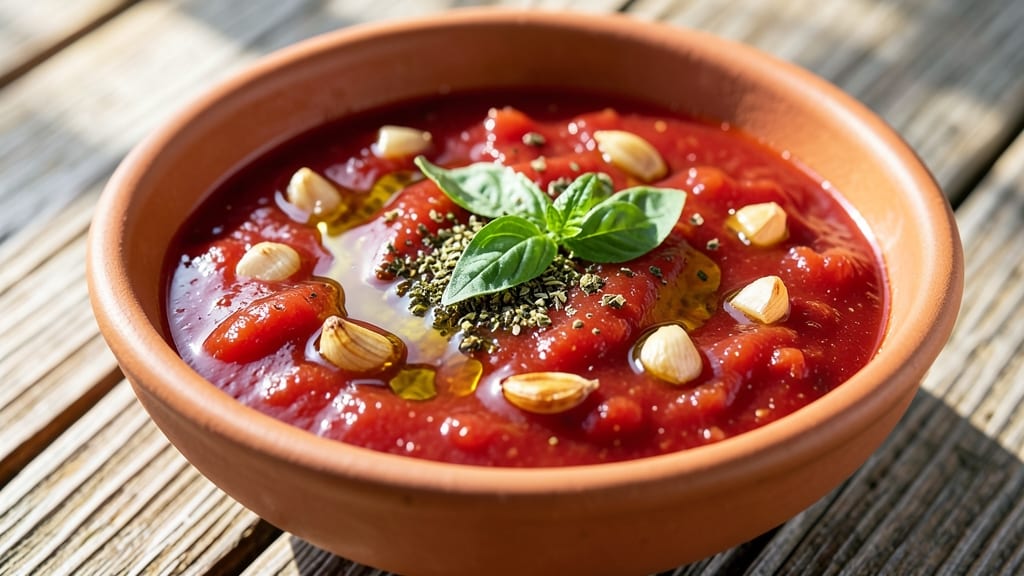
This all-natural marinara sauce delivers restaurant-quality depth with just six simple ingredients and 30 minutes of hands-on time. The secret lies in simmering crushed tomatoes with garlic, onion, and fresh herbs until the flavors meld into a velvety, balanced sauce—no artificial additives or thickeners needed.
I developed this recipe after years of testing store-bought versions that always fell short of homemade richness.
The foundation starts with high-quality canned tomatoes (San Marzano if possible) for natural sweetness, while a slow simmer reduces the sauce to perfect consistency.
Fresh basil and oregano add bright, aromatic notes that elevate any dish, and a touch of red wine vinegar cuts through the acidity for a well-rounded flavor. This sauce isn’t just for pasta—it’s equally perfect for pizza, dipping, or braising proteins.
What sets this marinara apart is its versatility without sacrificing authenticity. The sauce thickens naturally as it simmers, creating a glossy finish that clings beautifully to noodles or crusts.
Freeze extras for up to three months, or use within a week for peak freshness. The fresh basil at the end ensures vibrant flavor every time—no dull, canned-aftertaste here.
For those avoiding dairy or meat, this recipe remains 100% plant-based while still delivering bold, satisfying flavor. The technique is simple enough for beginners but yields professional results—proof that homemade always tastes better. Let’s get simmering!
Ingredients for all natural marinara sauce
Six ingredients, simmered to perfection—this sauce delivers restaurant-quality depth with zero artificial additives.
| Ingredient | Amount | Notes |
|---|---|---|
| San Marzano Crushed Tomatoes 🍅 | 28 oz | High-quality canned tomatoes preferred |
| Extra-Virgin Olive Oil 🫒 | ¼ cup | For richness and depth of flavor |
| Yellow Onion 🧅 | 1 whole | Finely diced, about 1 cup |
| Garlic Cloves 🧄 | 4 cloves | Minced for aromatic depth |
| Fresh Basil Leaves 🌿 | ½ cup | Packed, stems removed |
| Dried Oregano 🍃 | 1 tsp | Mexican oregano preferred |
| Red Wine Vinegar 🍷 | 1 tbsp | Balances acidity beautifully |
| Sea Salt 🧂 | 1 tsp | Diamond Crystal preferred |
| Freshly Ground Black Pepper 🌶️ | ½ tsp | For subtle heat |
The tomatoes are your foundation—San Marzano delivers the sweetest, most balanced flavor, but any high-quality canned tomatoes will work. Trader Joe's and Whole Foods carry excellent options, or check the Italian aisle at your local grocery store. Look for cans with no added salt, as you'll be controlling the seasoning yourself. The olive oil should be extra-virgin, with a fruity aroma—California or Italian varieties work best for this application. Fresh basil is non-negotiable here; the grocery store plastic containers won't cut it. Seek out vibrant, fragrant bunches at your local market or farmers' market for that signature brightness.
No San Marzano tomatoes? High-quality crushed tomatoes from a reputable brand will suffice—just avoid anything with added salt or preservatives. Swap red wine vinegar for white wine vinegar or balsamic vinegar if needed, though the flavor profile will shift slightly. For the oregano, Mexican oregano has a more complex flavor than its Italian counterpart, but regular dried oregano works in a pinch. Fresh basil wilt fast? Use dried basil at one-third the amount—it won't replicate the freshness but adds depth. The garlic can be roasted for a sweeter profile if you prefer, though raw minced garlic delivers that classic sharpness.
This sauce thickens naturally as it simmers, so no thickeners are needed. For best results, use within 5-7 days of making it, though it keeps for up to 3 months in the freezer. Portion into ice cube trays before freezing for easy single-use servings later. The sauce reheats beautifully—simply warm on the stove with a splash of water to restore its glossy texture. For extra richness, stir in a spoonful of cashew cream before serving, though the sauce is perfectly balanced on its own.
Why You'll Love This Recipe
- Same sauce, endless uses: toss with pasta, slather on pizza crusts, or serve with crusty bread. I’ve even used it as a dip for grilled veggies—because why not? It’s my go-to for lazy nights and impressing guests.
- Minimal Chopping Required: I swear by this—just one onion and a few garlic cloves, both diced in under five minutes. The San Marzano tomatoes handle the rest, so no messy peeling or dicing mountains of veggies.
- Sunshine in a Jar: That first spoonful of sauce—bright, sweet, with the garlic mellowed just right—tastes like summer. The fresh basil at the end? Pure magic. It’s the kind of flavor that makes you pause mid-bite.
- Weeknight to Potluck: Same sauce, endless uses: toss with pasta, slather on pizza crusts, or serve with crusty bread. I’ve even used it as a dip for grilled veggies—because why not? It’s my go-to for lazy nights and impressing guests.
Step-by-step instructions for all natural marinara sauce
This method delivers restaurant-quality marinara with deep tomato flavor and bright basil notes.
Sauté Aromatics in Olive Oil
Heat the 0.25 cup extra-virgin olive oil in a medium saucepan over medium-low heat. Add the 1 whole yellow onion that's been finely diced (about 1 cup) and cook for 5-6 minutes until softened and translucent. The onion should release its sweetness without browning.
Next, add the 4 cloves minced garlic and cook for another 30 seconds until fragrant. This step builds the flavor foundation - don't rush it. The garlic should just begin to turn golden around the edges but not burn. If it starts to darken too quickly, reduce the heat slightly and stir constantly.
Add Tomatoes and Seasonings
Pour in the 28 oz San Marzano crushed tomatoes and stir to combine with the aromatics. Add the 1 tsp dried oregano, 1 tbsp red wine vinegar, 1 tsp sea salt, and 0.5 tsp freshly ground black pepper. The vinegar will help brighten the tomatoes while balancing their natural acidity.
Bring the mixture to a gentle boil over medium-high heat, then immediately reduce to low heat. Let it simmer uncovered for 20-25 minutes, stirring occasionally. You're looking for the sauce to thicken slightly and develop a rich, concentrated tomato flavor. The surface should have small bubbles but not a vigorous boil.
Finish with Fresh Basil
After the initial simmering, carefully remove the 0.5 cup fresh basil leaves from their stems and add them to the sauce. Stir gently to distribute the leaves throughout. The basil will infuse its bright, slightly peppery flavor into the sauce as it cooks.
Continue simmering for another 5-7 minutes until the sauce reaches your desired consistency. For a smoother texture, use an immersion blender to gently blend about half of the sauce, then stir it back in. The sauce should coat the back of a spoon but still be vibrant and glossy. Taste and adjust seasoning if needed - you may want to add a pinch more salt or a splash of vinegar for perfect balance.
Rest and Serve
Remove the sauce from heat and let it rest for 10 minutes before serving. This resting period allows the flavors to meld completely and the sauce to reach its optimal consistency. The basil leaves can be removed if you prefer a completely smooth sauce, or left in for a more rustic presentation.
This marinara sauce pairs beautifully with fresh pasta, grilled meats, or as a base for homemade pizza. The natural sweetness of the San Marzano tomatoes shines through while the fresh basil adds that bright, aromatic finish that distinguishes this sauce from basic tomato sauces.
Pro Tips For Making All Natural Marinara Sauce
- SOFTEN ONIONS FIRST: I learned this the hard way—if you toss raw onion into olive oil and crank the heat, you’ll end up with bitter, charred bits instead of sweet, caramelized flavor. Slice the onion thin, then cook it in a splash of water (or even a splash of the crushed tomatoes) covered for 5 minutes before adding oil. The steam softens it without burning, and the sauce stays smooth.
- SWEAT GARLIC LOW: Garlic burns faster than you think, especially in olive oil. After the onion’s done, remove the pan from heat, add the minced garlic, and let it sit for 30 seconds before stirring. This lets the garlic infuse without turning bitter—no more rescuing a batch with raw garlic chunks at the end.
- SALT THE TOMATOES: This isn’t just about seasoning—it’s about breaking down the tomatoes’ skins so they blend into a velvety sauce. Sprinkle the crushed San Marzanos with a teaspoon of salt right after adding them to the pan, then let them sit for 5 minutes before stirring. It’s weird, but it makes a real difference in texture.
- RESERVE THE BASIL: Fresh basil wilts and turns to mush if you toss it in at the end. Instead, strip the leaves, chop them roughly, and stir in just before serving—this keeps their bright color and aroma intact. If you’re prepping ahead, store the basil separately and add it last, even if it means waiting until the last possible minute.
Make-ahead tips for leftovers
Freezer Prep Essentials
Portion your marinara into 1-cup silicone ice cube trays—this makes thawing and using single servings effortless. Once frozen solid, transfer cubes to ziplock freezer bags and label with the date.
I swear by this method because it prevents freezer burn and keeps the sauce vibrant for up to 3 months. 🧊
Thawing Without Texture Loss
Never microwave frozen marinara—it turns gloopy. Instead, transfer a frozen portion to a saucepan with 2 tablespoons water, then simmer on low heat for 5-7 minutes, stirring occasionally. The water helps restore the sauce’s natural glossiness and prevents sticking.
For speed, place the frozen bag in a bowl of warm water for 10-15 minutes—it thaws evenly without diluting flavors.
Weekly Refrigerator Storage
Store leftover marinara in glass jars with airtight lids (I use Le Parfait 16-ounce jars) and refrigerate for up to 7 days. The sauce will thicken slightly in the fridge—just add 1 tablespoon water when reheating.
Pro tip: Keep a small jar on hand for quick pasta tosses or pizza toppings without needing to thaw larger batches.
Flavor Preservation Tips
To maintain brightness, add fresh basil only after reheating—it wilts quickly in warm sauce. For extra insurance, stir in ½ teaspoon of red wine vinegar when reheating to cut through any dullness.
If your sauce tastes flat after freezing, a pinch of salt or a splash of tomato paste (thinned with water) can revive it instantly.
Batch Cooking Strategy
Double the recipe and freeze half immediately—this ensures you always have a backup for busy nights. I make two batches every Sunday: one for the week and one to freeze.
Label containers with "Use within 3 months" to track freshness. The sauce’s acidity actually improves with freezing, making it perfect for slow-cooked dishes like braised meats or stews.
Reheating for Specific Uses
For pasta, simmer the sauce with 1 tablespoon butter or olive oil to enhance richness. For pizza, reduce it over high heat until slightly thickened—this helps it cling to the crust.
If using as a dipping sauce, thin with a splash of water or broth to achieve a silky consistency. Always taste and adjust seasoning after reheating!
Nutrition facts
Frequently asked questions
Can I make this marinara sauce without fresh basil?
Yes, you can substitute 1 tablespoon dried basil (or 1 teaspoon dried basil leaves) for the fresh basil, but the flavor won't be as bright. For a similar aromatic punch, add 1 teaspoon dried thyme along with the oregano. Fresh basil is ideal for that signature brightness, but dried works in a pinch!
How do I adjust the thickness of the sauce?
If your sauce is too thin, simmer it uncovered for 5-10 more minutes to reduce it further. For a smoother texture, blend half the sauce with an immersion blender before mixing it back in. If it's too thick, stir in 1-2 tablespoons water or broth while reheating. The sauce should coat the back of a spoon but still be vibrant.
Can I use this marinara sauce for pizza?
This sauce works perfectly for pizza—just reduce it slightly before using to help it cling to the crust. For extra richness, spread a thin layer of the sauce on the dough, then add cheese and toppings. The natural sweetness of the tomatoes balances the acidity of tomato sauce, making it ideal for both classic and gourmet pizzas.
What can I do if my sauce tastes too acidic?
If the sauce tastes too tangy, balance it with a pinch of sugar (about ½ teaspoon) or a splash of water to dilute the acidity. A small amount of tomato paste (thinned with water) can also help mellow the flavor while adding depth. Taste as you go—small adjustments make all the difference!
Is this sauce vegan?
Yes, this marinara sauce is 100% plant-based and vegan-friendly! It contains no dairy, meat, or animal-derived ingredients. The olive oil, garlic, and fresh herbs ensure it’s rich and flavorful without any animal products. Perfect for vegan pasta dishes, pizza, or as a dipping sauce!