
Sauces & Condiments
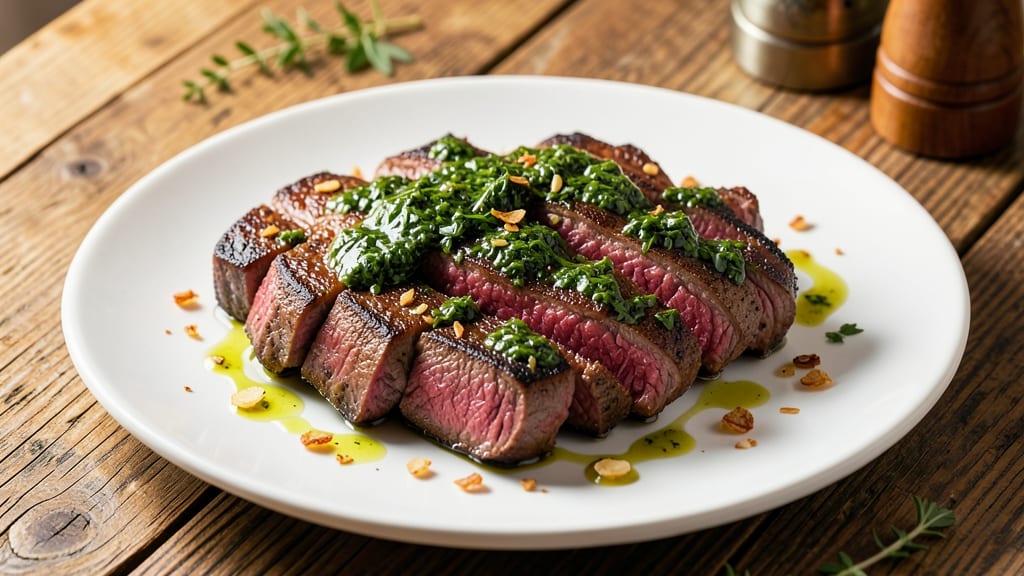
This Argentinian steak with chimichurri sauce recipe delivers restaurant-quality flavor with minimal effort—juicy, perfectly seared steak paired with vibrant herb sauce that brightens every bite.
The secret lies in marinating flank steak for at least 4 hours (overnight for maximum tenderness) while building chimichurri's signature fresh parsley, garlic, and red wine vinegar blend. I've perfected this technique over countless asado nights, ensuring the sauce doesn't overpower but instead enhances the meat's natural richness.
The cooking process is straightforward: high-heat searing creates that coveted crust, while proper resting ensures juicy results. Chimichurri transforms from simple ingredients into a tangy, herby sauce that cuts through the steak's richness beautifully.
This isn't just another steak recipe—it's an experience that brings Buenos Aires to your backyard grill or stovetop.
What makes this complete dish special is the balance between traditional methods and modern convenience. You'll achieve that authentic Argentine flavor without needing a specialized grill—whether you're using cast iron, a grill pan, or even the broiler.
The chimichurri sauce can be made ahead, giving you one less thing to worry about on cook day.
Serve with chimichurri-roasted potatoes or grilled vegetables for the full experience. The sauce works equally well as a marinade or finishing drizzle, making this recipe versatile for any steak occasion. Let's get cooking!
Ingredients for argentinian steak with chimichurri sauce
Center-cut flank steak and vibrant chimichurri ingredients transform into an authentic Argentine masterpiece.
| Ingredient | Amount | Notes |
|---|---|---|
| Flank Steak 🥩 | 1 ½ lb | Center-cut for tenderness, trimmed of fat |
| Fresh Flat-Leaf Parsley 🌿 | 1 ½ cups | Stems removed, tightly packed |
| Garlic Cloves 🧄 | 8 cloves | Fresh, peeled, slightly crushed |
| Red Wine Vinegar 🍷 | ¼ cup | Dry, aged variety preferred |
| Extra-Virgin Olive Oil 🫒 | ½ cup | High-quality, fruity flavor |
| Kosher Salt 🧂 | 1 ½ tsp | Diamond Crystal preferred |
| Ground Black Pepper 🌶️ | ½ tsp | Freshly cracked preferred |
| Red Chili Flakes 🌶️ | ½ tsp | Adjust for heat preference |
| Red Wine 🍷 | ½ cup | Bold, dry variety for marinade |
| Orange Zest 🍊 | 1 tbsp | Fresh, finely grated |
| Cumin Seeds 🌿 | ½ tsp | Toasted for depth of flavor |
| Fresh Oregano 🌿 | 2 tbsp | Chopped, or substitute dried |
The flank steak is non-negotiable for this recipe—center-cut ensures tenderness while maintaining that signature beefy flavor. Whole Foods or your local butcher shop will have the best quality, but most grocery stores carry it in the meat section. Look for bright red color and good marbling—this indicates freshness and flavor. If you can't find center-cut, a standard flank steak will work, but you may need to trim excess fat. For the chimichurri, fresh parsley is absolutely essential—Trader Joe's or local farmers markets often have the freshest bunches. Avoid pre-washed parsley from the grocery store, as it tends to wilt faster. The garlic should be firm and free of sprouts, and red wine vinegar should be aged at least two years for optimal tang.
No red wine vinegar? White wine vinegar or apple cider vinegar will work in a pinch, though the flavor will be slightly different. Running short on fresh parsley? Fresh cilantro or basil at half the amount can substitute, though the chimichurri will have a different character. The red wine used in the marinade should be bold and dry—think Cabernet Sauvignon or Malbec. If you don't have any on hand, beef broth with a splash of balsamic vinegar provides a similar depth of flavor. For the cumin seeds, toast them in a dry pan for 30 seconds before grinding to release their aromatic oils. This small step makes a noticeable difference in the chimichurri's complexity. If you're using dried oregano, reduce the amount to one-third of the fresh measurement.
The flank steak should be used within 2 days of purchase for optimal tenderness. Store it in the coldest part of your fridge, wrapped tightly in plastic wrap or butcher paper. The chimichurri sauce can be made up to 3 days in advance—it actually tastes better after the flavors meld. Store it in an airtight container with a thin layer of olive oil on top to preserve freshness. For the marinade, use it within 24 hours for best results. If you're planning ahead, marinate the steak for up to 8 hours in the refrigerator, but no longer—over-marinating can make the meat mushy. The chimichurri will keep for up to 5 days in the fridge or 3 months in the freezer, making it perfect for meal prep.
Why You'll Love This Recipe
- No-Fuss Prep: I swear by this recipe because it’s that simple—just slice the steak, toss it in the pan, and let the chimichurri (garlic, parsley, olive oil, vinegar) do the work. No marinating overnight, no fancy techniques, and honestly? The steak comes out tender and packed with flavor without me overthinking it.
- Bright, Tangy Magic: That chimichurri—crisp, herby, with a punch of garlic and vinegar—cuts through the richness of the steak like a cool breeze. The first time I made it, I nearly licked the plate clean. (Yes, even on a Tuesday night.)
- Leftovers? No Problem: Between us, this steak reheats like a dream—just a quick sear in the pan or under the broiler, and it’s back to that perfect texture. I’ve turned day-old portions into burrito bowls, sandwiches, or even a quick frittata. Zero waste, all flavor.
- Budget Steakhouse Feel: Flank steak is affordable, and a single cut feeds four easily. The chimichurri costs pennies to make, and the leftovers stretch further than takeout. I’ll be real: this is my go-to for impressing guests without breaking the bank.
Step-by-step instructions for Argentinian steak with chimichurri sauce
Master this iconic dish with perfectly seared steak and vibrant chimichurri that brightens every bite.
🔥 Step 1: Prepare the Chimichurri Marinade
In a food processor, combine the 1.5 cups fresh flat-leaf parsley, 8 cloves garlic cloves, 1 tbsp orange zest, 0.5 tsp toasted cumin seeds, 0.5 tsp red chili flakes, 1.5 tsp kosher salt, and 0.5 tsp ground black pepper. Pulse until finely chopped but not pasty—you want texture, not a smooth paste. This ensures the chimichurri maintains its vibrant color and fresh herb flavor.
With the processor running, slowly drizzle in the 0.5 cup extra-virgin olive oil and 0.25 cup red wine vinegar through the feed tube. Process until fully emulsified but still slightly chunky. Taste and adjust seasoning—this is your flavor baseline. Transfer to a bowl and set aside. The marinade should be bright green with a tangy, herby aroma that immediately whets your appetite.
👨🍳 Step 2: Marinate the Flank Steak
Pat the 1.5 lb flank steak completely dry with paper towels—this is critical for developing a proper crust. Place the steak on a plate and generously coat both sides with the chimichurri marinade. Use your hands to massage the marinade into the meat, ensuring it penetrates the surface. Cover and refrigerate for at least 4 hours, or ideally overnight. This resting period allows the flavors to meld deeply into the beef while tenderizing the muscle fibers.
Here's the thing—don't skip the marinating time. The chimichurri's acidity and herbs work their magic during this period, transforming tough flank steak into tender, flavorful slices. If you're short on time, marinate for at least 2 hours, but understand the flavor development will be less pronounced.
🔥 Step 3: Sear the Steak to Perfection
Remove the steak from the refrigerator 30 minutes before cooking to bring it to room temperature. Preheat a heavy skillet over high heat until it's smoking hot. Add the steak and sear for 3-4 minutes per side until deeply browned with a crust that looks almost black in spots. This high-heat sear is essential—it creates the Maillard reaction that develops those complex, savory flavors we crave in steak.
For a medium-rare doneness (recommended for flank steak), insert a meat thermometer into the thickest part—it should read 130-135°F. The steak's internal temperature will rise about 5°F while resting, so pull it just shy of your target. Let the steak rest on a cutting board for 10 minutes before slicing. This resting period is non-negotiable—it allows the juices to redistribute throughout the meat, preventing them from pooling and running out when you cut.
🥘 Step 4: Prepare the Final Chimichurri
While the steak rests, give your chimichurri a final refresh. In a small bowl, combine the remaining marinade with 0.5 cup red wine and give it a quick whisk. This addition mellows the acidity slightly and adds depth to the sauce. Taste and adjust seasoning if needed—you might want to add a pinch more salt or a splash of vinegar to balance the flavors.
The chimichurri should be vibrant green with a bright, herby aroma. If it's too thick, whisk in 1-2 teaspoons of water to loosen it. This sauce is meant to be served fresh, so hold off on adding it until just before serving. The contrast between the warm, seared steak and the cool, herby chimichurri is what makes this dish truly special.
🔪 Step 5: Slice and Serve
Slice the steak against the grain into ¼-inch thick slices. The grain runs diagonally across the flank steak, so you'll need to adjust your angle as you work your way across the cut. This against-the-grain slicing is crucial—it shortens the muscle fibers, making each bite more tender and easier to chew.
Arrange the sliced steak on a platter and drizzle generously with the chimichurri. Serve immediately with the remaining chimichurri on the side for additional drizzling. The combination of the smoky, seared steak and the bright, herby chimichurri creates a perfect balance of flavors and textures that's quintessentially Argentinian.
Pro Tips For Making Argentinian Steak With Chimichurri Sauce
- SEAR THE STEAK HOT: Flank steak needs screaming heat to develop that crust—cast iron or heavy skillet, oil smoking hot, then walk away for 3-4 minutes. I used to rush this, and the steak just turned gray. Let it do its thing, then flip once, no poking.
- STRIP PARSLEY LIKE A PRO: Flat-leaf parsley stems are flavor bombs—don’t toss them. Hold a bunch by the roots and strip leaves off in one motion, then finely chop stems with the leaves. My grandmother did this, and it cuts prep time in half while packing more punch into the chimichurri.
- DON’T OVERMIX THE CHIMICHURRI: Pulse the chimichurri in a food processor just until combined—overworking it turns it into a paste. You want texture, not glue. I learned this after making a sad, mushy sauce that clung like regret.
- REST THE STEAK UNDER FOIL: Skip the plate—wrap the hot steak in foil for 5-10 minutes to lock in juices. I know, it’s tempting to slice immediately, but that’s how you end up with a dry, sad pile of meat. Trust the foil.
Pro cooking tips for this recipe
High-Heat Sear Secrets
For that signature Argentine crust, your pan needs to be scoring-hot—so hot that when you add the steak, you hear a loud sizzle and see smoke. I use a cast-iron skillet (like my Lodge Pre-Seasoned) because it retains heat better than stainless steel.
If your pan isn't hot enough, the steak will steam instead of sear, resulting in a pale, soggy crust. Test it by flicking a drop of water—if it sizzles and evaporates instantly, you're ready. 🔥
Marinade Time Matters
Don't rush the marinating! The acid in red wine vinegar and chimichurri breaks down muscle fibers, but 4 hours minimum is non-negotiable for flank steak. I've found that marinating overnight actually makes the meat more tender than a commercial tenderizer.
If you're short on time, marinate for at least 2 hours, but be prepared for slightly tougher results. Pro tip: Use a ziplock bag for marinating—it keeps the steak submerged and makes massaging easier.
Resting Prevents Juice Loss
Skipping the rest is the #1 mistake home cooks make. That 10-minute rest after searing lets juices redistribute—if you cut too soon, they'll pool and run out, leaving you with dry meat. I like to tent the steak loosely with foil during resting to keep it warm.
For extra insurance, place a meat thermometer in the thickest part while resting—it should rise about 5°F from your pull temp.
Chimichurri Texture Tips
The perfect chimichurri should be chunky but emulsified—not a smooth paste. Pulse your food processor until it's just combined, then stop. For extra vibrancy, add 1 tbsp fresh lemon juice right before serving. If your chimichurri separates, whisk in 1 tsp olive oil to re-emulsify.
And here's a secret: Toast the cumin seeds in a dry pan for 30 seconds before grinding—this adds depth that raw seeds can't match. 🌿
Alternative Cooking Methods
No grill? No problem. For stovetop searing, use a heavy stainless steel skillet (like All-Clad) and work in batches if needed. For oven cooking, preheat to 425°F, place the steak on a wire rack over a baking sheet, and roast for 15-20 minutes (flip halfway).
For grill pan cooking, use medium-high heat and sear for 4-5 minutes per side. The key is always high heat for that Maillard crust.
Serving Like a Pro
Slice against the grain using a sharp chef's knife (I love my Wüsthof) at a 30-degree angle for clean cuts. Arrange slices fan-style on a platter and drizzle with chimichurri in a zigzag pattern.
For extra flair, sprinkle with flaky sea salt and serve with chimichurri-roasted potatoes or grilled asparagus. The sauce should be served on the side too—let guests drizzle to taste! 🍽️
Nutrition facts
Frequently asked questions
Can I substitute flank steak with another cut?
Yes, but choose wisely! Skirt steak works beautifully with chimichurri, as does ribeye or sirloin for a more tender option. Avoid lean cuts like filet mignon—they lack the beefy flavor that pairs so well with chimichurri's brightness. If using a thicker cut, reduce marinating time to 2-3 hours to prevent over-tenderizing.
What if my chimichurri turns out too thick?
Simply whisk in 1-2 teaspoons of water or 1 tablespoon of red wine to loosen it while keeping the vibrant color. For extra texture, add a pinch of toasted cumin seeds or finely chopped fresh oregano. If it separates, whisk in 1 teaspoon of olive oil to re-emulsify. The perfect consistency should coat the back of a spoon but still be pourable.
How do I make this recipe without fresh parsley?
Use ½ cup fresh cilantro or basil as a substitute, but the flavor will differ slightly. For a closer match, blend ¼ cup dried parsley with ¼ cup fresh basil and 1 tablespoon lemon zest in the food processor. The sauce will lose some vibrancy but still deliver that herby brightness. Store-bought chimichurri mixes work in a pinch, but homemade always tastes better!
Can I make chimichurri ahead of time?
Chimichurri actually tastes better after 24 hours as the flavors meld. Store it in an airtight container with a thin layer of olive oil on top to preserve freshness. It keeps for 3 days in the fridge or 3 months in the freezer. For best results, bring it to room temperature before using. The marinade can also be made 1 day ahead—just add the red wine right before serving.
Why does my steak turn out tough?
Most likely, you skipped the resting time or didn't slice against the grain. Always let the steak rest for 10 minutes after cooking—this redistributes juices and prevents toughness. Slice ¼-inch thick slices at a 30-degree angle against the grain to shorten muscle fibers. For extra tenderness, marinate for overnight instead of just a few hours.