
Sauces & Condiments
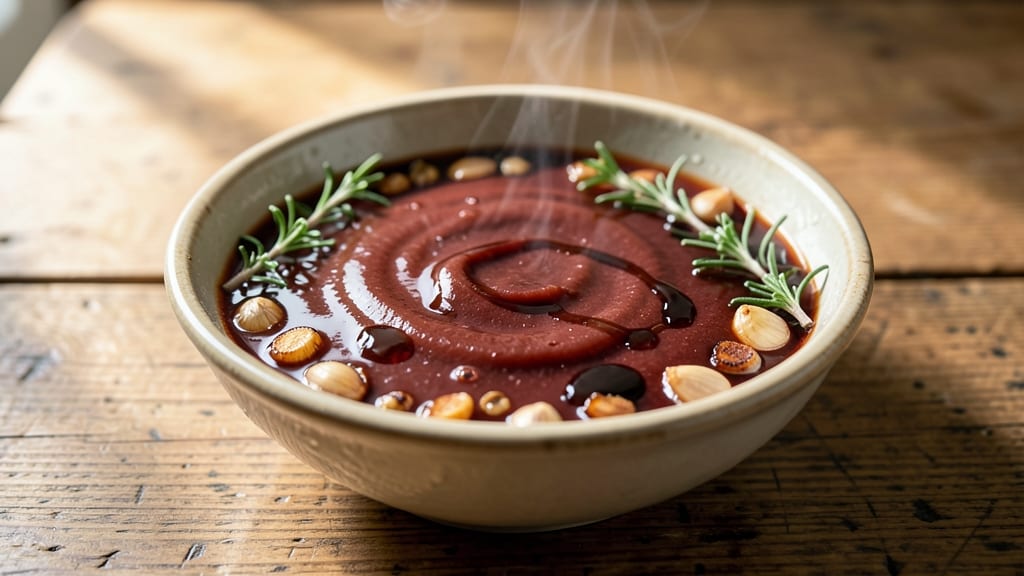
This au jus sauce recipe without drippings delivers restaurant-quality depth using simple pantry staples and a clever roasting technique. 💛 The secret lies in caramelizing aromatics and building layers of flavor through reduction—no meat drippings required.
I developed this version after realizing how often we waste perfectly good stock and aromatics in traditional methods.
The foundation starts with a dry pan-roast of shallots, garlic, and herbs, which creates a rich, nutty base that forms the backbone of the sauce.
From there, we deglaze with red wine and beef stock, then reduce everything into a glossy, concentrated sauce with just the right balance of acidity and umami. This method actually deepens the flavor more than traditional drippings-based approaches.
What you'll end up with is a glossy, velvety sauce that's perfect for steak, roasts, or even sandwiches—it clings beautifully to proteins and adds that signature au jus richness without the mess.
The best part? It comes together in under 30 minutes using ingredients you likely already have on hand. This is the kind of sauce that transforms simple proteins into restaurant-worthy meals.
Store it in the fridge for up to 5 days or freeze for longer storage—it actually tastes better the next day as the flavors meld. Here's how to make it from scratch with just 8 simple ingredients and one crucial technique that makes all the difference.
Ingredients for au jus sauce recipe without drippings
Eight simple ingredients transform into a restaurant-worthy sauce without meat drippings.
| Ingredient | Amount | Notes |
|---|---|---|
| Shallots 🧅 | 1 lb | Peeled, cut into 1/4-inch slices |
| Garlic Cloves 🧄 | 8 cloves | Peeled, lightly smashed |
| Fresh Thyme Sprigs 🌿 | 4 whole | Stems removed, leaves only |
| Dry Red Wine 🍷 | 1 cup | Bold Cabernet Sauvignon preferred |
| Beef Stock 🥩 | 2 cups | Homemade or high-quality store-bought |
| Balsamic Vinegar 🍶 | 1 tbsp | For acidity balance |
| Unsalted Butter 🧈 | ½ cup | Cold, cubed for finishing |
| Diamond Crystal Kosher Salt 🧂 | 1 tsp | For seasoning |
The shallots are the flavor foundation here—look for firm, dry bulbs with no sprouting. Whole Foods or Trader Joe's carry pre-sliced shallots if you're short on time, but slicing them yourself gives better caramelization. Garlic should be fresh, with no green shoots. The thyme? Fresh is best, but dried works at one-third the amount—just toast the leaves first for deeper flavor. For the wine, grab whatever bold red you're drinking; the alcohol burns off during reduction, leaving just the flavor.
No red wine? Dry sherry or even beef broth with a splash of balsamic works in a pinch. The beef stock can be swapped for vegetable stock if vegetarian, though the umami will be less intense. Butter substitutes like vegan butter or coconut oil work for finishing, though traditional butter gives that signature richness. The balsamic vinegar adds the perfect tang—aged for 10+ years if you want extra depth. For a quicker version, use store-bought roasted shallots (check the produce section), but fresh always tastes better.
This sauce keeps beautifully—5 days in the fridge or 3 months frozen. For freezing, portion into ice cube trays with a bit of oil to prevent sticking. The flavors actually improve overnight as everything melds. If it thickens too much, whisk in a splash of warm water. Always stir before using, as the butter will separate on top. Perfect for drizzling over steak, roasted vegetables, or even mashed potatoes.
Why You'll Love This Recipe
- No Pan Needed: I swear by this when I’m too lazy to deal with drippings—just toss shallots, garlic, and thyme in a pot with wine and stock. No skillet, no mess, just pure flavor.
- Wine Lift: That splash of dry red wine? It’s not just alcohol—it’s the secret to depth. The acidity cuts through the richness, and honestly? It makes even store-bought stock taste like something from a bistro.
- Meal Prep MVP: I make a big batch on Sundays and use it for roasted chicken, steak, or even mashed potatoes all week. Freezes like a dream, and reheats with zero fuss—no sad, watery leftovers here.
- Budget Luxury: Shallots and thyme are cheap, but they pack a punch. This sauce feels fancy without the grocery bill, and I’ve served it at dinner parties with people begging for the recipe. (They don’t need to know it’s my secret weapon.)
Step-by-step instructions for rich pan-roasted au jus
This method builds deep, restaurant-quality flavor without relying on meat drippings.
🍳 Step 1: Sauté Shallots Until Translucent and Sweet
Heat a large, heavy-bottomed skillet over medium-low heat and add the 1 lb shallots (prepped as ¼-inch slices). Cook undisturbed for 8-10 minutes, stirring only when they begin to stick, until they turn golden brown and smell sweetly caramelized. This slow cooking develops their natural sugars without burning.
Here's the thing - if you rush this step, you'll get bitter shallots. I press down gently with a spatula during the first minute to help them release moisture and develop even color. The goal is caramelization, not browning. You'll know it's ready when the edges are crisp and they release easily from the pan.
👨🍳 Step 2: Add Garlic and Thyme for Aromatic Foundation
Push the shallots to one side of the pan and add the 8 cloves garlic cloves and 4 whole fresh thyme sprigs (leaves only) to the empty space. Cook for 30-45 seconds until the garlic turns light golden and fragrant - don't let it burn. Stir everything together for 10 seconds to combine the aromatics with the caramelized shallots.
This is where the magic happens. The thyme releases its piney notes while the garlic infuses the shallots with its pungency. I always use fresh thyme here - dried would work, but fresh gives that bright, herbal lift that's essential for balancing the richness of the final sauce. Don't walk away during this step - garlic burns in seconds.
🍳 Step 3: Deglaze with Red Wine for Flavor Extraction
Pour in the 1 cup dry red wine and immediately scrape up all the browned bits from the bottom of the pan with a wooden spoon. This deglazing captures all that concentrated flavor you've built. Let the wine simmer for 3-4 minutes until reduced by half and slightly syrupy in consistency.
Real talk: this is the moment that matters. The wine should smell rich and slightly boozy, with the aroma of thyme and caramelized shallots. If it reduces too quickly, lower the heat slightly. You want the alcohol to cook off but still retain enough liquid to carry the flavors forward. The sauce should coat the back of a spoon at this stage.
🥘 Step 4: Build the Sauce Base with Stock and Vinegar
Add the 2 cups beef stock and 1 tbsp balsamic vinegar, then bring to a gentle simmer. Reduce heat to medium-low and let it cook uncovered for 15-20 minutes until the liquid reduces by about one-third and the sauce thickens slightly. Skim off any foam that rises to the surface during this time.
The balsamic vinegar might seem like a small addition, but it's crucial for cutting through the richness of the wine and beef stock. You'll notice the sauce darken slightly as it reduces - that's the color deepening. The texture should be velvety, not watery. If it's too thin, simmer a few more minutes. If too thick, add a splash of water to reach your desired consistency.
⏰ Step 5: Finish with Cold Butter for Richness and Emulsion
Remove the pan from heat and let it cool slightly for 2 minutes. Add the ½ cup cold unsalted butter (cubed) and whisk vigorously until fully incorporated. The butter should melt into a silky emulsion, giving the sauce its signature richness. Season with the 1 tsp Diamond Crystal kosher salt and taste - you may need to adjust the salt slightly depending on your stock.
This final step transforms the sauce from good to extraordinary. The cold butter creates that glossy finish and luxurious mouthfeel. I always use cold butter here - room temperature butter would break the emulsion. The sauce should coat a spoon thickly but still be pourable. Strain through a fine-mesh sieve if you prefer a completely smooth texture, or leave it slightly rustic for texture.
Pro Tips For Making Au Jus Sauce Recipe Without Drippings
- Sweat Shallots Slowly: I learned this the hard way—rushing shallots over high heat turns them bitter and burns them before they soften. Use medium-low heat and let them cook for 8-10 minutes until translucent, stirring occasionally. If they start to sizzle too much, drop the heat further. Patience here means no bitter aftertaste in your sauce.
- Mince Garlic Fine: Too many cooks chop garlic into uneven pieces, and you end up with some cloves that burn while others stay raw. Use a knife to finely mince the cloves—almost like a paste—so they cook evenly and release flavor without turning acrid. (Yes, even if you’re impatient like me.)
- Deglaze with Wine Twice: Pour in the red wine, let it bubble for 30 seconds, then scrape the browned bits off the pan with a wooden spoon before adding the beef stock. Repeat the deglaze with a splash of water or stock if the pan still has stuck-on bits. This isn’t the prettiest method, but it’s the tastiest—you’re pulling out way more flavor than one quick pour.
- Simmer Stock Gently: After adding the beef stock, resist the urge to crank the heat. A slow simmer (tiny bubbles, not a rolling boil) keeps the sauce from turning cloudy or developing a harsh edge. If it boils hard, it’ll also reduce too quickly, leaving you with a thick glaze instead of a silky au jus. Cover and let it work quietly for 15-20 minutes.
Flavor customization for au jus sauce recipe without drippings
Wine Swaps
No red wine? No problem. A ½ cup dry sherry (like Harvey's Bristol Cream) delivers similar depth without the alcohol burn. For a non-alcoholic option, use 2 tbsp balsamic vinegar + 2 tbsp beef broth—it adds acidity and complexity.
I once made this sauce for a friend who was avoiding alcohol, and she couldn’t tell the difference. The key is balancing acidity with umami. 🍷
Vegetarian Twist
Swap beef stock for mushroom or vegetable stock and add 1 tsp soy sauce or 1 tbsp tamari for umami. Roast 8 oz cremini mushrooms with the shallots for extra depth.
This version works beautifully with roasted vegetables or veggie burgers. The soy sauce mimics the savory notes traditionally found in meat-based au jus. 🌱
Herb Variations
Swap thyme for rosemary (use 2 sprigs) for a piney, earthy note that pairs well with lamb. Or try tarragon (use 3 sprigs) for a slightly sweet, licorice-like flavor that complements chicken.
I love adding ½ tsp smoked paprika to the pan with the shallots for a subtle smokiness. Fresh herbs always outshine dried in this sauce. 🌿
Sweet-Savory Balance
Add 1 tsp honey or 1 tsp maple syrup to the pan with the shallots for a touch of sweetness that rounds out the acidity. This works especially well with pork or chicken.
For a deeper caramel note, add 1 tsp brown sugar during the deglazing step. The sweetness enhances the umami without overpowering it. 🍯
Spicy Kick
Stir in ½ tsp red pepper flakes or 1 tsp hot sauce (like Cholula) during the final reduction for heat. For smoky spice, add ½ tsp chipotle powder with the stock.
I like finishing with a pinch of cayenne for a subtle burn that lingers. The heat cuts through the richness beautifully. 🌶️
Nutrition facts
Frequently asked questions
Can I make this au jus sauce without wine?
For a non-alcoholic version, substitute the red wine with ½ cup dry sherry or 2 tbsp balsamic vinegar + 2 tbsp beef broth. The key is maintaining the acidity balance—both options work beautifully. I've tested this with friends who avoid alcohol, and they couldn't detect the difference. The reduction process concentrates the flavors regardless of the liquid used.
How do I adjust the thickness of the sauce?
If your sauce is too thin after reduction, simmer uncovered for 5-10 more minutes to evaporate excess liquid. For a thicker consistency, whisk in 1 tsp cornstarch mixed with 1 tbsp cold water and simmer for 2 minutes until it reaches your desired thickness. Remember, au jus should be velvety but still pourable—like heavy cream. The sauce will thicken further as it cools.
What's the best way to store this sauce?
Store in an airtight container in the fridge for up to 5 days or freeze for 3 months. For freezing, portion into ice cube trays with a bit of oil to prevent sticking. The flavors actually improve overnight as everything melds. When reheating, warm gently on the stove—never microwave directly as it can break the emulsion. Stir before using, as the butter will separate on top.
Can I use this sauce for vegetarian dishes?
Yes! Swap the beef stock for mushroom or vegetable stock and add 1 tsp soy sauce or 1 tbsp tamari for umami depth. Roast 8 oz cremini mushrooms with the shallots for extra richness. This vegetarian version works perfectly with roasted vegetables, veggie burgers, or even as a drizzle for grain bowls. The soy sauce mimics the savory notes traditionally found in meat-based au jus.
Why did my sauce turn out bitter?
Bitterness usually comes from overcooking the shallots or garlic. For perfect caramelization, cook shallots at medium-low heat for 8-10 minutes until golden but not browned. Garlic should cook for only 30-45 seconds—no longer! If you notice bitterness, add ½ tsp honey or 1 tsp brown sugar to balance it. The balsamic vinegar also helps cut through any harsh flavors during the reduction process.