
Sauces & Condiments
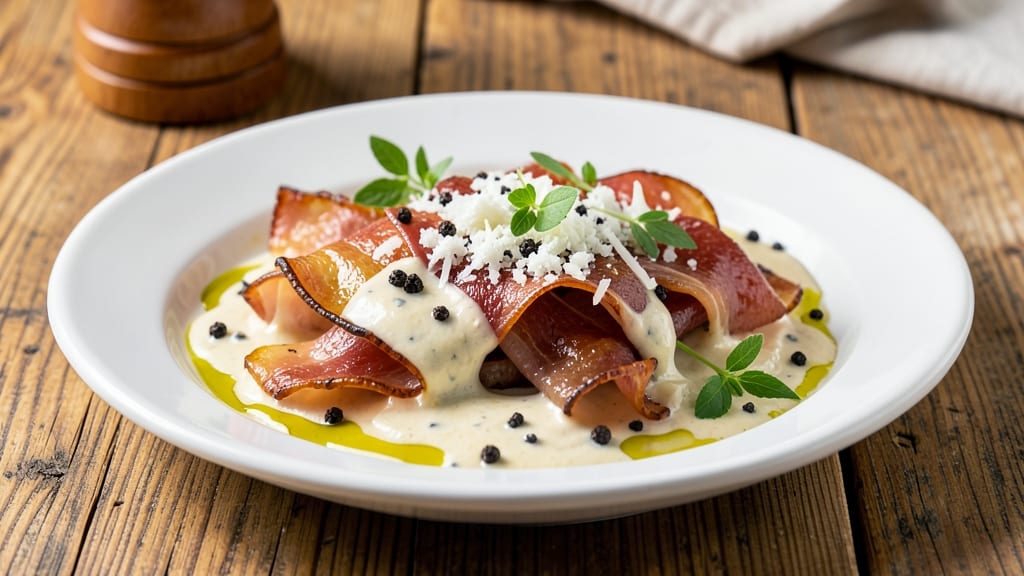
This authentic carbonara sauce recipe delivers the creamy, peppery richness of Rome’s classic dish without the risk of curdling.
The secret lies in tempering egg yolks with starchy pasta water—a technique that transforms simple ingredients into a velvety, golden sauce with just the right balance of smoky guanciale and sharp black pepper.
What sets this sauce apart is its foolproof emulsification method, where raw eggs blend seamlessly with rendered guanciale or pancetta and a touch of pecorino romano.
The key is patience—adding hot pasta water gradually to the egg mixture creates a silky texture that clings to every strand of pasta without breaking.
By the time you’re done, you’ll have a sauce that’s luxuriously creamy yet light, with a subtle peppery kick and a depth of flavor that only authentic guanciale can provide.
The best part? It comes together in just 10 minutes, making it perfect for weeknight dinners or impressing guests with restaurant-quality results.
Store leftovers in the fridge for up to 3 days, or freeze for later use—just reheat gently with a splash of pasta water to restore that signature silkiness. This is carbonara as it should be: rich, simple, and impossible to resist.
Ingredients for authentic carbonara sauce
Eight essential ingredients transform into Rome's velvety carbonara sauce—rich, peppery, and foolproof.
| Ingredient | Amount | Notes |
|---|---|---|
| Guanciale or Pancetta 🥓 | 6 oz | Diced into 1/4-inch pieces, cured pork preferred |
| Large Egg Yolks 🥚 | 4 whole | Fresh, room-temperature preferred |
| Pecorino Romano Cheese 🧀 | 1 cup | Freshly grated, aged minimum 8 months |
| Freshly Ground Black Pepper 🌶️ | ½ tsp | Coarse grind for authentic texture |
| Diamond Crystal Kosher Salt 🧂 | ¼ tsp | Fine grain for precise seasoning |
| Extra-Virgin Olive Oil 🫒 | 2 tbsp | High-quality, fruity variety |
| Spaghetti or Rigatoni Pasta 🍝 | 12 oz | Fresh or high-quality dried |
| Pasta Water 💧 | 1 ½ cups | Reserved starchy cooking water |
The guanciale or pancetta is non-negotiable for authentic flavor—guanciale delivers the classic smoky depth, while pancetta works in a pinch. Source guanciale from specialty Italian markets or well-stocked butchers; Costco often carries premium pancetta in vacuum-sealed packages. Look for thick-cut slices with visible marbling, as this ensures maximum flavor when rendered. If using pancetta, opt for uncured if available—it renders more cleanly. For Pecorino Romano, seek aged wheels from Italian delis; pre-grated versions lack the sharp, mineral notes essential for balance. Diamond Crystal kosher salt is preferred over table salt due to its finer texture, which dissolves cleanly into the sauce.
No guanciale? Pancetta is the next best option, though bacon in a desperate pinch (rendered thoroughly to remove smokiness) can substitute—reduce the amount by 20% to avoid overpowering. Pecorino Romano unavailable? Parmigiano-Reggiano works, though it lacks the peppery bite; Parmigiano-Reggiano DOP from Whole Foods or Trader Joe's offers the best quality. Fresh egg yolks are critical—room-temperature yolks emulsify better, so remove them from the fridge 10 minutes before use. For black pepper, freshly cracked is mandatory; pre-ground loses potency quickly. The olive oil should be cold-pressed and fruity—California Extra Virgin or Italian Ligurian brands excel. If your pasta water lacks starch, add 1 tbsp reserved pasta water per cup to the sauce during emulsification.
Store the sauce in an airtight container with a thin layer of olive oil on top to prevent a skin from forming. Fridge life is 3 days, though flavor peaks on day 2 when the sauce fully melds. For freezing, portion into ice cube trays—each cube reheats perfectly with a splash of pasta water. Never boil leftover sauce; instead, gently warm over low heat while stirring continuously. The sauce thickens as it cools, so add 1-2 tbsp pasta water when reheating to restore silkiness. Portion with pasta to prevent overcooking—carbonara should be served immediately after tossing.
Why You'll Love This Recipe
- No Egg Scramble Needed: I swear by this method—just toss the yolks straight into the pan with the hot pasta and guanciale. No pre-whisking, no mess, and no risk of turning it into scrambled eggs. That silky, velvety sauce just happens when you let the residual heat work its magic.
- Pecorino Magic: Between us, this is where the sauce gets its soul. That sharp, salty bite from aged Pecorino Romano cuts through the richness of the guanciale and yolks like a knife. Honestly? Skip the Parmesan—this is the real deal.
- Weeknight to Dinner Party: Same recipe, totally different vibes. Toss it with spaghetti for a 20-minute weeknight meal, or serve it on crispy pancetta-wrapped asparagus for a fancy dinner. The sauce’s simplicity lets the dish shine—no one will guess how little effort it took.
- Leftovers That Don’t Suck: Most pasta gets sad the next day, but not this. The sauce actually improves when reheated—just add a splash of pasta water and a crack of black pepper. My kids beg for it cold in lunchboxes, and my husband sneaks seconds at midnight. (Yes, even on a Tuesday night.)
Step-by-step instructions for authentic carbonara sauce
Mastering this classic Roman dish requires precise technique and quality ingredients.
Render the Guanciale Until Crispy
Heat a large skillet over medium heat and add the 6 oz guanciale or pancetta in a single layer. Let it render undisturbed for 8-10 minutes until the fat becomes golden and the meat develops crisp edges. I press down gently on the slices during the first minute—this prevents them from curling and ensures even contact with the pan.
Resist the urge to stir frequently. Instead, let the fat pool at the bottom of the pan and cook the meat in its own rendered juices. When the guanciale is deep golden brown and crispy, remove it from the pan with a slotted spoon and set aside, leaving the rendered fat behind. This fat is the foundation of your sauce—don't drain it.
Prepare the Egg and Cheese Mixture
While the guanciale cooks, whisk together the 4 whole large egg yolks, 1 cup freshly grated Pecorino Romano cheese, 0.5 teaspoon freshly ground black pepper, and 0.25 teaspoon Diamond Crystal kosher salt in a medium bowl. The mixture should be pale yellow and thick, almost custard-like in consistency.
I always use room-temperature eggs for this step—they emulsify better with the hot pasta water. If your eggs are cold, let them sit at room temperature for 10-15 minutes before using. The cheese should be finely grated—large chunks won't melt smoothly into the sauce. Set this mixture aside while you cook the pasta.
Cook the Pasta Al Dente
Bring a large pot of well-salted water to a rolling boil. Add the 12 oz spaghetti or rigatoni and cook until 1 minute before the package instructions indicate for al dente. This slight undercooking is crucial—the pasta will finish cooking in the sauce.
Before draining, reserve exactly 1.5 cups of pasta water in a measuring cup. This starchy water is essential for creating the silky sauce. I keep the measuring cup right next to the stove to ensure I don't forget this critical step. Drain the pasta but don't rinse it—the surface starch helps the sauce cling beautifully.
Combine Everything Off the Heat
Return the skillet with the rendered guanciale fat to low heat—just enough to maintain warmth, not enough to cook the eggs. Add the drained pasta and toss to coat evenly in the fat. Then, immediately add ½ cup of the reserved pasta water and toss vigorously for 30 seconds to create a loose emulsion.
Now comes the critical moment: remove the skillet completely from the heat. Add the egg-cheese mixture in a slow, steady stream while tossing the pasta continuously with a wooden spoon. The residual heat from the pasta and pan will gently cook the eggs into a creamy sauce without scrambling them.
Finish with Remaining Pasta Water
Continue tossing the pasta for 1-2 minutes until the sauce becomes thick and creamy. If it's too thick, add the remaining 1 cup pasta water 1 tablespoon at a time until you reach the perfect consistency—a glossy, velvety sauce that coats the pasta without being watery.
Return the crispy guanciale to the skillet and toss everything together. The sauce should now have a rich, golden hue with visible flecks of crispy pork. Serve immediately, as carbonara continues to thicken as it cools. The authentic version is never creamy from heavy cream—all the richness comes from the eggs, cheese, and rendered pork fat.
Pro Tips For Making Authentic Carbonara Sauce
- Render Fat Slow: Guanciale or pancetta needs patience—cook it on medium-low heat until the fat runs clear (not golden). I used to rush this, and the sauce ended up greasy and uneven. Let those fat pools build up; you’ll need every drop.
- Grate Cheese Fresh: Skip the pre-grated Pecorino Romano—it’s packed with anti-caking agents that turn your sauce grainy. Use a microplane or fine grater right before mixing, and keep it in the fridge until the last second to avoid clumping.
- Off Heat for Yolks: The pasta water should stop boiling before hitting the egg-yolk-cheese mix—otherwise, you’ll scramble them. Pour the pasta into the saucepan first, then remove it from heat and stir vigorously. (Yes, it’ll look weird. That’s the point.)
- Reserve Starchy Water: Save a generous half-cup of pasta water before draining—carbonara relies on that starch to bind the sauce. If it’s too thin, add a splash; if too thick, loosen with a splash. No guesswork, just physics.
Pro cooking tips for perfect results
Temperature Control
The secret to a perfect carbonara sauce lies in precise heat management. Keep the guanciale fat at low heat after rendering—medium-low is ideal—to maintain warmth without cooking the eggs.
I use a thermometer to monitor the pan temperature between 170-180°F during the emulsification step. If the pan gets too hot, the eggs will scramble instead of emulsify, ruining the sauce. 🌡️
Emulsification Mastery
Emulsifying the sauce off the heat is critical—this is where the magic happens. Add the egg-cheese mixture slowly in a thin stream while tossing vigorously with a wooden spoon. The residual heat from the pasta (around 150°F) will gently cook the eggs into a creamy sauce.
If the sauce breaks, immediately add 1 tablespoon of pasta water to reset the emulsion. I like to use a hand mixer for this step to ensure a silky texture.
Pasta Water Ratio
Never skip reserving starchy pasta water—this is the secret weapon for a velvety sauce. The ideal ratio is 1.5 cups of pasta water per 12 oz of pasta, but adjust based on your pasta’s starchiness.
If your water lacks starch, add 1 tbsp of cornstarch dissolved in 2 tbsp cold water to the reserved portion. The starch acts as a natural emulsifier, helping the sauce cling to the pasta without breaking. 💧
Cheese Grating Matters
Freshly grated Pecorino Romano is non-negotiable for authentic flavor. Use a fine-mesh grater or microplane to achieve a powdery consistency—pre-grated cheese contains anti-caking agents that prevent proper melting. For extra sharpness, age the cheese for 3-4 days in the fridge before grating.
If you’re using Parmigiano-Reggiano, mix it 50/50 with Pecorino for the classic Roman balance.
Wooden Spoon Technique
A wooden spoon is essential for tossing carbonara—it prevents the sauce from sticking and allows for even distribution. Use a long-handled spoon to reach all corners of the pan. Toss continuously in one direction (clockwise or counterclockwise) to create a smooth, glossy finish.
If the sauce starts to thicken too quickly, add pasta water 1 tbsp at a time while tossing. The goal is a silky, clingy sauce that coats every strand of pasta. ✨
Guanciale vs. Pancetta
While guanciale is the gold standard, pancetta works in a pinch. The key difference is fat content—guanciale has 30% less fat, making it ideal for authentic carbonara. If using pancetta, reduce the amount by 20% to avoid an overly rich sauce.
For extra flavor, cube the pancetta slightly smaller (about ¼-inch pieces) to ensure even cooking. Always render the fat until golden brown—this develops the deep, smoky flavor that defines carbonara. 🥓
Nutrition facts
Frequently asked questions
Why does authentic carbonara never use cream?
The classic Roman recipe relies on eggs, cheese, and rendered pork fat for richness—no cream is needed! Adding cream was a mid-20th century American adaptation. The traditional method uses the natural emulsification of egg yolks with starchy pasta water to create that signature velvety texture. Cream would make it too heavy and mask the authentic flavors.
Can I make carbonara sauce ahead of time?
Yes, but with care! Store the sauce in an airtight container with a thin layer of olive oil on top to preserve freshness. It keeps well in the fridge for 3 days or frozen for 3 months. To reheat, warm gently over low heat with a splash of pasta water—never boil it, or the sauce will break. The texture will be slightly thicker when cold, so adjust with pasta water when reheating.
What if my sauce curdles when I combine everything?
Don't panic! Immediately remove the pan from heat and add 1 tablespoon of hot pasta water while whisking vigorously. The starch in the water helps reset the emulsion. If it's still broken, add another splash and whisk until smooth. The key is working off the heat—adding hot pasta water gradually to the egg mixture prevents scrambling. For next time, ensure your eggs are room temperature and add the egg-cheese mixture very slowly.
Is there a vegetarian version of this sauce?
Traditional carbonara relies on pork fat for flavor, but you can adapt it! Replace guanciale with smoked tofu or mushroom duxelles rendered in olive oil. Use nutritional yeast for a cheesy depth instead of Pecorino. The texture will differ slightly, but the technique remains the same—emulsify eggs with starchy water. For best results, add 1 tbsp cornstarch to the egg mixture to help bind the sauce.
How do I know when my guanciale is perfectly rendered?
Look for deep golden brown edges and a crisp texture. The fat should be shimmering and sizzling gently when you press down on the slices. If it's still pale or rubbery after 10 minutes, it needs more time. Never rush this step—properly rendered guanciale releases its smoky flavor that defines authentic carbonara. The meat should pull away cleanly from the pan when ready.