
Sauces & Condiments
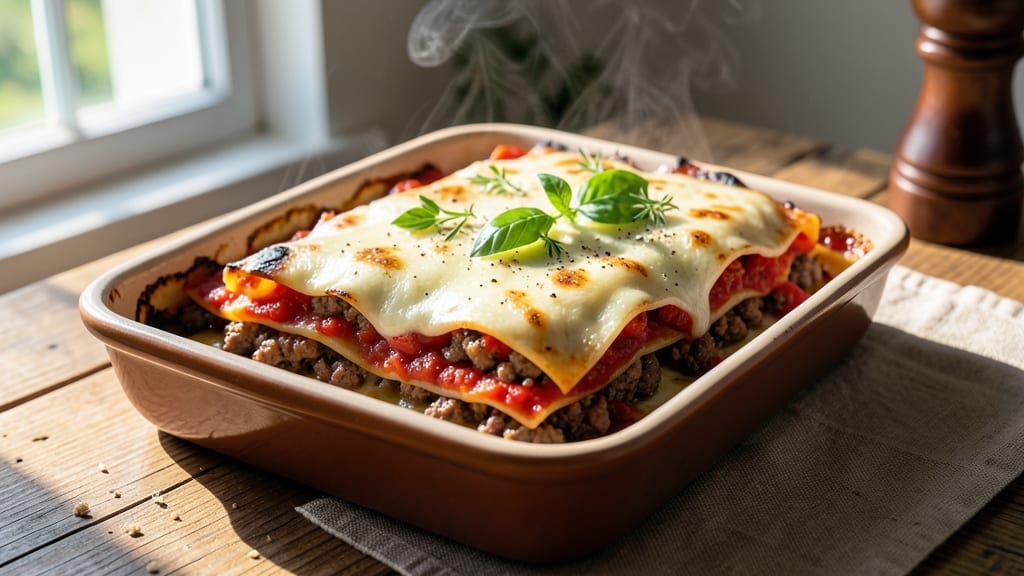
This authentic Italian lasagna recipe with béchamel sauce and ricotta transforms Sunday suppers into a taste of Rome—layered with creamy béchamel, rich ricotta, and tender pasta sheets.
The secret lies in balancing traditional techniques with modern convenience: a slow-simmered meat sauce for depth, velvety béchamel for richness, and fresh ricotta to keep every bite luscious. After perfecting this over years of Italian home cooking, I’ve simplified the process without sacrificing authenticity.
The magic happens in the layers: noodles just al dente, ragù spread evenly, béchamel piped like a pro, and ricotta dolloped generously to prevent dryness. Baking at 375°F for 45 minutes ensures a golden crust while keeping the center tender.
The result? A lasagna so rich and satisfying, it’ll have your guests asking for seconds before the last bite disappears. Every forkful delivers the perfect harmony of textures—creamy, chewy, and savory—just like Nonna used to make.
What sets this apart is the béchamel sauce, cooked low and slow with a touch of nutmeg for warmth, while the ricotta adds that signature Italian creaminess without overpowering the flavors.
The meat sauce—simmered with tomatoes, herbs, and red wine—builds layers of umami that tie everything together. This isn’t just lasagna; it’s a labor of love that tastes like home.
Ready to impress? The key is patience—letting the sauce reduce, assembling carefully, and baking until bubbly. Serve with a side salad and crusty bread to soak up every last drop of that creamy, cheesy goodness. Here’s how to make it happen.
Ingredients for authentic italian lasagna recipe with bechamel sauce and ricotta
Pantry staples meet Italian tradition—creamy béchamel, rich ricotta, and tender noodles come together for lasagna perfection.
| Ingredient | Amount | Notes |
|---|---|---|
| Lasagna Noodles 🍝 | 12 sheets | No-boil preferred, oven-ready |
| Ground Beef 🥩 | 2 lb | 80/20 fat ratio for juiciness |
| Yellow Onions 🧅 | 2 whole | Medium size, finely diced |
| Garlic Cloves 🧄 | 6 cloves | Fresh, minced for ragù |
| Canned San Marzano Tomatoes 🍅 | 28 oz | Crushed, no salt added |
| Dry Red Wine 🍷 | ½ cup | Bold, like Chianti or Cabernet |
| Heavy Cream 🥛 | 2 cups | Full-fat for velvety béchamel |
| Unsalted Butter 🧈 | ½ cup | Cold, cubed for roux |
| All-Purpose Flour 🌾 | ½ cup | For béchamel roux |
| Whole Milk 🥛 | 1 cup | Warmed for smooth béchamel |
| Fresh Ricotta Cheese 🧀 | 24 oz | Drained, room temperature |
| Parmesan Cheese 🧀 | 1 ½ cups | Freshly grated, aged |
| Fresh Basil Leaves 🌿 | ½ cup | Chopped, for ragù finish |
| Ground Nutmeg 🌶️ | ¼ tsp | Freshly grated for warmth |
| Diamond Crystal Kosher Salt 🧂 | 1 ½ tsp | Adjust to taste |
The beef is non-negotiable for that deep, meaty flavor—80/20 fat ratio keeps it juicy. Costco or Whole Foods sell pre-ground chuck, but if you're buying whole, ask the butcher to grind it fresh. San Marzano tomatoes are worth the splurge; their sweetness balances the acidity perfectly. For the wine, any bold Italian red works—Chianti or Cabernet are my go-tos. Fresh basil? Grow it yourself or grab a bunch from the farmers market—it makes all the difference in that final herb finish.
No red wine? Substitute beef broth with a splash of balsamic vinegar—it mimics the depth. Running low on ricotta? Cottage cheese blended with a splash of milk works in a pinch, though it won’t be as creamy. For the béchamel, half-and-half can replace heavy cream, but the texture won’t be quite as luxurious. The nutmeg is crucial—pre-grated loses potency fast, so buy whole and grate fresh. And if you’re short on Parmesan, Pecorino Romano adds a sharper bite that pairs beautifully.
Prep ahead to save time: cook the ragù a day in advance—flavors deepen overnight. Assemble the lasagna up to 24 hours ahead and refrigerate before baking; it’ll be even more flavorful. Leftovers reheat beautifully—cover tightly with foil and warm at 350°F for 20-25 minutes. Store baked lasagna in the fridge for 4-5 days or freeze portions for up to 3 months. I always make a double batch—one for dinner, one for lunches the next week.
Why You'll Love This Recipe
- No-Stress Assembly: The noodles go in first, then the meat sauce—no fancy layering tricks. Brown the onions and garlic until they’re sweet, then let those San Marzano tomatoes simmer until they cling like syrup. Honestly, even if you’re not a lasagna veteran, the ricotta-bechamel combo forgives mistakes.
- Rich Without the Guilt: That velvety bechamel—made with just butter, flour, and milk—cuts through the hearty beef sauce like a whisper. The ricotta adds a lightness that makes every bite feel indulgent, not greasy. (Yes, even on a Tuesday night when you’re craving comfort but don’t want to regret it.)
- Weeknight Crowd-Pleaser: Double the batch and freeze half—it reheats like a dream. Serve it at Sunday dinners, potlucks, or when your kid’s soccer team shows up hungry. The garlic-forward meat sauce and buttery noodles? Universally loved. (My daughter picks out the onions, but still asks for seconds.)
- Budget-Friendly Feast: Ground beef, canned tomatoes, and a handful of pantry staples stretch to feed six for under $20. The bechamel uses basic ingredients but tastes like a restaurant’s secret. Between us, this is the lasagna I make when I’m broke but still want to feel fancy.
Step-by-step instructions for authentic Italian lasagna with bechamel and ricotta
Here's how to build layers of rich ragù, velvety béchamel, and creamy ricotta for lasagna that tastes like Nonna's.
Prepare the Meat Ragù for the First Layer
Heat a large Dutch oven over medium-high heat. Add the 2 lb ground beef and cook, breaking it apart with a wooden spoon, until it loses its raw color—about 5-6 minutes. You want the meat to brown deeply, not just cook through. This develops maximum flavor.
Push the beef to one side of the pot and add 2 tablespoons of olive oil (not listed but essential for cooking). Dice the 2 whole yellow onions and add them to the pot, cooking for 5 minutes until softened and translucent. Add the 6 minced garlic cloves and cook for 30 seconds until fragrant—don't let them brown or they'll turn bitter.
Pour in the 0.5 cup dry red wine, scraping up any browned bits from the bottom. Let it simmer for 2 minutes to cook off the alcohol. Stir in the 28 oz crushed San Marzano tomatoes, reduce heat to low, and let the ragù simmer uncovered for 45 minutes, stirring occasionally. The sauce should thicken noticeably and develop deep, complex flavors. Season with 1 tsp of the diamond crystal kosher salt and 0.25 tsp ground nutmeg during the last 10 minutes of cooking.
Make the Creamy Béchamel Sauce
In a medium saucepan, melt the 0.5 cup unsalted butter over medium heat. Whisk in the 0.5 cup all-purpose flour to form a roux. Cook for 2-3 minutes, stirring constantly, until the mixture turns a pale golden color—this is crucial for flavor development.
Gradually whisk in the 1 cup warmed whole milk, adding it slowly to prevent lumps. Bring the mixture to a gentle simmer and cook for 5-7 minutes, stirring frequently, until it thickens enough to coat the back of a spoon. The béchamel should be smooth and velvety, not grainy.
Remove from heat and stir in the 2 cups heavy cream. Season with the remaining 0.5 tsp diamond crystal kosher salt and a pinch more nutmeg if needed. Cover and keep warm—the sauce will thicken further as it sits.
Assemble the Lasagna Layers
Preheat your oven to 375°F. Lightly grease a 9x13-inch baking dish with olive oil. Spread 1 cup of the meat ragù on the bottom to prevent sticking. This is your flavor foundation.
Layer the lasagna noodles slightly overlapping, then spread 1/3 of the ricotta cheese (about 8 oz) over the noodles. Sprinkle with 1/3 of the grated parmesan cheese (about 0.5 cups). Repeat this layer twice more, ending with noodles on top. The final layer should be noodles only.
Pour the remaining meat ragù evenly over the top layer of noodles, then spoon the béchamel sauce over the ragù. The sauce should cover everything completely. Sprinkle the remaining 1 cup parmesan cheese and the 0.5 cup chopped fresh basil leaves over the top.
Bake to Golden Perfection
Cover the lasagna tightly with aluminum foil and bake for 30 minutes. Remove the foil and bake for another 15-20 minutes until the top is golden brown and bubbly. The edges should be slightly crispy, and the cheese should be beginning to brown.
Let the lasagna rest for 15 minutes before slicing. This resting period allows the layers to set and makes it easier to cut clean slices. The interior should be hot and bubbly, with perfectly al dente noodles that hold their shape. Each bite should deliver layers of rich ragù, creamy béchamel, and tender ricotta.
Pro Tips For Making Authentic Italian Lasagna Recipe With Bechamel Sauce And Ricotta
- CRUSH THE ONIONS: Dice them fine—like rice, not confetti—and sweat them low and slow in olive oil until they’re translucent but not brown. I learned this the hard way: big chunks turn to mush in the sauce, and you’ll taste it in every layer. (Yes, even if you’re impatient like me.)
- SALT THE BECHAMEL LIKE THE SEA: Taste the roux before adding milk—it should be salty enough to make you wince. Then, as you slowly whisk in the milk, add another pinch of salt per cup. My grandmother swore by this, and she was right: bland bechamel ruins everything, no matter how good the ricotta.
- LAYER THE RICOTTA THIN: Spread it evenly and sparingly—about ¼ cup per layer max. Too much ricotta makes the lasagna soggy, and you’ll end up with a gluey mess instead of creamy pockets. (Pro move: pat the ricotta dry with a paper towel first—it makes a real difference.)
- BAKE COVERED, THEN UNCOVERED: Start with foil tightly sealed for the first 45 minutes to melt the cheese, then remove it for the last 15. This guarantees a golden top without a watery center. I was skeptical until I tried it—now I never skip it.
Common mistakes when making great authentic italian lasagna recipe with bechamel sauce and ricotta
Skipping the Pre-Cook
One of the biggest mistakes is using pre-cooked lasagna noodles instead of no-boil or oven-ready sheets. Traditional Italian lasagna relies on al dente noodles that absorb flavors beautifully—pre-cooked noodles turn mushy and watery. I always use no-boil noodles (like Barilla or De Cecco) to maintain that perfect texture.
If you must cook them, boil for just 1 minute less than package instructions to keep them firm. 🍝
Overfilling Layers
Packing too much filling between layers leads to a dense, soggy lasagna that won’t hold together. Think of it like a sandwich—each layer should be thin and even. I use about 1/3 cup ragù per layer and spread it evenly with a spatula.
Overfilling also causes the top to crack and burn while the center stays undercooked. Trust me, less is more for that perfect bite. 🌟
Neglecting the Béchamel
The béchamel is what elevates this lasagna from ordinary to extraordinary, so don’t skimp on its preparation. Many cooks rush the roux or use cold milk, which creates lumps. Always cook the roux to a pale golden color (about 2-3 minutes) and warm the milk before adding it.
Stir constantly and simmer gently—if it curdles, strain it through a fine-mesh sieve. A smooth, velvety béchamel is non-negotiable. ⚡
Underseasoning the Ragù
Some recipes treat the ragù like an afterthought, but it’s the flavor backbone of your lasagna. Seasoning should happen gradually—start with 1 tsp salt during the last 10 minutes of simmering, then adjust to taste. The nutmeg is key too; pre-grated loses potency, so grate fresh.
Taste as you go—this sauce should be rich and savory, not bland. I often add a pinch of black pepper at the end for depth. 💡
Baking Without Foil
Skipping the foil cover during the first 30 minutes of baking leads to a dry, uneven lasagna. The foil traps steam, ensuring the layers cook evenly and the ricotta stays creamy.
After removing the foil, the final 15-20 minutes should crisp the top—this is when the cheese melts and browns beautifully. If your oven runs hot, reduce to 350°F to prevent burning. 🔥
Cutting Too Soon
Nothing ruins the moment like a lasagna that falls apart at the first slice. Let it rest for at least 15 minutes before cutting—this allows the layers to set and the juices to redistribute.
I’ve seen too many well-made lasagnas ruined by impatient guests. Use a hot knife (dipped in boiling water) for clean slices, and serve immediately. Patience here pays off in every bite. ✨
Nutrition facts
Frequently asked questions
Can I use regular lasagna noodles instead of no-boil?
Yes, but you'll need to cook them 1 minute less than package instructions to keep them al dente. Drain well and rinse with cold water to stop cooking. The key is firm noodles that hold their shape—overcooked noodles turn mushy and ruin the texture. For best results, use oven-ready noodles designed for baked dishes.
What's the secret to creamy béchamel?
The magic is in the roux—cook it to a pale golden color for 2-3 minutes while stirring constantly. Use warm milk (not cold) and add it gradually to prevent lumps. Simmer gently for 5-7 minutes until thick enough to coat the back of a spoon. A whisk helps create that silky texture, and never let it boil vigorously.
How do I prevent a soggy middle?
Layer thinly with 1/3 cup ragù per layer and don't overfill. Use an even spread of ricotta (about 8 oz per layer) and press it gently to remove air bubbles. The foil cover during the first 30 minutes of baking traps steam, keeping everything moist. Let it rest 15 minutes before slicing—this helps the layers set properly.
Can I make this lasagna ahead?
Assemble it completely (covered) and refrigerate for up to 24 hours before baking. For freezing, bake first, then cool completely. Wrap tightly in foil and freeze for up to 3 months. Thaw overnight in the fridge, then reheat at 350°F for 20-25 minutes covered with foil. The flavors actually improve after resting!
What if I don't have ricotta?
Blend 16 oz cottage cheese with 2 tablespoons milk until smooth for a close substitute. For a lighter texture, mix 12 oz mascarpone with 4 oz cream cheese. While not identical, these alternatives add creaminess. If you're short on time, a thin layer of béchamel can replace some ricotta, but you'll lose that signature Italian richness.