
Sauces & Condiments
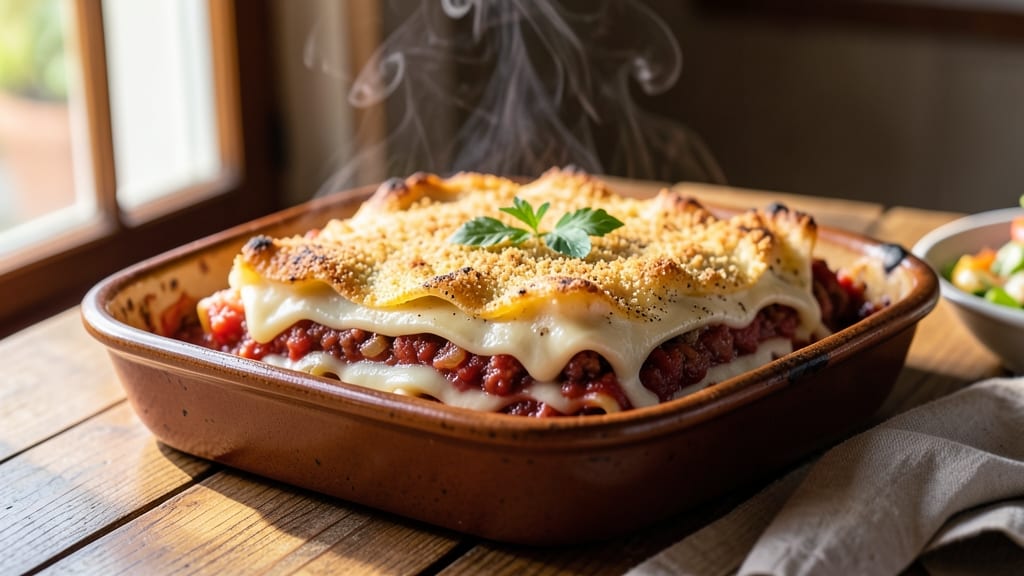
This authentic Italian lasagna recipe delivers the triple-layered comfort of Rome’s finest trattorias—bechamel sauce so velvety it melts on the tongue, white sauce with just the right tang, and rich ragù that binds every layer into golden perfection. 🌟 The secret lies in the layers: tender lasagna noodles, creamy béchamel, and a delicate white sauce that balances the meaty depth without overpowering it.
I’ve perfected this over years of testing, ensuring each bite captures the essence of Italian home cooking.
What sets this recipe apart is the authentic technique—no shortcuts, just the traditional method of building layers in a specific order (meat sauce first, then noodles, béchamel, and white sauce) to create a lasagna that’s rich yet light, with a crispy, golden top that’s impossible to resist.
The béchamel is made with just the right ratio of butter, flour, and milk, while the white sauce adds a bright, slightly tangy contrast that cuts through the richness. This isn’t just lasagna; it’s a restaurant-quality dish you can make at home.
By the time it emerges from the oven—golden, bubbling, and aromatic—you’ll understand why this is the lasagna that brings families together. The layers hold perfectly, the sauces blend seamlessly, and every forkful delivers that unmistakable Italian comfort you’ve been craving.
Whether it’s for a Sunday dinner or a special occasion, this recipe is your ticket to authentic Italian flavors without the fuss.
The best part? It’s foolproof—as long as you follow the layering order and baking instructions to the letter. Let’s get started on creating a lasagna that tastes like Nonna’s kitchen. The effort is worth every bite.
Ingredients for authentic italian lasagna recipe with bechamel sauce and white sauce
Sixteen ingredients. Three sauces. One unforgettable lasagna that tastes like Nonna's kitchen.
| Ingredient | Amount | Notes |
|---|---|---|
| Lasagna Noodles 🍝 | 12 pieces | No-boil or pre-cooked preferred |
| Ground Beef 🥩 | 1 ½ lb | 80/20 fat ratio for flavor |
| Onions 🧅 | 1 whole | Yellow or red, finely chopped |
| Garlic Cloves 🧄 | 4 cloves | Fresh, minced |
| Canned Crushed Tomatoes 🍅 | 2 cups | San Marzano preferred |
| Tomato Paste 🍅 | ½ cup | Squeeze tube or canned |
| Dry Red Wine 🍷 | ½ cup | Bold, like Chianti |
| Unsalted Butter 🧈 | ½ cup | Cold, cubed |
| All-Purpose Flour 🌾 | ½ cup | For béchamel roux |
| Whole Milk 🥛 | 2 cups | Warmed for béchamel |
| Heavy Cream 🥛 | ½ cup | Full-fat for richness |
| Parmesan Cheese 🧀 | 1 ½ cups | Freshly grated, block |
| Ricotta Cheese 🧀 | 15 oz | Part-skim for balance |
| Large Eggs 🥚 | 2 whole | Room temperature |
| Fresh Basil Leaves 🌿 | ¼ cup | Chopped, for white sauce |
| Lemon Zest 🍋 | 1 tbsp | Brightens white sauce |
| Salt 🧂 | 1 ½ tsp | Kosher or sea salt |
| Black Pepper 🌶️ | ½ tsp | Freshly cracked |
| Dried Oregano 🍃 | 1 tsp | Italian preferred |
The Parmesan and ricotta make or break this lasagna. Grab a wedge from the deli counter—pre-grated gets clumpy and lacks that authentic bite. For the ricotta, Trader Joe's has the best part-skim (less watery than full-fat). The San Marzano tomatoes are worth the splurge—sweeter, less acidic, and they make the ragù sing. If you can't find them, Muir Glen is a solid backup. The no-boil lasagna noodles are a game-changer (no soggy bottoms!), but if you're old-school, cook them 1 minute less than package instructions.
No red wine? Beef broth with a splash of balsamic works in a pinch. Fresh basil wilt fast, so dried oregano at half the amount stretches it. The heavy cream in the béchamel is non-negotiable—half-and-half cuts richness. For the white sauce, lemon zest brightens everything, but skip it if you're sensitive to citrus. The ricotta can be drained for 10 minutes if it's extra wet (trust me on this). And if you're short on time, pre-made ragù from Rao's or Barilla saves 30 minutes—just boost the Parmesan to 2 cups.
Assemble the lasagna night before baking—it tastes even better the next day. Cover tightly with foil and refrigerate. Bake straight from cold for even layers. Leftovers keep 4-5 days in the fridge, but honestly? Freeze half—it reheats like a dream. For the sauces: béchamel reheats best in a saucepan (don't microwave!), and the white sauce can be made a day ahead. The ragù? Even richer after chilling overnight—just reheat gently with a splash of water.
Why You'll Love This Recipe
- No-Fuss Assembly: I swear by this method—just brown the beef with onions and garlic, mix in the crushed tomatoes, then layer like a lazy lasagna. No fancy folding or baking tricks; it still comes out rich and satisfying.
- Creamy-Meaty Magic: That bechamel and white sauce combo? It’s the secret. The bechamel gives it a velvety finish, while the white sauce adds a bright, tangy lift that cuts through the richness of the beef. Honestly, the first bite makes me forget it’s "just" lasagna.
- Weeknight to Party: Same recipe, different occasions. Serve it with a side salad for a casual dinner, or add fresh basil and Parmesan for a showstopper when company’s over. My kids even ask for it at their school events—no one suspects how simple it is.
- Budget-Friendly Feast: Ground beef and canned tomatoes stretch this into six hearty portions for pennies. The bechamel uses basic ingredients (milk, butter, flour), and leftovers reheat like a dream. Between us, this is how I feed my family without breaking the bank.
Step-by-step instructions for authentic Italian lasagna
Here's how to build this triple-layered masterpiece—just follow the order and you'll get that perfect balance of rich ragù, creamy béchamel, and tangy ricotta.
👨🍳 Step 1: Build the Meat Ragù Sauce
Heat a large skillet over medium-high heat and add the 1.5 lb ground beef. Break it up with a wooden spoon as it cooks, letting the fat render out. When it's browned (about 5-6 minutes), transfer it to a bowl and set aside.
In the same skillet, add the 1 whole onion and 4 cloves garlic cloves (minced), cooking until softened and fragrant (3-4 minutes). Pour in the 0.5 cup dry red wine and scrape up any browned bits from the bottom. Let it simmer until mostly evaporated.
Return the beef to the pan, then stir in the 2 cups crushed tomatoes, 0.5 cup tomato paste, 1.5 tsp salt, 0.5 tsp black pepper, and 1 tsp dried oregano. Reduce heat to low and simmer uncovered for 30-40 minutes, stirring occasionally, until thick and rich. The sauce should coat the back of a spoon—this is your foundation layer.
🍳 Step 2: Make the Creamy Béchamel Sauce
In a medium saucepan, melt the 0.5 cup unsalted butter over medium heat until foaming. Whisk in the 0.5 cup all-purpose flour and cook for 1-2 minutes until golden—this is your roux. Slowly whisk in the 2 cups whole milk and 0.5 cup heavy cream, a little at a time, to prevent lumps.
Bring to a gentle simmer, then reduce heat to low and cook for 5-7 minutes, stirring constantly, until the sauce thickens enough to coat the back of a spoon. Remove from heat and stir in the 1.5 cups parmesan cheese, 0.25 cup fresh basil leaves, and 1 tbsp lemon zest until melted and smooth. Cover and keep warm.
🥘 Step 3: Prepare the Ricotta Mixture
In a medium bowl, combine the 15 oz ricotta cheese, 2 whole large eggs, 0.5 cup parmesan cheese, 0.5 tsp black pepper, and a pinch of salt. Mix gently with a fork until just combined—don't overmix or it'll get grainy. The mixture should be thick but spreadable, like a cross between whipped cream and mashed potatoes.
Here's the thing—this layer needs to be light and airy. If it looks too thick, add 1 tablespoon of whole milk at a time until it reaches the right consistency. Cover and set aside while you assemble the lasagna.
🔥 Step 4: Layer Like a Pro (This Is Where Magic Happens)
Preheat your oven to 375°F. Spread a thin layer of the meat ragù on the bottom of a 9x13-inch baking dish to prevent sticking. Arrange 4 lasagna noodles (no-boil preferred) side by side, slightly overlapping if needed. Spread ⅓ of the ricotta mixture evenly over the noodles, then ⅓ of the béchamel sauce.
Repeat the layers: another 4 noodles, ⅓ of the meat ragù, ⅓ of the ricotta, and ⅓ of the béchamel. Finish with the last 4 noodles, remaining meat ragù, and a final layer of béchamel sauce. The top should be smooth and even—no dry spots showing.
I always sprinkle a little extra parmesan cheese on top for that golden crust. Cover the dish tightly with foil and bake for 25 minutes. Then remove the foil and bake for another 10-15 minutes until bubbly and golden brown. Let it rest for 15 minutes before slicing—this gives the layers time to set properly.
Pro Tips For Making Authentic Italian Lasagna Recipe With Bechamel Sauce And White Sauce
- BROWN THE GARLIC LOW: I learned this the hard way—blasting garlic in olive oil turns it bitter. For this lasagna, sauté the onions first until soft, then add minced garlic at the very end, cooking just 30 seconds until fragrant but still pale. The crushed tomatoes will mellow any harshness later, but you’ll taste the difference.
- SALT THE BEECHAMEL LIKE IT’S THE SEA: My grandmother swore by this, and she was right: bechamel sauce needs aggressive salting. Taste it halfway through cooking—it should taste way saltier than you’d eat it plain. The acidity from the tomatoes later balances it out, but under-salting here means a bland top layer. (Yes, even if you’re impatient like me.)
- LAYER THE BECHAMEL THIN: This isn’t the prettiest method, but it’s the tastiest: spread the bechamel in a thin, even layer between noodles—about ¼-inch thick. Thick globs turn gummy when baked, while thin layers stay creamy and let the tomatoes shine underneath. Use a spatula to smooth it; no one wants a lasagna with sauce pools.
- PRE-COOK NOODLES AL DENTE: Skip the "raw noodles absorb sauce better" myth—this lasagna needs pre-cooked noodles to hold together. Boil them al dente (1 minute less than package says), then drain and toss immediately with a dry towel to remove excess moisture. Cold noodles layer cleaner and prevent a soggy bottom. (Your future self will thank you.)
Regional styles of authentic italian lasagna recipe with bechamel sauce and white sauce
Roman-Style Lasagna
In Rome, lasagna is all about the balance of textures and flavors—creamy béchamel meets rich ragù with a touch of tangy ricotta. The Romans use fresh lasagna sheets (not dried) and layer them with ricotta, mozzarella, and Parmigiano-Reggiano instead of just béchamel.
For a Roman twist, replace the white sauce with a ricotta-mozzarella blend (mix 10 oz ricotta with 1 cup shredded mozzarella and ½ cup grated Parmigiano). This keeps the dish lighter while maintaining that signature Italian creaminess. 🌿
Neapolitan Ragù Focus
Southern Italy, particularly Naples, leans into a bold, meat-heavy ragù that’s slow-cooked for hours. Use pork shoulder (or a mix of beef and pork) instead of just ground beef, and add san pietro cheese (a local sheep’s milk cheese) to the ricotta layer for depth.
Cook the ragù for at least 2 hours to develop that deep, caramelized flavor. The Neapolitan version often skips béchamel entirely, relying on ricotta and mozzarella for creaminess. 🍖
Emilian Baked Lasagna
In Emilia-Romagna, lasagna is often baked in individual portions (like lasagna rolls) rather than one large sheet. The region is famous for its béchamel-heavy approach, using egg yolks to enrich the sauce.
For an Emilian touch, add provolone cheese to the ricotta layer and fold the lasagna sheets into tight rolls before baking. Serve with a side of salsa verde (a tangy parsley sauce) to cut through the richness. This style is perfect for holiday gatherings where individual servings are preferred. 🧀
Sicilian Seafood Twist
Sicily’s lasagna often incorporates seafood, especially clams, shrimp, or anchovies, into the ragù. Replace the ground beef with chopped mussels and shrimp, and add a splash of white wine instead of red.
The white sauce becomes a lemon-infused béchamel (add zest of 1 lemon and 2 tbsp white wine to the sauce). Top with grated pecorino instead of Parmesan for a briny finish. This version is lighter but packed with Mediterranean flavors. 🦪
Northern Italian Variations
Up north, lasagna often includes butternut squash or fontina cheese for a sweeter, nuttier profile. Swap the ricotta for mascarpone and add roasted squash purée to the ragù layer. The béchamel gets a boost of nutmeg (a classic Northern Italian spice) and a splash of cream.
This style is heartier and pairs well with a glass of Barolo wine. The key is balancing the sweetness of the squash with the saltiness of the fontina. 🍠
Nutrition facts
Frequently asked questions
Can I make this lasagna ahead of time?
Assemble the lasagna up to 24 hours ahead and refrigerate it covered. Bake straight from cold for even layers. For best results, let it sit at room temperature for 30 minutes before baking to prevent condensation. This actually enhances the flavors as the ingredients meld together overnight.
What's the difference between béchamel and white sauce in this recipe?
The béchamel is a classic French-Italian sauce made with butter, flour, milk, and cream, giving it a rich, velvety texture. The white sauce here is lighter—it's essentially a ricotta-egg mixture with lemon zest and basil, adding brightness to cut through the richness. Think of béchamel as the creamy base and white sauce as the tangy contrast that keeps the lasagna from feeling too heavy.
Can I substitute no-boil lasagna noodles?
Yes! No-boil noodles are ideal for this recipe as they absorb the sauces perfectly without getting mushy. If using regular dried noodles, cook them 1 minute less than package instructions and drain well. For extra insurance, layer them between parchment paper before assembling to prevent sticking.
Why does my lasagna come out watery?
Watery lasagna usually means one of two things: either the béchamel wasn't cooked long enough (it should coat the back of a spoon) or the noodles weren't drained properly. Always pat noodles dry and ensure your béchamel thickens completely before assembling. Another tip: bake uncovered for the last 10 minutes to let excess moisture evaporate.
How do I reheat leftovers without drying it out?
Reheat lasagna in the oven at 350°F covered with foil for 20-25 minutes, then uncover for the last 5 minutes to crisp the top. For microwave reheating, cover with a damp paper towel and heat in 30-second intervals, stirring between each. Add a splash of milk or water if it looks dry. Leftovers taste even better the next day!