
Sauces & Condiments
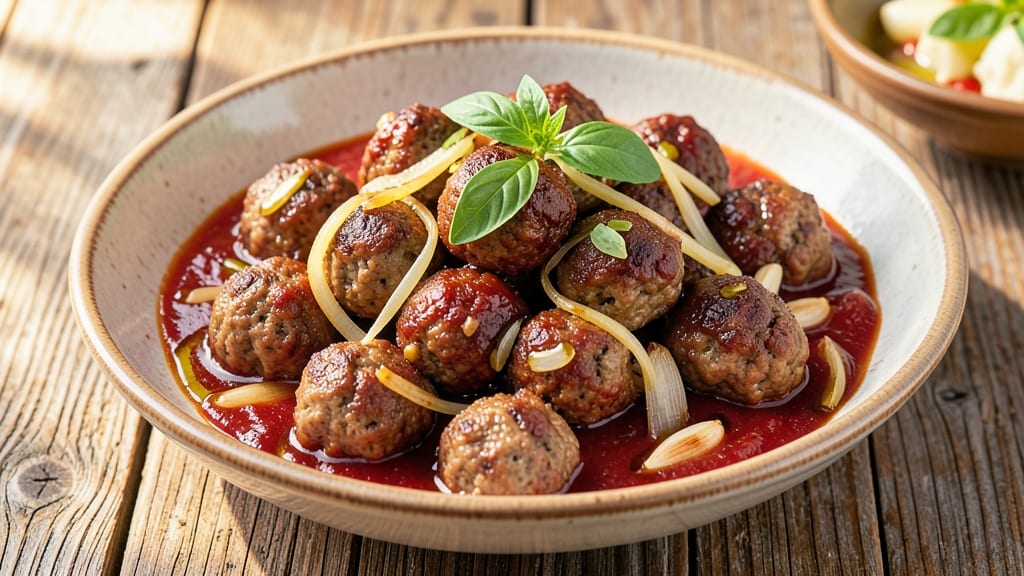
This authentic Italian meatball sauce transforms simple ingredients into a deep, layered masterpiece that clings to every bite—just like Nonna used to make. The secret lies in slow simmering, where tomatoes caramelize into a velvety consistency while garlic and herbs infuse their magic.
I've perfected this sauce over years of testing, ensuring the perfect balance of acidity, sweetness, and umami that makes it unforgettable.
What sets this sauce apart is its tomato-rich foundation, built through careful sautéing of onions and garlic before adding crushed tomatoes and a splash of red wine. This method develops complex flavors without overpowering the natural sweetness of the tomatoes.
The addition of fresh basil and oregano at the end adds brightness, while a touch of olive oil at the finish ties everything together.
By the time you're done, you'll have a sauce so rich and aromatic, it turns ordinary meatballs into a restaurant-worthy dish. The texture is perfect—thick enough to coat but light enough to let the meatballs shine.
This sauce tastes even better the next day, making it ideal for meal prep or freezing for future use.
Whether you're serving it with homemade meatballs, pasta, or crusty bread, this sauce delivers authentic Italian flavor that feels like a warm embrace. Let's get cooking—your taste buds will thank you.
Ingredients for authentic italian meatball sauce
Nine simple ingredients create a sauce that tastes like Nonna's kitchen magic.
| Ingredient | Amount | Notes |
|---|---|---|
| Extra-Virgin Olive Oil 🫒 | ½ cup | High-quality, fruity variety |
| Yellow Onion 🧅 | 1 whole | Medium size, finely chopped |
| Garlic Cloves 🧄 | 4 cloves | Fresh, minced for depth |
| San Marzano Crushed Tomatoes 🍅 | 2 cups | High-quality, no salt added |
| Dry Red Wine 🍷 | ½ cup | Bold, like Chianti or Cabernet |
| Tomato Paste 🍅 | 2 tbsp | Smooth, no sugar added |
| Fresh Basil Leaves 🌿 | ¼ cup | Packed, torn by hand |
| Dried Oregano 🍃 | 1 tsp | Italian or Mediterranean blend |
| Sea Salt 🧂 | 1 ½ tsp | Diamond Crystal preferred |
| Freshly Ground Black Pepper 🌶️ | ½ tsp | Coarsely cracked |
The tomatoes make or break this sauce. San Marzano is the gold standard—sweet, meaty, and free from watery fillers. Grab a can from Trader Joe's or Whole Foods if you want to splurge; the regular grocery store brand works too, just look for 'crushed' not 'diced' (less water). The olive oil? Extra-virgin only—cheap oil tastes like soap. For the wine, any bold red works—Cabernet, Chianti, whatever's open. The basil? Fresh is non-negotiable—dried just won't cut it here (save it for pizza).
No San Marzano? Whole peeled tomatoes crushed by hand work in a pinch, but you'll need about 2 cups worth. Short on wine? Substitute beef broth with 1 tsp balsamic vinegar—it mimics the acidity. The tomato paste can be skipped if you're using extra-rich tomatoes, but I always include it for that umami depth. No fresh basil? Dried at 1/4 the amount adds some flavor, but honestly, it's better to grab a small bunch. For the oregano, Italian or Mediterranean blends have that authentic touch—regular oregano works but lacks complexity.
This sauce gets better with time—3-4 days in the fridge is ideal if you can wait. For freezing, portion into ice cube trays first, then transfer to a bag. Thaw overnight in the fridge before reheating. The tomatoes release more flavor as they sit, so don't rush it. Double the batch and freeze half—you'll thank me later. And if you're serving with meatballs, make them the day before too. They soak up the sauce like sponges, becoming even more tender.
Why You'll Love This Recipe
- No-Chop Fancy: I swear by the slow-simmered onions here—they melt into sweet, jammy bits with barely any effort. Just dice once, then forget about it while the wine reduces to a rich, glossy glaze.
- Wine-Infused Magic: That splash of dry red wine? It’s not just for show—it deepens the sauce into something velvety and complex, like a little Italian secret. The San Marzano tomatoes carry the acidity, but the wine ties it all together.
- Freezer-Friendly Gem: Make a double batch and freeze half—thaw it straight into pasta or a pot pie later. The flavors actually improve after a few days, like a good bottle of wine.
- Pantry Staple Power: Honestly, you’re using things you already have: olive oil, garlic, onions, wine. No weird ingredients or last-minute grocery runs. Just open, simmer, and serve—authentic without the fuss.
Step-by-step instructions for authentic Italian meatball sauce
Here's how to build a rich, layered sauce that captures the essence of Italian home cooking.
Sauté Onion and Garlic Until Transparent
Heat the 0.5 cup extra-virgin olive oil in a large, heavy-bottomed saucepan over medium heat. Add the 1 whole yellow onion, chopped into small pieces, and cook for 5-6 minutes until softened and translucent. You'll see the onion turn from opaque to clear—this is your signal to move to the next step.
Reduce heat to medium-low and add the 4 cloves minced garlic cloves. Cook for another 30-60 seconds until fragrant but not browned—garlic burns quickly, and you want that sweet, aromatic flavor without bitterness. Stir constantly to prevent browning. This foundational step develops the sauce's depth before adding any other ingredients.
Deglaze with Wine and Simmer
Pour in the 0.5 cup dry red wine and increase heat to medium-high. Let it simmer for 3-4 minutes until the wine has mostly evaporated and the alcohol burns off. You'll notice the aroma change—this is when the wine's acidity starts to meld with the onion and garlic flavors, creating a more complex base.
Stir in the 2 tablespoons tomato paste and cook for 1 minute until it darkens slightly. This step is crucial—it thickens the sauce and adds a deep, concentrated tomato flavor that forms the backbone of the sauce. Don't skip this; it's what gives authentic Italian sauces their rich, velvety texture.
Build Flavor with Tomatoes and Herbs
Add the 2 cups San Marzano crushed tomatoes along with 1 teaspoon dried oregano, 1.5 teaspoons sea salt, and 0.5 teaspoon freshly ground black pepper. Stir well to combine, then reduce heat to low. Let the sauce simmer uncovered for 20-25 minutes, stirring occasionally. You're looking for a thick, slightly reduced sauce that coats the back of a spoon.
After 15 minutes, stir in the 0.25 cup fresh basil leaves, torn by hand. The basil should wilt and infuse the sauce with its bright, fresh flavor. Taste and adjust seasoning if needed—this is where you fine-tune the balance of salt, acidity, and herbs. The sauce should be rich but not overly salty, with bright tomato notes and a touch of wine's acidity.
Simmer to Perfection
Continue simmering for another 5-10 minutes until the sauce reaches your desired consistency. For a thicker sauce, simmer longer; for a thinner, more drinkable sauce, add a splash of water or pasta water. The key is patience—rushing this step results in a flat, one-dimensional sauce.
Remove from heat and let the sauce rest for 5-10 minutes. This resting period allows the flavors to meld and the sauce to thicken slightly as it cools. The sauce should be vibrant red with a glossy sheen, and the aroma should be intoxicating—tomato, basil, and a hint of wine. Serve warm over pasta, with meatballs, or alongside your favorite Italian dishes.
Pro Tips For Making Authentic Italian Meatball Sauce
- Sweat the Onion First: I learned this the hard way—chopping onions and garlic at the same time just makes your sauce bitter. Start with the onion in olive oil over medium-low heat until it’s translucent and just starting to caramelize (about 8-10 minutes), then add the garlic. The patience here makes a real difference in flavor.
- Deglaze with Wine Slowly: After adding the red wine, let it simmer for at least 3 minutes before tossing in the tomatoes. Rushing this step means the alcohol doesn’t fully cook off, leaving a harsh taste. I was skeptical until I tried it—now I never skip it.
- Crush Tomatoes by Hand: Skip the can opener and grab a wooden spoon. Mash the San Marzano tomatoes right in the can to break up the seeds and skin—this keeps the sauce smoother and richer. Yes, it’s a little messy, but the texture is noticeably better.
- Simmer Low and Long: After adding the tomatoes, reduce heat to a bare simmer and cover partially. Let it cook for at least 45 minutes, stirring occasionally. This isn’t the prettiest method, but it’s the tastiest—it deepens the flavors and thickens the sauce naturally.
Best sauces and condiments for this authentic italian meatball sauce
Classic Tomato Sauce
This sauce is the foundation of Italian comfort food, built on San Marzano tomatoes and red wine for depth. The key is slow simmering—20-25 minutes—to let the flavors meld.
I always use extra-virgin olive oil (never anything less) to enhance the tomato's natural sweetness. The wine deglazes the pan, adding acidity that brightens the dish. 🍷
Creamy Ricotta Twist
For a richer texture, stir in ½ cup whole-milk ricotta at the end of cooking. Heat gently until smooth—this adds silkiness without overpowering the tomato flavor.
I like to add ¼ tsp nutmeg for warmth. Perfect for pairing with baked ziti or meatball subs. The ricotta blends seamlessly, creating a velvety finish.
Spicy Arrabbiata
Turn up the heat with 1 tsp red pepper flakes and 1 minced Fresno chili when sautéing the onions. The chili adds smoky depth, while the flakes bring a slow-building burn. Finish with 1 tbsp lemon zest to cut through the heat. Serve with linguine for a restaurant-worthy kick. 🌶️
Herb-Infused Variations
Swap oregano for 1 tsp fennel seeds (toasted in the oil) for a Sicilian touch. Or add 1 sprig rosemary with the basil for a Tuscan-inspired twist.
Fresh herbs should always go in last—5 minutes before serving—to preserve their brightness. The fennel adds an anise-like sweetness that pairs beautifully with meatballs.
Umami Boosters
For extra depth, stir in 1 tbsp soy sauce or 1 anchovy fillet (finely chopped) when adding the tomatoes. The umami punch elevates the sauce without altering its Italian roots.
I also like adding 1 tsp balsamic vinegar at the end for a tangy finish. These tweaks make the sauce taste even more complex.
Storage Secrets
Let the sauce cool completely before storing in airtight glass containers. It keeps for 5-7 days in the fridge or 3 months in the freezer. For freezing, portion into ice cube trays first—thawing individual servings prevents a watery texture.
Reheat gently on the stove with a splash of water to restore richness. 🧊
Nutrition facts
Frequently asked questions
Can I use regular canned tomatoes instead of San Marzano?
You can, but the flavor won't be as rich. San Marzano tomatoes are sweeter and less watery, giving that authentic Italian depth. If substituting, choose a high-quality brand with no added salt. For extra richness, add 1 extra tablespoon tomato paste to compensate. The sauce will still taste good, but it won't have that signature velvety texture.
What if I don't have red wine?
No problem! Use ½ cup beef broth with 1 teaspoon balsamic vinegar instead. The vinegar mimics the wine's acidity, while the broth adds depth. For a non-meat option, substitute with ½ cup vegetable broth + ½ teaspoon lemon juice. The sauce will still turn out flavorful—just slightly less complex.
How do I make this sauce thicker or thinner?
For a thicker sauce, simmer uncovered for an extra 10-15 minutes to reduce the liquid. If it gets too thick, add 1-2 tablespoons water or pasta water to loosen it. For a thinner sauce, simply reduce the simmering time to 15-20 minutes instead of the full 25 minutes. The key is patience—rushing the process ruins the texture.
Can I make this sauce in a slow cooker?
Sauté the onions and garlic as directed, then transfer everything to a slow cooker. Cook on low for 6-8 hours or high for 3-4 hours, stirring occasionally. The slow cooking enhances the flavors even more. Just add the fresh basil at the very end to preserve its brightness. This method is perfect for hands-off prep.
Why does my sauce taste bland?
Bland sauce usually means insufficient simmering time or under-seasoning. Let it cook longer (up to 30 minutes) to deepen the flavors. Taste and adjust with more salt, a pinch of sugar (to balance acidity), or a splash of red wine vinegar for brightness. Also, ensure you're using high-quality olive oil and fresh herbs—they make a huge difference!