
Sauces & Condiments
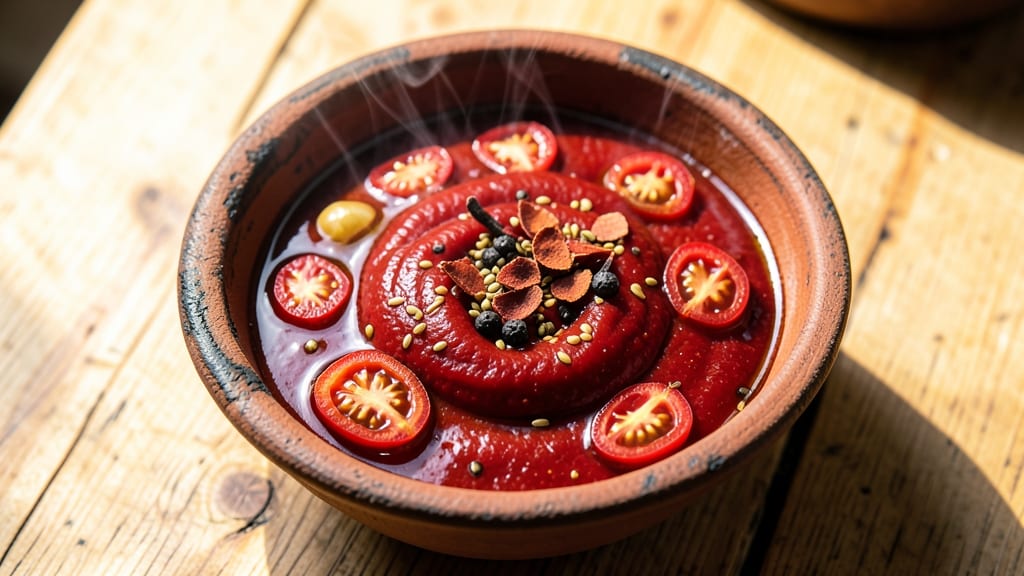
This authentic red chili sauce transforms simple ingredients into a complex, slow-simmered condiment with deep umami heat and smoky depth. The secret lies in balancing dried chilies, vinegar, and sugar while letting the flavors meld over hours—not minutes.
Unlike store-bought versions, this sauce builds layers of flavor through careful toasting and simmering, creating a versatile condiment that elevates everything from tacos to grilled meats.
The process begins with toasting spices and chilies to unlock their natural oils and aromas, then simmering them with tomatoes, garlic, and vinegar until thick and glossy. This method ensures a sauce that’s authentic without shortcuts—no artificial colors or preservatives, just pure, concentrated heat.
The result is a sauce that’s both vibrant and balanced, with a perfect harmony of spice, acidity, and sweetness.
What makes this recipe stand out is its adaptability—use it as a dipping sauce, a marinade, or a finishing touch for dishes that need a bold, authentic kick.
The slow simmering reduces the sauce to a rich, syrupy consistency, making it shelf-stable and packed with flavor. Once you taste the difference, store-bought versions won’t compare.
Perfect for those who appreciate the craft of homemade condiments, this sauce delivers restaurant-quality depth with minimal effort. The key is patience—letting the flavors develop over time transforms basic ingredients into something extraordinary. Ready to elevate your cooking with an authentic touch?
Ingredients for authentic red chili sauce
Ten essential ingredients crafting restaurant-quality chili sauce with smoky depth and balanced heat.
| Ingredient | Amount | Notes |
|---|---|---|
| Dried Red Chilies 🌶️ | ½ oz | Arbol or guajillo for authentic heat |
| Dried Garlic Cloves 🧄 | ¼ cup | Toasted for deeper flavor |
| Cumin Seeds 🌿 | 1 tbsp | Toasted until fragrant |
| Coriander Seeds 🌿 | 1 tbsp | Toasted for aromatic depth |
| Black Peppercorns 🌶️ | ½ tbsp | Toasted for complexity |
| Tomatoes 🍅 | 2 lbs | Roma or vine-ripened preferred |
| Apple Cider Vinegar 💧 | ½ cup | For tangy balance |
| Granulated Sugar 🍚 | ¼ cup | Adjust to taste |
| Extra-Virgin Olive Oil 🫒 | ¼ cup | For richness and depth |
| Salt 🧂 | 1 ½ tsp | Diamond Crystal preferred |
The foundation of authenticity lies in the spices. Dried red chilies should be vibrant and free of stems—Penzeys or Mexican markets carry the best varieties. Toast them in a dry skillet until fragrant, about 30 seconds per side; this unlocks their natural oils and intensifies the flavor. The same principle applies to the cumin, coriander, and black peppercorns—toasting enhances aroma and transforms these seeds from ordinary to extraordinary. For tomatoes, Roma or vine-ripened varieties yield the most concentrated flavor; avoid canned unless it's high-quality crushed tomatoes like Muir Glen or San Marzano. The vinegar acts as a preservative and flavor enhancer, so don't skimp on quality—Bragg or Heinz apple cider vinegar strikes the perfect balance between tang and sweetness.
Substitutions should preserve the sauce's integrity. No dried chilies? Fresh serrano or jalapeño peppers work in a pinch, but reduce the amount by half—fresh peppers contain more moisture. Running low on cumin? Ground cumin at half the volume suffices, though toasted whole seeds deliver superior depth. The sugar can be swapped for honey or agave, though granulated maintains the sauce's shelf stability. Olive oil can be replaced with avocado or grapeseed oil, but extra-virgin adds a fruity complexity that elevates the dish. If you're short on time, pre-toasted spices from bulk sections at Whole Foods or Trader Joe's save steps without sacrificing quality. For a smoother texture, blend the sauce after simmering, though traditional versions embrace a rustic, slightly chunky consistency.
This sauce develops richer flavors with time, so store it in sterilized glass jars in a cool, dark place for up to 6 months. The acidity from vinegar acts as a natural preservative, but refrigeration extends freshness to 1 year if properly sealed. For long-term storage, freeze in ice cube trays—each cube makes a perfect single-serving marinade or finishing touch. The sauce thickens as it cools, so reheat gently over low heat, stirring occasionally. For restaurant-quality results, let it sit at room temperature for 30 minutes before serving to allow flavors to fully meld. The longer it rests, the more complex the taste profile becomes—a testament to the power of patience in cooking.
Why You'll Love This Recipe
- No Pantry Panic: I keep a jar of this in my fridge just for lazy nights—no fresh garlic chopping, no last-minute trips to the store. Those dried chilies and spices sit on my shelf for months, ready to turn oil into magic with a flick of the wrist.
- Deep Umami Magic: Between us, the dried garlic cloves and black peppercorns develop this unexpected depth when toasted—like a whisper of charred smokiness that makes store-bought sauces taste like sad imitations. Honestly, my takeout-order habit dropped by half after this.
- Secret Weapon Everywhere: Slather it on grilled fish, drizzle it over roasted potatoes, or toss it into scrambled eggs—it’s my go-to for when I need flavor fast. Even my picky teen sneaks it into his pasta. (Yes, even on a Tuesday night.)
- Fridge Goldmine: One batch stretches for weeks, and it improves with time. That’s right—your old jar isn’t wasted; it’s just getting better. Plus, the spices cost pennies, so I make it twice as much as I think I’ll use. Budget-friendly? More like budget hero.
Step-by-step instructions for authentic red chili sauce
Transform simple ingredients into a complex, layered sauce through precise technique and patience.
Toast the Whole Spices for Maximum Depth
Heat a dry skillet over medium-low heat. Add the 0.5 oz dried red chilies, 0.25 cup dried garlic cloves, 1 tbsp cumin seeds, 1 tbsp coriander seeds, and 0.5 tbsp black peppercorns all at once. Toast for 3-4 minutes, stirring constantly, until the spices release their aroma and the chilies darken slightly.
This toasting step is crucial—it removes bitterness and awakens the essential oils in each spice. You'll know it's perfect when the cumin and coriander smell intensely warm and the garlic cloves turn golden. Watch carefully; toasted spices burn quickly. Immediately transfer the toasted spices to a bowl and set aside to cool completely.
Slow-Cook Tomatoes Until Silky and Concentrated
In the same skillet (no need to clean it—the toasted spices will infuse the oil), add 0.25 cup extra-virgin olive oil over medium heat. Once the oil shimmers, add the 2 lbs tomatoes (cut into quarters if large) and cook for 15-20 minutes, stirring occasionally, until they begin to break down and release their juices.
As the tomatoes cook, they'll release their natural sugars and acids, creating a sweet-tart base. The skin should wrinkle and the flesh should soften completely. This slow cooking process prevents the sauce from becoming watery later. If the tomatoes aren't breaking down quickly enough, reduce heat to medium-low and continue cooking.
Build Layers of Flavor Through Reduction
Add the cooled toasted spices, 1.5 tsp salt, and 0.25 cup granulated sugar to the skillet. Stir well to distribute the spices evenly through the tomato mixture. Increase heat to medium-high and bring to a gentle boil, then immediately reduce to low heat.
Let the sauce simmer uncovered for 45-60 minutes, stirring occasionally, until it reduces by about half and becomes thick and glossy. The sauce should coat the back of a spoon and cling to the tomatoes when you stir. This reduction process develops the sauce's depth and complexity—don't rush it. If the sauce starts to stick, add 1-2 tablespoons water to prevent burning.
Balance and Finish with Acid
Once the sauce has reduced sufficiently, remove it from heat and stir in the 0.5 cup apple cider vinegar. Taste and adjust the seasoning—you may need to add more salt or sugar to balance the acidity and sweetness. The sauce should be tangy, sweet, and spicy with a deep umami richness from the tomatoes.
Let the sauce cool to room temperature, then transfer it to a clean jar. The flavors will continue to meld as it sits. This sauce keeps well in the refrigerator for up to 2 weeks and can be used in curries, marinades, or as a condiment. The authentic heat from the dried chilies and the complexity of the toasted spices create a sauce that's far more sophisticated than store-bought versions.
Pro Tips For Making Authentic Red Chili Sauce
- Toast Your Spices: Dry-roast cumin and coriander seeds in a heavy pan over medium heat until they dance—about 2-3 minutes—then grind them fresh. I learned this the hard way: pre-ground spices taste flat, but toasted ones add depth that changes the whole sauce.
- Deseed Carefully: Remove the stems and seeds from dried chilies, but leave the veins intact—they hold the heat and flavor. I used to toss them whole, and the sauce ended up bitter. Keep a bowl nearby to catch the seeds; they’re good for other dishes.
- Simmer, Don’t Boil: Once your chilies and spices are cooked down, reduce to the lowest heat possible and let it bubble gently. I’ve seen people crank the heat, and it burns the garlic before the sauce develops its rich color. Patience here makes all the difference.
- Blend with Oil: After cooking, let the mixture cool slightly, then blend with a splash of oil (about 1 tablespoon). This emulsifies the sauce, making it smoother and more stable—no clumping, no separating. (Yes, even if you’re impatient like me.)
Troubleshooting your authentic red chili sauce
Sauce Too Thin?
If your sauce isn’t thickening enough during the 45-60 minute reduction, increase heat slightly to medium-low and let it bubble gently. Stir occasionally to prevent sticking, and add 1-2 tablespoons water only if it starts to burn.
For faster results, transfer to a saucepan with a wider surface area—this increases evaporation. I’ve found that using Roma tomatoes (with their lower water content) helps achieve a thicker consistency more reliably. 🌡️
Overpowering Spice?
Too much heat? Reduce the dried chilies by half next time—¼ oz instead of ½ oz. If already made, balance the heat by adding 1 extra tablespoon sugar or 1 tablespoon honey to mellow the burn.
A splash of apple cider vinegar (another 1-2 tablespoons) can also help cut through the intensity. Remember, toasting spices concentrates their flavor—don’t skip this step, but adjust quantities if needed.
Sauce Too Tart?
The vinegar might be overpowering if your sauce tastes overly sour. Reduce the apple cider vinegar to ¼ cup next time, or add 1 extra tablespoon sugar to balance. For an immediate fix, stir in ½ teaspoon ground cinnamon or a pinch of smoked paprika—these add depth without sweetness.
If the sauce is already made, a tiny bit of honey or maple syrup (just ½ teaspoon) can help smooth out the acidity. 🍯
Mold or Fermentation Issues?
If your stored sauce develops mold or an off smell, it’s likely due to improper sterilization or air exposure. Always store in sterilized glass jars with airtight seals, and refrigerate after opening. For long-term storage, freeze in ice cube trays—this prevents oxidation and keeps the sauce fresh for months.
If fermentation occurs (a slight fizziness), it’s normal for vinegar-based sauces, but if it smells sour or rotten, discard it. Never taste-test questionable sauce!
Grainy Texture?
A gritty texture usually means the spices weren’t toasted enough or blended properly. Next time, toast spices until they’re deeply aromatic (about 4 minutes for whole seeds). For an immediate fix, blend the sauce briefly in a blender or food processor—just 10-15 seconds—to smooth out any remaining whole spices.
If you prefer a rustic texture, strain the sauce through a fine-mesh sieve to remove any large particles while keeping the flavor intact. 💡
Sauce Separates?
Separation happens when the sauce cools too quickly or sits too long. To fix it, gently reheat the sauce over low heat while stirring constantly until it returns to a smooth consistency. For prevention, store the sauce in smaller portions and refrigerate promptly.
If separation persists, stir in 1 teaspoon cornstarch mixed with 1 tablespoon water to thicken and stabilize the emulsion. This trick works wonders for restoring a silky texture!
Nutrition facts
Frequently asked questions
Can I substitute fresh chilies for dried in this recipe?
Fresh chilies work, but you'll need 1 cup chopped fresh serrano or jalapeño peppers for 0.5 oz dried chilies. Remove seeds for milder heat. Toast them first in a dry skillet for 2 minutes per side to concentrate flavors—this mimics the dried chili toasting step. Fresh peppers add moisture, so reduce simmering time by 10-15 minutes to prevent a watery sauce.
How do I adjust the spice level for sensitive eaters?
Start by reducing dried chilies to 0.25 oz (half the original amount). For extra mildness, remove all seeds and membranes from fresh chilies. Add 1 extra tablespoon sugar or ½ teaspoon ground cinnamon to balance heat. If using store-bought chili powder, use ½ teaspoon instead of dried chilies—it's much hotter. Always taste as you go!
Can this sauce be used as a marinade?
This sauce makes an excellent marinade for grilled meats, tofu, or shrimp. The acidity and spices tenderize proteins while adding incredible flavor. Use ½ cup sauce per pound of protein and marinate for 2-4 hours (or overnight for tougher cuts). For extra tenderness, add 1 tablespoon olive oil to the marinade. Always reserve some sauce to use as a finishing glaze after cooking!
Why does my sauce taste bitter after simmering?
Bitterness usually means the tomatoes weren't cooked long enough or the spices were over-toasted. Next time, simmer uncovered for the full 45-60 minutes to let excess acidity evaporate. For immediate fixes, stir in 1 teaspoon honey or ½ teaspoon smoked paprika to mellow the flavor. Avoid using green tomatoes—they contain more bitter compounds. The key is patience: slow reduction removes bitterness!
What are the best ways to use this sauce beyond dipping?
This versatile sauce elevates tacos, grilled vegetables, ramen, and even ice cream (trust us!). Use it as a slurry for pasta sauces, stir into curries for depth, or drizzle over fried rice. For desserts, mix 1 tablespoon sauce with ½ cup whipped cream for a spicy-sweet topping. The umami richness pairs surprisingly well with sweet dishes!