
Sauces & Condiments
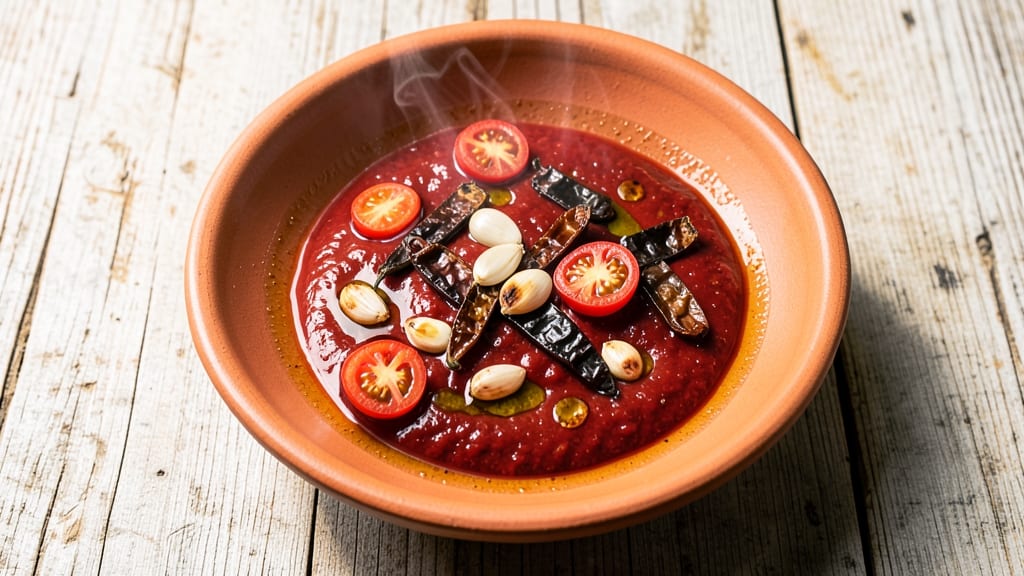
Baca's red chile sauce recipe delivers the deep, smoky heat that makes Southwestern dishes unforgettable. This isn't your average chile sauce—it's a fermented, slow-simmered masterpiece that builds layers of complexity with every use. The blend of roasted red chiles, tomatoes, and garlic creates a velvety sauce with just the right balance of heat and tang, perfect for adding depth to everything from eggs to grilled meats.
The secret lies in the fermentation process, which develops rich umami flavors over time. You'll start with dried red chiles (like ancho or guajillo) that you'll toast, rehydrate, and blend with fresh tomatoes, garlic, and a touch of vinegar.
Simmering the mixture low and slow allows the flavors to meld into a smooth, aromatic sauce that's far more sophisticated than store-bought versions.
What makes this sauce truly special is its versatility—it elevates tacos, enchiladas, and even breakfast dishes like huevos rancheros. The heat is controlled but noticeable, with a smoky depth that comes from properly toasting the chiles. Once you taste the difference, you'll never go back to bottled sauces again.
Store it in the refrigerator for up to two weeks or preserve it through canning for long-term use. The flavor only improves with time, making this a sauce worth making in batches. Let's get started on creating your own batch of this restaurant-quality chile sauce.
Ingredients for baca's red chile sauce
Nine ingredients transform into restaurant-quality chile sauce with smoky depth and fermented richness.
| Ingredient | Amount | Notes |
|---|---|---|
| Dried Red Chile Peppers (Ancho or Guajillo) 🌶️ | ½ lb | Toasted and rehydrated, stems removed |
| Fresh Roma Tomatoes 🍅 | 2 lb | Ripe but firm, cored and quartered |
| Garlic Cloves 🧄 | 6 cloves | Peeled, slightly charred for depth |
| White Vinegar 💧 | ¼ cup | For fermentation and balance |
| Extra-Virgin Olive Oil 🫒 | ¼ cup | High quality, fruity variety |
| Salt 🧂 | 1 tsp | Kosher or sea salt preferred |
| Black Peppercorns 🌶️ | ½ tsp | Freshly cracked for aroma |
| Cumin Seeds 🌿 | 1 tsp | Toasted lightly for warmth |
| Fresh Cilantro Leaves 🌿 | ¼ cup | Optional, for fresh brightness |
| Water 💧 | 1 ½ cups | Filtered for best flavor |
The chiles are the heart of this sauce—ancho gives sweetness, guajillo adds smokiness. Local Latin markets often carry them in bulk, but Amazon or Mexican grocery stores are reliable too. Toast them in a dry skillet until fragrant (about 2 minutes per side), then soak in hot water for 15 minutes to rehydrate. The tomatoes should be bright red and firm—green spots mean underripe. Roma tomatoes work best, but vine-ripened grocery store tomatoes in season are fine. Skip the pre-washed kind, as they often have a wax coating that affects flavor.
No ancho or guajillo? Pasilla or chipotle peppers work in a pinch, but adjust heat by using less. Vinegar is crucial for fermentation—apple cider vinegar adds subtle sweetness. The olive oil matters here: low-acid varieties like Picual or Arbequina won't overpower the chiles. Toasting the cumin seeds in a dry pan for 30 seconds deepens their flavor without burning. Fresh cilantro is optional but adds a bright finish—dried won't work here. If you're short on time, skip the fermentation step and simmer the sauce for 45 minutes instead, though the flavor won't develop as fully.
This sauce tastes better with age—ferment for 24-48 hours in the fridge before using. It keeps for 2 weeks refrigerated or 6 months frozen. For long-term storage, can it in sterilized jars with a water bath for up to a year. The flavor evolves beautifully over time, so make a big batch. I like to freeze it in ice cube trays for easy portioning—just pop out what you need for recipes. The sauce thickens as it cools, so thin with a splash of water if needed.
Why You'll Love This Recipe
- No Soak Needed: I’ll be real—soaking dried chilies is a hassle. This recipe skips it entirely by simmering them whole, then blending them into oblivion. Five minutes of hands-off work, and you’re done.
- Smoky-Sweet Magic: That deep, earthy aroma from the Guajillo peppers? It’s like a warm hug in a jar. The vinegar cuts through the richness just enough to make it dangerously addictive—drizzle it on eggs, tacos, or even grilled cheese.
- Weeknight to Party: I make a big batch on Sundays and keep it in the fridge. Weeknights? Slap it on toast with eggs. Hosting? Use it as a dip for chips or a marinade for chicken. Same jar, endless uses.
- Pantry Goldmine: Ancho peppers last for months, and a few tomatoes stretch into gallons of sauce. Honestly, this is my budget-friendly secret—cheaper than store-bought, and way better. Plus, the vinegar keeps it fresh for weeks.
Step-by-step instructions for Baca's red chile sauce
This smoky, fermented sauce builds depth through careful preparation and patience.
Toast and Rehydrate the Dried Chile Peppers
Preheat your oven to 350°F. Place the 0.5 lb dried red chile peppers (Ancho or Guajillo) on a baking sheet and toast for 3-5 minutes until fragrant and slightly darkened. This step intensifies their natural flavors—watch closely so they don’t burn. Transfer the toasted peppers to a heatproof bowl and pour over 1.5 cups hot water (just boiled) to cover. Let them soak for 15 minutes until softened and pliable.
While they soak, remove stems and any tough seeds from the peppers. I like to use my fingers for this—it’s faster than tweezers and gives better control. The peppers should yield easily when pressed; if not, let them soak another 5 minutes. This rehydration step is critical for extracting their deep, smoky essence without bitterness.
Char the Tomatoes and Garlic
Heat a dry skillet over medium-high heat. Add the 2 lb fresh Roma tomatoes, cut into quarters, and cook for 8-10 minutes, turning occasionally, until they develop blackened char marks all over. The sugar in the tomatoes caramelizes here, creating a natural sweetness that balances the heat. Transfer the charred tomatoes to a cutting board and let them cool slightly.
In the same skillet, add the 6 cloves garlic and toast for 1-2 minutes until fragrant and just beginning to turn golden. Be careful not to burn them—they should smell sweet and nutty, not bitter. Remove the garlic from the skillet and set aside with the tomatoes. This charring step adds a smoky depth that’s essential for authentic flavor.
Blend the Base Ingredients
Transfer the rehydrated chile peppers (with their soaking liquid), charred tomatoes, and toasted garlic to a blender. Add the 0.25 cup white vinegar, 0.25 cup extra-virgin olive oil, 1 tsp salt, 0.5 tsp black peppercorns, and 1 tsp cumin seeds. Blend on high for 1-2 minutes until completely smooth. The sauce should be vibrant red with a thick, velvety consistency—like a cross between a salsa and a molé.
Taste the mixture and adjust seasoning if needed. The vinegar adds brightness and helps balance the richness, while the cumin seeds provide warmth. If the sauce tastes too acidic, add a pinch more salt; if it’s too mild, blend in a splash of the reserved soaking liquid. This blending step is where all the flavors come together—don’t rush it.
Simmer and Ferment for Depth
Pour the blended sauce into a clean saucepan and bring to a gentle simmer over medium-low heat. Let it cook uncovered for 20-25 minutes, stirring occasionally, until it thickens slightly and the flavors meld. The sauce should reduce just enough to coat the back of a spoon—this concentration enhances the smoky, fermented notes. Skim off any foam that rises to the surface with a spoon.
Remove from heat and let the sauce cool to room temperature. This resting period allows the flavors to develop further—almost like a secondary fermentation. Cover and refrigerate for at least 4 hours (or overnight) before serving. The longer it sits, the more complex the flavors become. This step is where the sauce transforms from good to extraordinary.
Finish with Freshness and Serve
Before serving, stir in the 0.25 cup fresh cilantro leaves (if using) and adjust the seasoning one last time. The cilantro adds a bright, herbaceous note that cuts through the richness of the sauce. Serve the sauce warm or at room temperature, drizzled over grilled meats, tacos, or corn tortillas. It’s even delicious spooned directly into bowls of rice or beans.
This sauce keeps well in the refrigerator for up to 2 weeks, with flavors deepening over time. The key to its success lies in the balance of heat, acidity, and smokiness—each step builds on the last to create a sauce that’s far more than just the sum of its parts. Enjoy it knowing you’ve captured the essence of Baca’s legendary red chile sauce.
Pro Tips For Making Baca'S Red Chile Sauce
- STRIP SEEDS AND STEMS: Dried chilies hold their heat and texture better when you remove the stems and seeds before soaking—just tear open the pods and scrape them out with a spoon. I used to skip this, and the sauce always ended up with a bitter edge that ruined the balance.
- SOAK CHILIES IN HOT WATER: Cold water won’t soften dried chilies evenly—use boiling water for 10-15 minutes to break them down faster without losing flavor. After soaking, drain and rinse them under cold water to stop the cooking process and keep their color vibrant.
- CHAR THE TOMATOES: Sear the Roma tomatoes in a dry skillet for 2-3 minutes per side until blackened in spots before blending. This step deepens their sweetness and smoky complexity—something I only noticed after tasting the difference.
- USE GARLIC LIKE A BOSS: Minced garlic burns in seconds, so crush the cloves with the flat side of your knife first, then add them to the sauce after the tomatoes have softened. This way, they infuse flavor without turning bitter. (Yes, even if you’re impatient like me.)
Perfect pairings for this baca's red chile sauce
Breakfast Powerhouse
Start your day with huevos rancheros—poach eggs in this sauce, then top with crumbled queso fresco and avocado slices. The smoky depth pairs perfectly with the richness of the eggs, while the vinegar cut keeps it bright.
I like to serve it with warm corn tortillas for dipping—trust me, you'll crave this every morning. 🍳
Taco & Burrito Elevator
Use this sauce as your base for tacos al pastor or carne asada. Spread 2-3 tablespoons on each tortilla before adding meat, then top with pickled onions and cilantro. The fermentation process gives it a tangy complexity that store-bought sauces can't match.
For burritos, mix 1 cup sauce with 1 cup refried beans as a filling—it's a game-changer. 🌮
Grilled Meat Glaze
Brush this sauce on grilled meats like steak or chicken during the last 5-7 minutes of cooking. The smoky chiles caramelize beautifully, creating a sticky glaze that clings to every bite.
I recommend using it on flank steak or pork chops—just ½ cup sauce per pound gives perfect coverage. Serve with roasted potatoes for a full Southwestern feast. 🔥
Pasta & Noodle Twist
Toss 1 cup sauce with cooked pappardelle or fettuccine, then finish with grated pecorino cheese and toasted pine nuts. The heat stands up to the richness of the pasta, while the acidity cuts through the dairy.
For extra depth, add ½ cup chicken stock to the sauce before blending—it creates a silky consistency perfect for coating noodles. 🍝
Dipping Sauce Star
Serve this sauce as a dip with crispy taquitos, nachos, or even fries. The balance of heat and smokiness makes it addictive—just keep a bowl on the table for guests to scoop up.
I like to chill the sauce slightly before serving to mellow the heat while keeping the vibrant color. Perfect for game day or movie nights! 🍟
Rice Bowl Revolution
Stir ½ cup sauce into cooked cilantro-lime rice for an instant flavor upgrade. Top with black beans, shredded chicken, and a fried egg for a complete bowl. The sauce's depth transforms simple rice into a restaurant-worthy base. For extra richness, drizzle with a little avocado oil before serving. 🍚
Nutrition facts
Frequently asked questions
Why does this chile sauce need fermentation?
The fermentation process develops deep, complex flavors that you won't get from a simple simmer. The vinegar and natural acids in the tomatoes create an environment where beneficial bacteria break down the chiles and tomatoes, producing umami-rich compounds. This gives the sauce its signature tangy, slightly funky depth that improves over time—just like fine wine or aged cheese.
Can I make this sauce without a blender?
Yes, but the texture will be different. Use a food mill or mortar and pestle to crush the soaked chiles, tomatoes, and garlic into a coarse paste. For a smoother result, strain through a fine-mesh sieve. The flavor will still be excellent, though the sauce will be slightly chunkier—perfect for dipping or drizzling rather than spreading.
How do I adjust the heat level?
Start by removing seeds and membranes from the dried chiles before toasting—this reduces capsaicin (the compound that creates heat). For more heat, add 1-2 dried chipotle peppers to the blend, or increase the amount of ancho/guajillo peppers. To mellow the heat, add 1 extra tablespoon of olive oil or a splash of tomato juice to balance the flavors.
What's the best way to store leftover sauce?
For short-term storage, keep it in an airtight container in the fridge for up to 2 weeks. The flavors actually improve with time! For long-term storage, freeze in ice cube trays or small jars—thaw overnight in the fridge. If canning, process in a water bath for 15 minutes to ensure safety. Label with the date, as the sauce continues to develop complexity over months.
Can I substitute fresh chiles for the dried ones?
Fresh chiles won't work the same way—they lack the concentrated, smoky depth of dried varieties. However, you can use 2-3 large fresh poblano peppers (roasted and peeled) as a partial substitute, but the flavor will be milder. For best results, stick with dried ancho or guajillo peppers—they're the heart of this sauce's authentic taste.