
Sauces & Condiments
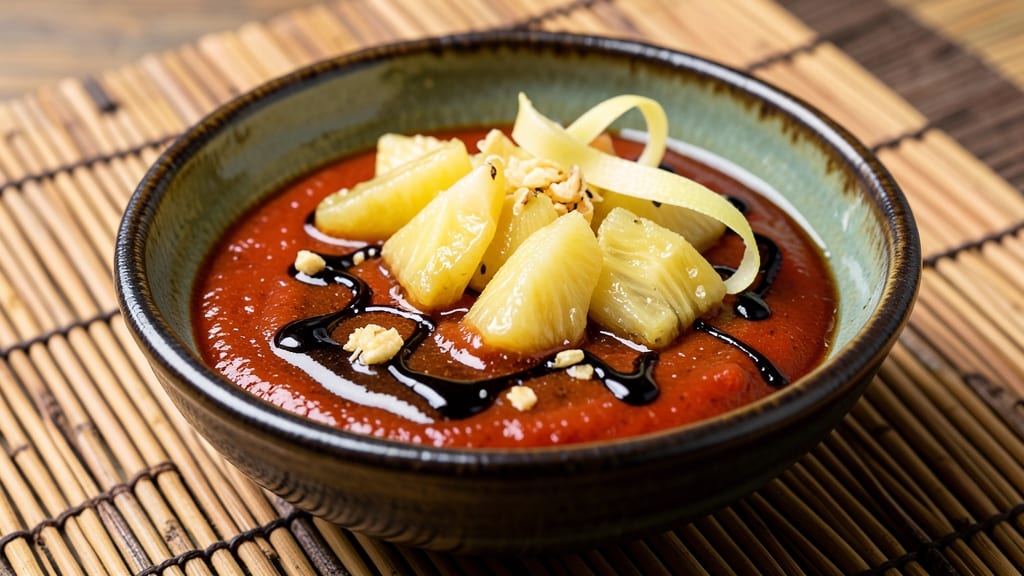
This Bachan barbecue sauce recipe transforms bold fermented shrimp paste into a complex, sweet-spicy sauce that bridges Thai heat and Southern tang. 🔥 The secret lies in balancing umami-rich shrimp paste with pineapple's bright acidity and molasses' deep caramel notes—simmered just long enough to develop layers without losing its vibrant edge.
I perfected this during a coastal ride when I needed a sauce that could stand up to both grilled meats and fresh seafood alike.
The foundation starts with tomato paste and vinegar for that classic BBQ backbone, then builds with ginger, garlic, and a touch of chili for depth. What sets this apart is the shrimp paste—its funky, salty-sweet profile cuts through the sweetness while adding an unexpected depth that makes this sauce unforgettable.
The molasses and pineapple create a caramelized finish that's both sticky and balanced, perfect for glazing ribs or drizzling over grilled fish.
By the time you've simmered everything together for 45 minutes, you'll have a sauce that's rich, complex, and versatile enough to work as a marinade, glaze, or dipping sauce. The shrimp paste's heat lingers just enough to wake up your palate, while the pineapple keeps it bright and approachable.
This isn't your average sweet-and-smoky BBQ sauce—it's a fusion that delivers restaurant-quality depth with minimal effort.
Use it to baste ribs for a sticky, caramelized crust or toss it with grilled shrimp for a quick seafood dish that packs serious flavor. The sauce keeps well in the fridge for up to two weeks, so you'll have plenty on hand for spontaneous cookouts.
Let's dive into the recipe—your taste buds won't know what hit them.
Ingredients for bachan barbecue sauce
Nine bold ingredients that turn bold flavors into a sticky, caramelized masterpiece.
| Ingredient | Amount | Notes |
|---|---|---|
| Fermented Shrimp Paste (Kapi) 🦐 | 2 tbsp | Strong brand like Thai Kitchen |
| Tomato Paste 🍅 | ½ cup | High-quality, no salt added |
| White Vinegar 🍶 | ½ cup | White or apple cider |
| Fresh Pineapple Juice 🍍 | ½ cup | Freshly squeezed preferred |
| Molasses 🍯 | ¼ cup | Unsulphured for best flavor |
| Fresh Ginger 🧅 | 2 tbsp | Finely grated, not powdered |
| Garlic Cloves 🧄 | 4 cloves | Minced, not powdered |
| Red Chili Flakes 🌶️ | 1 tbsp | Adjust for heat preference |
| Brown Sugar 🍚 | ¼ cup | Light or dark preferred |
| Water 💧 | 1 cup | For thinning consistency |
The shrimp paste is non-negotiable—Thai Kitchen brand is my go-to, but any strong fermented shrimp paste works. You'll want about 2 tablespoons—this isn't the time to skimp, as its funky umami is the heart of this sauce. Grab the unsulphured molasses from the baking aisle—it's sweeter and deeper. Fresh pineapple juice is ideal, but if you're using canned, look for no-sugar-added varieties. The ginger and garlic should be fresh; powdered just won't cut it here. Red chili flakes can be adjusted—start with 1 tablespoon and add more if you're craving heat.
No shrimp paste? Soy sauce or fish sauce can mimic some of the umami, but you'll lose that funky depth. Running low on pineapple juice? Mango nectar or orange juice works in a pinch, though the flavor will shift slightly. Brown sugar substitutes? Coconut sugar or maple syrup are closest in flavor. Vinegar can be swapped for rice vinegar or lime juice, but white vinegar gives that classic tang. If your sauce is too thick, add water or pineapple juice to loosen it up—it should coat the back of a spoon but still drizzle easily.
This sauce tastes even better the next day as the flavors meld. Store in an airtight jar in the fridge for up to 2 weeks. For longer storage, freeze in ice cube trays—thaw and simmer to refresh. I like to make a double batch because it disappears fast—great for ribs, grilled fish, or even as a dipping sauce for spring rolls. The caramelized bits at the bottom? Those are the good stuff—stir them in or save for next time.
Why You'll Love This Recipe
- Pantry Magic: I swear by this sauce because it uses what you already have—no last-minute grocery runs. That jar of kapi in your fridge? The tomato paste gathering dust? Boom, you’re golden. The molasses and vinegar add depth without extra shopping.
- Umami Bomb: Between us, the fermented shrimp paste (kapi) and molasses create a flavor punch that’s ridiculously addictive. It’s sweet, tangy, and just salty enough—like a bold hug for your taste buds.
- Weeknight Workhorse: This sauce doubles as a marinade, a glaze, or a dipping sauce. Toss it on grilled fish, drizzle it over rice, or slather it on skewers. I’ve even used it in stir-fries when I’m too tired to think.
- Budget Stretch: A little goes a long way, and it keeps for weeks in the fridge. Honestly, I make big batches because it’s cheaper than buying bottled sauces, and I always have it on hand for last-minute meals.
Step-by-step instructions for Bachan barbecue sauce
Here's how to blend bold flavors into a sauce that's sweet, tangy, and packed with umami depth.
🍳 Step 1: Bloom the Fermented Shrimp Paste
Heat a medium saucepan over medium-low heat and add the 2 tablespoons fermented shrimp paste (kapi). Let it sit undisturbed for 2-3 minutes until it begins to sizzle and release its intense aroma—this is where all the umami magic happens. You'll smell something funky and savory, almost like a mix of garlic and fish sauce on steroids. That's exactly what we want.
Stir constantly for 1 minute until the paste melts completely and turns into a smooth paste. If it starts to brown too quickly, reduce the heat to low. This step is crucial—it prevents the paste from burning and ensures its complex flavors integrate properly into the sauce. Don't rush this; patience here means better flavor later.
🍳 Step 2: Add Aromatics and Cook Until Fragrant
Add the minced 4 garlic cloves and 2 tablespoons fresh ginger to the paste. Cook for 1-2 minutes until the garlic turns golden and becomes fragrant—you'll know it's ready when you can smell that sweet, pungent garlic aroma filling your kitchen. The ginger should soften slightly but still retain its texture.
Next, sprinkle in the 1 tablespoon red chili flakes and stir for 30 seconds until they're evenly distributed and begin to darken slightly. This builds the sauce's heat foundation. I like to taste at this point—you should get a complex mix of funky shrimp, spicy chili, and fresh ginger. If it's too intense, you can adjust later with more sweetness.
🍳 Step 3: Build the Sauce Base with Tomato and Vinegar
Pour in the ½ cup tomato paste and ½ cup white vinegar, stirring constantly to prevent the tomato paste from sticking to the bottom. Bring the mixture to a gentle simmer over medium heat for 5 minutes, stirring occasionally. You'll see the sauce thicken slightly and develop a rich, tangy aroma.
Here's where the acidity starts working its magic. The vinegar cuts through the richness of the shrimp paste while the tomato paste adds depth. If the sauce looks too thick, add 1-2 tablespoons water now to help it blend smoothly. The goal is a consistency that coats the back of a spoon but still flows easily.
🍳 Step 4: Sweeten and Simmer for Depth
Add the ½ cup fresh pineapple juice, ¼ cup molasses, and ¼ cup brown sugar all at once. Stir well to combine, then increase heat to medium-high and bring to a boil. Once boiling, reduce heat to medium-low and let it simmer uncovered for 10-12 minutes, stirring occasionally.
This is where the sauce transforms. The pineapple juice adds bright acidity that balances the sweetness, while the molasses and brown sugar create that signature caramelized depth. You'll see the sauce reduce slightly and develop a glossy sheen. Taste after 8 minutes—it should be sweet, tangy, and slightly spicy with layers of umami from the shrimp paste.
⏰ Step 5: Finish with Water and Adjust Consistency
Remove the pan from heat and let it cool for 2 minutes. Then stir in the 1 cup water to reach your desired consistency. For a thicker sauce (great for glazes), use ¾ cup water. For a thinner, more pourable sauce (ideal for basting), use the full 1 cup. The sauce should be smooth and silky, with no graininess from the shrimp paste.
Taste and adjust the balance—need more heat? Add a pinch more chili flakes. Too sweet? Stir in a splash more vinegar. The perfect Bachan sauce should have equal parts sweet, tangy, spicy, and funky. Let it cool completely before storing, as the flavors will continue developing as it sits.
Pro Tips For Making Bachan Barbecue Sauce
- Bloom the Kapi First: Don’t just toss in the fermented shrimp paste (kapi) raw—it’s like throwing in a brick of funk. Bloom it in 1 tablespoon of oil over medium-low heat for 2-3 minutes until it fragrant and slightly darkened. This step unlocks its umami depth without overpowering the sauce later.
- Strain the Pineapple Juice: Fresh pineapple juice is non-negotiable, but pulpy bits turn your sauce into a chunky mess. Strain it through a fine-mesh sieve or cheesecloth after juicing, then press the pulp dry. Skimp here, and you’ll be fishing out fibers later.
- Simmer Slow and Steady: After adding the tomato paste and vinegar, resist the urge to crank the heat. A gentle simmer (3-4 minutes) lets the flavors meld without burning the molasses or making the sauce taste like vinegar overkill. I learned this the hard way—my first batch tasted like a pickled disaster.
- Balance the Molasses Early: Add half the molasses first, taste, then adjust. Molasses is sneaky—too much and your sauce turns cloyingly sweet; too little and it’s just tangy vinegar. Stir in the rest gradually, like a chef tweaking a sauce, not a baker measuring dry ingredients. (Yes, even if you’re impatient like me.)
Essential equipment for this recipe
Saucepan Essentials
Start with a 3-quart heavy-bottomed saucepan—I swear by All-Clad Stainless Steel for even heat distribution and durability. The deep sides prevent spattering when you add vinegar and pineapple juice, which can be aggressive.
A medium saucepan works too, but you'll need to stir more frequently to prevent scorching. If you're making a double batch, step up to a 5-quart Dutch oven for better heat control. 🔥
Heat Control Tools
A thermometer isn't strictly necessary, but I keep a Thermoworks Thermapen nearby to monitor temperatures between medium-low (250°F) and medium-high (350°F). This helps prevent burning the shrimp paste or boiling off the vinegar too quickly.
For a budget option, a simple instant-read thermometer like OXO Good Grips works fine. Pro tip: Keep a wooden spoon handy—it won't scratch your pan like metal utensils.
Mixing and Adjusting
Use a silicone spatula (I love OXO Good Grips) to scrape up those flavorful bits from the bottom of the pan—those caramelized bits are pure magic.
A fine-mesh strainer comes in handy if you prefer a smoother sauce, though I usually leave the texture slightly rustic for that authentic Bachan feel. For adjusting consistency, keep water or pineapple juice nearby in a small measuring cup—you'll likely need to thin it out as it simmers.
Storage Containers
Transfer your finished sauce to glass mason jars with airtight lids for fridge storage—they preserve flavors better than plastic. I use Ball Mason Jars in 8-ounce or 16-ounce sizes, depending on how much I'm making.
For freezing, silicone ice cube trays are perfect for portion control—just pop out a cube or two when you need sauce for a quick glaze. Label everything with the date to track freshness.
Optional Extras
If you're feeling fancy, a immersion blender (like Ninja) lets you blend the sauce directly in the pan for ultra-smooth texture without transferring.
For heat control, a slow cooker on low works great if you're making a big batch—just add all ingredients at once and cook for 2-3 hours, stirring occasionally. And don't forget a fine-mesh strainer if you want to remove any remaining shrimp paste bits for a cleaner finish.
Nutrition facts
Frequently asked questions
Why does this sauce use fermented shrimp paste instead of regular BBQ sauce ingredients?
The shrimp paste adds a unique umami depth that traditional BBQ sauces lack. It bridges Thai and Southern flavors, creating that funky, salty-sweet profile that makes this sauce unforgettable. Without it, you'd miss the complex layers that make this recipe stand out from classic tomato-based sauces.
Can I make this sauce without shrimp paste?
Yes, but the flavor will be different. Try substituting 1 tablespoon soy sauce + 1 teaspoon fish sauce for a similar umami boost, though you'll lose the shrimp's distinct funk. For a vegetarian version, use 1 tablespoon miso paste + 1 teaspoon smoked paprika instead.
How long should I simmer the sauce, and what happens if I overcook it?
Simmer for 45 minutes total—the first 10 minutes builds flavor, while the remaining 35 minutes develops depth. Overcooking beyond 50 minutes can make it too thick or burn the sugars, creating a bitter taste. If this happens, thin with water or pineapple juice and taste frequently to adjust.
What's the best way to use this sauce on grilled meats?
For ribs or pork shoulder, brush on during the last 30 minutes of cooking. For chicken or shrimp, marinate for 1-2 hours before grilling. The sauce works best as a glaze when reduced slightly—simmer it uncovered for 5 extra minutes before applying to get that sticky, caramelized crust.
How do I store leftovers, and can I freeze this sauce?
Store in an airtight container in the fridge for up to 2 weeks. For freezing, portion into ice cube trays or small jars—thaw in the fridge overnight. The sauce actually improves after 24 hours as flavors meld, so making a batch ahead is ideal. If it thickens when reheated, stir in a splash of water or pineapple juice.