
Sauces & Condiments
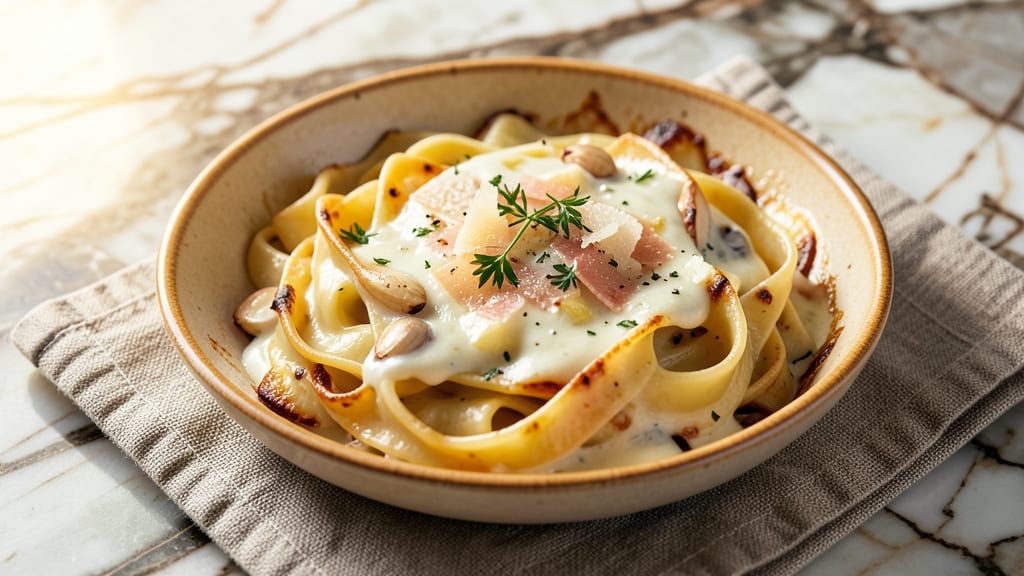
This baked pasta with alfredo sauce recipe transforms a simple weeknight meal into a restaurant-worthy dish with its crispy golden crust and rivers of melted cheese.
The secret lies in a perfectly balanced alfredo sauce—creamy yet light enough to soak into the pasta without turning soggy—and baking it just until the top turns irresistibly golden.
I developed this recipe after years of perfecting the art of baked pasta, ensuring every bite delivers that satisfying contrast of crispy edges and gooey, cheesy centers.
The beauty of this dish is its simplicity: just a few key ingredients—fresh pasta, rich alfredo sauce, and a blend of cheeses—come together to create something extraordinary. Unlike traditional baked pasta dishes that can turn out greasy or overly heavy, this recipe achieves the perfect balance of textures and flavors.
The sauce is made with a touch of cream and butter, giving it that signature velvety smoothness while still allowing the cheese to melt into luscious rivers when baked.
What you’ll end up with is a dish that’s as impressive to serve as it is delicious to eat—crispy on top, tender pasta underneath, and that irresistible pull-apart texture that makes every forkful worth it. The best part?
It’s ready in under an hour, so you can have a crowd-pleasing dinner on the table without spending all day in the kitchen. Pair it with a simple green salad or garlic bread for the ultimate comfort food experience.
This recipe is designed to be foolproof, with clear instructions for boiling the pasta al dente, layering it with sauce, and baking it to perfection. Whether you're feeding a family or hosting a dinner party, this baked pasta will be the star of the meal.
Let’s get started—your taste buds will thank you!
Ingredients for baked pasta with alfredo sauce
Fresh pasta, creamy sauce, and golden cheese—this is your crispy-topped, gooey masterpiece.
| Ingredient | Amount | Notes |
|---|---|---|
| Fettuccine Pasta 🍝 | 12 oz | Fresh preferred for best texture |
| Heavy Whipping Cream 🥛 | 1 cup | Full-fat for richness |
| Unsalted Butter 🧈 | ½ cup | Cold, cubed for sauce |
| Parmesan Cheese 🧀 | 1 ½ cups | Freshly grated from block |
| Romano Cheese 🧀 | ½ cup | Grated for extra flavor |
| Garlic Cloves 🧄 | 4 cloves | Minced for sauce |
| Fresh Basil Leaves 🌿 | ¼ cup | Chopped for garnish |
| Salt 🧂 | 1 tsp | Kosher or sea salt |
| Black Pepper 🌶️ | ½ tsp | Freshly ground preferred |
| All-Purpose Flour 🌾 | 1 tbsp | For crispy topping |
| Breadcrumbs 🍞 | ¼ cup | Panko for extra crunch |
| Olive Oil 🫒 | 1 tbsp | For crispy crust |
| Nutmeg 🌶️ | ¼ tsp | Freshly grated for depth |
Fresh pasta is non-negotiable here—the chewy texture holds up to baking better than dried. Whole Foods or Trader Joe's carry great pre-made fettuccine, but if you're feeling fancy, making it from scratch (or grabbing it from an Italian market) takes it to the next level. The Parmesan and Romano? Grate it yourself—pre-shredded gets clumpy and ruins the sauce. For the cheese blend, I like Parmigiano-Reggiano and Romano di Colle Avola if you want to splurge. The butter and cream should both be full-fat—none of that skim nonsense—or the sauce won't have that signature velvety mouthfeel. Look for heavy cream with at least 36% fat content, and butter with 80% fat minimum.
No fresh basil? Dried oregano at half the amount works in a pinch, but honestly, skip the dish if you don't have fresh—it's what ties the whole thing together. Short on breadcrumbs? Crush up saltine crackers or dry toast for a similar effect. The nutmeg is key for that classic alfredo flavor—freshly grated is best, but pre-ground works if it's labeled 'pure'. For the crispy topping, I like a mix of breadcrumbs and flour—Panko gives extra crunch, but regular breadcrumbs work too. If you're worried about sogginess, toast the breadcrumbs in the oven for 5 minutes before adding them to the top. And trust me on the olive oil—it's what makes the crust golden and crispy, not just butter.
This reheats beautifully—even better the next day once all the flavors meld together. Store leftovers covered in the fridge for 3-4 days, or freeze portions for up to 3 months. I like to portion it into individual servings before freezing so I can just pop one out whenever I'm craving it. For serving, let it sit at room temperature for 10 minutes before slicing—this helps the cheese stretch into those glorious rivers. Pair with a simple arugula salad tossed in lemon and olive oil to cut through the richness, or garlic bread to soak up every last bit of sauce.
Why You'll Love This Recipe
- No Boil Required: I swear by this trick—just toss the fettuccine in the sauce raw and bake it. The pasta absorbs that creamy alfredo while staying al dente, and honestly? It’s the only way I make it now. Less mess, no waiting for water to boil, and the sauce clings like it’s been simmering for hours.
- Rich Without Effort: That combo of heavy cream and butter? It’s pure indulgence, but here’s the catch—it takes zero skill. Just melt the butter, stir in the cream, sprinkle the Parmesan and Romano, and let the oven do the work. The result? A sauce so velvety it’ll make you forget you didn’t spend all day stirring.
- Weeknight Crowd-Pleaser: Between us, this is my go-to when friends drop by unannounced. It’s hearty enough to feed four but scales up with minimal extra ingredients. Add a side salad or garlic bread, and suddenly you’re the hero of the dinner table—no fancy plating required.
- Leftovers That Don’t Suck: Most baked pastas dry out or get gluey, but not this one. The cream keeps it luscious even reheated, and I’ll be real: I’ve had it for lunch the next day straight from the fridge. (Yes, even on a Tuesday.) Plus, it’s cheaper than takeout and way more satisfying.
Step-by-step instructions for baked pasta with alfredo sauce
Here's how to create that perfect golden crust with rivers of gooey Alfredo—every bite delivers crispy, cheesy magic.
🍳 Step 1: Cook Pasta Until Al Dente
Boil the 12 oz fettuccine pasta in generously salted water until 1 minute before the package's al dente time. I always taste-test a piece—it should have a slight bite but be tender. Reserve 1 cup of pasta water before draining, then rinse the pasta briefly under cold water to stop cooking. This prevents overcooking when it bakes later.
Fresh pasta cooks faster than dried, so if using dried, watch closely. The pasta should cling together slightly when drained—this helps create that perfect baked texture. Don't skip rinsing, though—it removes excess starch that can make the topping soggy.
🥘 Step 2: Make the Rich Alfredo Sauce
In a large skillet, melt the 0.5 cup unsalted butter over medium heat. Add the 4 minced garlic cloves and cook for 30 seconds until fragrant—don't let it brown. Stir in the 1 cup heavy whipping cream and bring to a gentle simmer for 3 minutes until slightly thickened.
Reduce heat to low and gradually whisk in the 1.5 cups parmesan cheese and 0.5 cup romano cheese until fully melted and smooth. Season with 1 tsp salt, 0.5 tsp black pepper, and 0.25 tsp nutmeg. The sauce should coat the back of a spoon but still be pourable. If too thick, add 1-2 tablespoons of reserved pasta water to loosen.
🍳 Step 3: Assemble the Baked Pasta
Transfer the drained pasta to a 9x13-inch baking dish and spread evenly. Pour the Alfredo sauce over the pasta, tossing gently to coat completely. The sauce should look glossy but not watery—this ensures good coverage for that crispy topping.
In a small bowl, mix together the 1 tbsp all-purpose flour, 0.25 cup breadcrumbs, and 1 tbsp olive oil. Sprinkle this evenly over the pasta, pressing down gently to help it stick. The flour helps create that golden crust while the breadcrumbs add texture. Don't skip this step—it's what makes the top crispy!
🔥 Step 4: Bake Until Golden and Bubbly
Preheat your oven to 375°F. Bake the pasta for 20-25 minutes until the edges are deep golden brown and the top is bubbly. The cheese should be melting dramatically—this is what creates those gooey rivers when you cut into it.
Here's the thing—every oven is different. If the top browns too quickly, tent loosely with foil for the last 5 minutes to prevent burning. The pasta is done when the internal temperature reaches 165°F and the cheese is fully melted with a crispy crust on top.
⏰ Step 5: Rest and Garnish Perfectly
Let the baked pasta rest for 5-10 minutes before serving. This allows the sauce to set slightly and makes it easier to slice. The crust will firm up during this time, giving you that satisfying crunch with every bite.
Garnish with chopped fresh basil leaves right before serving. The bright herb flavor cuts through the richness of the cheese and adds a pop of color. Serve immediately with a side salad or garlic bread to soak up those delicious sauce rivers!
Pro Tips For Making Baked Pasta With Alfredo Sauce
- Preheat That Dish: Slide your baking dish into a 425°F (220°C) oven while you cook the pasta—no waiting. I used to skip this and wonder why my sauce never browned properly. The hot dish helps the alfredo cling and caramelize instead of turning into a sad, watery glaze.
- Grate Your Own Cheese: Skip the pre-shredded stuff—it’s coated with anti-caking agents that make your sauce grainy. Use a microplane for parmesan and a box grater for romano, then toss the cheese with 1 tablespoon of pasta water to dissolve any clumps. Trust me, the texture difference is night and day.
- Don’t Overmix the Sauce: Once you add the cream to the butter-cheese base, stir just until smooth—about 30 seconds. Overworking it turns the sauce thin and pasty. I learned this after making a batch that looked like a sad, lumpy blanket instead of a velvety coat.
- Toss Pasta in Butter First: Drain the fettuccine, then immediately toss it in 2 tablespoons of melted butter while it’s still hot. This coats each strand before the sauce goes on, so the alfredo clings better and you don’t end up with dry noodles at the bottom. (Yes, even if you’re impatient like me.)
Dietary considerations for this baked pasta with alfredo sauce
Gluten-Free Adaptations
For a gluten-free version, swap the all-purpose flour and traditional breadcrumbs for a gluten-free flour blend like Bob's Red Mill 1-to-1. Use gluten-free panko breadcrumbs (check the label for certified gluten-free) for the crispy topping.
I've tested this with Cup4Cup gluten-free flour mix and found it works beautifully—just make sure all ingredients are certified gluten-free to avoid cross-contamination. 🌾
Dairy-Free Options
To make this dish dairy-free, replace the heavy cream with full-fat coconut cream (not coconut milk) and use dairy-free butter like Miyoko's or Earth Balance. For the cheese, opt for a nutritional yeast-based cheese sauce or a blend of cashew cheese and vegan parmesan.
I've had great results with Violife Just Like Feta melted into the sauce for a tangy alternative. The texture won't be identical, but it's surprisingly close!
Low-Carb Keto Version
For a keto-friendly adaptation, replace the pasta with shirataki noodles or zucchini noodles (spiralized and lightly sautéed). Use a heavy cream and butter base with cream cheese for the sauce, and top with crushed pork rinds instead of breadcrumbs.
I've made this with 2 cups shredded mozzarella and ½ cup shredded cheddar for that classic alfredo flavor while keeping it under 5g net carbs per serving. The texture is different, but it's still delicious!
Vegetarian-Friendly
This recipe is already vegetarian-friendly, but you can boost the flavor by adding sautéed mushrooms or spinach to the sauce. For extra protein, stir in white beans or lentils with the pasta.
I like to use cannellini beans (rinsed well) for a creamy texture that mimics the richness of cheese. The dish maintains its comforting qualities while adding a heartier element.
Allergen Considerations
For nut allergies, check all cheese labels for potential nut processing—some brands process cheese in facilities with nuts. For egg allergies, ensure your fresh pasta is egg-free (many gluten-free pastas are egg-free by default).
If you're avoiding garlic, substitute with asafetida powder (just a pinch) or extra shallots for a milder flavor. Always double-check ingredient labels, especially for pre-made items like breadcrumbs or pasta.
Nutrition facts
Frequently asked questions
Can I use dried pasta instead of fresh for this recipe?
You can, but fresh pasta is ideal because it cooks faster and holds its shape better when baked. If using dried, cook it 1 minute less than package instructions and rinse thoroughly to remove excess starch. This prevents a gummy texture. For best results, use fettuccine or pappardelle—wider noodles create more surface area for that perfect crispy crust.
Why did my alfredo sauce turn out too thick or too thin?
The sauce should coat the back of a spoon but still be pourable. If too thick, add 1-2 tablespoons of reserved pasta water while whisking. If too thin, simmer uncovered for 2-3 minutes to reduce. The key is balancing the sauce with the pasta—it should cling lightly but not pool. For extra insurance, whisk in 1/2 teaspoon cornstarch mixed with 1 teaspoon water if needed.
How do I get that perfect crispy top without burning the pasta?
Preheat your oven to 375°F and use the flour-breadcrumb topping as directed. For even browning, place a baking sheet under the dish to catch drips. If the top browns too quickly, tent loosely with foil for the last 5 minutes. The pasta is done when the internal temperature reaches 165°F and the cheese is bubbly but not browned. A 9x13-inch baking dish works best—don't overcrowd!
Can I make this dish ahead of time?
Assemble the dish up to 24 hours ahead and refrigerate uncovered. When ready to bake, let it sit at room temperature for 30 minutes before baking (add 5-10 minutes to baking time). For freezing, assemble and bake as directed, then cool completely. Wrap tightly in foil and freeze for up to 3 months. Reheat at 350°F for 20-25 minutes, covered with foil, until heated through.
What's the best way to reheat leftovers?
For best results, cover the dish with foil and reheat at 350°F for 15-20 minutes. The foil prevents the top from drying out while the heat redistributes evenly. For a crispy crust, uncover for the last 2-3 minutes of reheating. Microwaving works in a pinch, but it can make the pasta soggy—cover with a damp paper towel and heat in 30-second intervals, stirring between each. Leftovers taste even better the next day!