
Sauces & Condiments
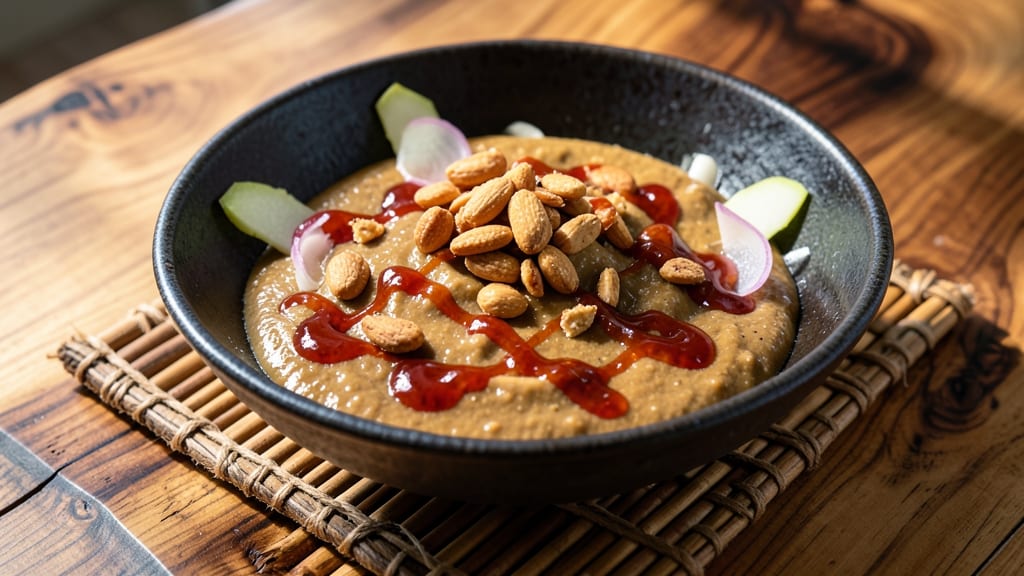
This Balinese peanut sauce recipe transforms simple stir-fries into a symphony of nutty-spiced richness that clings to every bite. 🌟 The secret lies in roasted peanuts and coconut milk, simmered with aromatic spices like turmeric and coriander until velvety smooth.
I developed this version after years of perfecting the balance between creamy texture and bold Balinese flavors—no lumps, no overpowering sweetness, just pure, restaurant-quality depth.
The sauce starts with a fragrant paste of garlic, shallots, and tamarind, which builds the foundation for layers of warmth from ginger and galangal. As it simmers, the peanuts release their natural oils, creating that signature silky texture while keeping the sauce rich but not heavy.
What makes this recipe truly special is its versatility—it elevates everything from satay skewers to crispy tofu or fresh spring rolls.
By the time you're done, you'll have a sauce that's smooth enough to drizzle, thick enough to coat, and packed with the kind of complex flavors that make home cooking feel like a culinary adventure.
The best part? It comes together in under 30 minutes with simple pantry staples, yet tastes like you spent hours mastering it.
Whether you're serving it as a dipping sauce, marinade, or stir-fry glaze, this Balinese peanut sauce will become your go-to for adding depth and richness to any dish. Let's get started with the perfect balance of spice, creaminess, and nutty warmth.
Ingredients for balinese peanut sauce
Nine simple ingredients transform into velvety, nutty-spiced Balinese magic for your favorite dishes.
| Ingredient | Amount | Notes |
|---|---|---|
| Dry Roasted Peanuts 🥜 | ¾ cup | Unsalted, finely chopped |
| Coconut Milk 🥥 | 1 can | Full-fat, 13.5 oz can |
| Garlic Cloves 🧄 | 4 cloves | Minced for paste |
| Shallots 🧅 | 2 whole | Minced, about 0.25 cup |
| Tamarind Paste 🍋 | 1 tbsp | Or 1 tbsp lime juice |
| Fresh Ginger 🌿 | 1 tbsp | Grated, about 0.5 oz |
| Galangal 🌿 | 1 tbsp | Grated, about 0.5 oz |
| Ground Turmeric 🌶️ | ½ tsp | For vibrant color |
| Ground Coriander 🌿 | 1 tsp | Freshly ground preferred |
| Coconut Sugar 🍯 | 1 tbsp | Or brown sugar |
| Soy Sauce 🥢 | 1 tbsp | Vegetarian soy sauce |
| Vegetable Oil 🫒 | 1 tbsp | For roasting peanuts |
| Lime Juice 🍋 | 1 tbsp | Freshly squeezed |
| Salt 🧂 | ½ tsp | Adjust to taste |
The peanuts are the star—unsalted dry roasted from the bulk bin at Trader Joe's or Whole Foods have the best flavor. Chop them yourself (food processor works great) for that perfect texture. Galangal is the tricky one—if you can't find it, extra ginger plus a pinch of cardamom gets you close. Tamarind paste? Look for the block at Asian markets—it keeps forever. The coconut milk should be full-fat for that rich, creamy finish. I usually grab Thai Kitchen brand because it's consistent and affordable.
No tamarind? Lime juice works in a pinch, though it'll be slightly less tangy. Galangal missing? Double the ginger and add a pinch of cinnamon for depth. Want it sweeter? Add another tablespoon of coconut sugar. For extra richness, stir in 1 tsp peanut butter at the end. The sauce thickens as it cools, so if it's too thick, just add a splash of water or coconut milk. If it's too thin, simmer uncovered for 2-3 minutes to reduce.
This sauce keeps beautifully—1 week in the fridge or 3 months frozen. I always make extra because it disappears fast. Store it in a glass jar with a tight lid. If it separates, just stir before using. The flavors actually deepen overnight, so leftovers taste even better. For satay, drizzle it on while the skewers are still hot—they'll soak up all that nutty goodness.
Why You'll Love This Recipe
- No-Fuss Pantry Magic: The only chopping I do is mincing garlic and shallots—no dicing, no peeling, just quick work. That tamarind paste? One spoonful does the job, and the peanuts toast themselves in the pan while you stir.
- Rich, Tangy Crunch: The toasted peanuts bring that satisfying crunch, while the tamarind cuts through the coconut creaminess like a bright, zesty hug. Honestly, the balance of sweet, sour, and nutty is what keeps me coming back.
- Dip or Drizzle: Slather it over grilled chicken, toss it with noodles, or serve it as a dip—this sauce plays well everywhere. I’ll be real: it’s my go-to for lazy Sundays when I’m too tired to plan.
- Lasts All Week: A single batch stretches for days, and it tastes even better the next day as the flavors meld. Plus, peanuts and coconut milk are cheap staples, so I’m not breaking the bank for flavor. Budget win.
Step-by-step instructions for Balinese peanut sauce
Here's how to make this aromatic, nutty-sweet sauce that's perfect for satay or stir-fries.
🔥 Step 1: Toast the Peanuts Until Fragrant
Heat the 1 tablespoon vegetable oil in a small skillet over medium heat. Add the 0.75 cup dry roasted peanuts and toast for 3-4 minutes, stirring constantly, until they turn a deeper golden brown and release their nutty aroma. This step is crucial—it intensifies the peanut flavor and prevents the sauce from tasting raw.
Watch closely after 2 minutes—the peanuts should be sizzling gently. If they start to smoke, reduce the heat slightly. Once toasted, immediately transfer the peanuts to a small bowl and set aside. You'll use them later to thicken and enrich the sauce, so don't skip this step—it makes all the difference in texture and flavor.
🍳 Step 2: Sauté Aromatics Until Golden
In the same skillet (no need to clean it—the browned bits add flavor), add the 2 whole shallots and 4 cloves garlic cloves that you've minced. Cook over medium heat for 4-5 minutes until the shallots soften and turn golden brown. This should happen before the garlic burns—you want it fragrant but not bitter.
Here's where the magic starts: the shallots should caramelize slightly, creating a sweet base for the sauce. If they're browning too quickly, reduce the heat to medium-low. Add the 1 tablespoon fresh ginger and 1 tablespoon galangal (both grated) and cook for another 1 minute, stirring constantly. The galangal has a citrusy, peppery kick that's essential for authentic Balinese flavor.
🥘 Step 3: Build the Sauce Base
Pour in the 1 can coconut milk and stir well to combine with the aromatic vegetables. Bring the mixture to a gentle simmer over medium heat, then reduce to low heat and let it cook uncovered for 5-7 minutes. This allows the coconut milk to reduce slightly and deepen in flavor.
While it simmers, add the 1 tablespoon tamarind paste, 0.5 teaspoon ground turmeric, 1 teaspoon ground coriander, 1 tablespoon coconut sugar, and 1 tablespoon soy sauce. Stir well to incorporate. The tamarind adds that signature tangy depth, while the turmeric gives the sauce its characteristic golden hue. Taste as you go—this is where you'll adjust the seasoning before adding the peanuts.
👨🍳 Step 4: Finish with Peanuts and Lime
Add the toasted peanuts to the sauce and stir vigorously for 1-2 minutes until they're fully incorporated and the sauce thickens slightly. The peanuts will break down into tiny pieces, creating that signature nutty texture. If the sauce is too thick, add 1-2 tablespoons of water to reach your desired consistency.
Finally, stir in the 1 tablespoon lime juice and 0.5 teaspoon salt. The lime brightens the flavors while cutting through the richness of the coconut and peanuts. Taste again and adjust the salt if needed—this sauce should balance sweet, spicy, tangy, and nutty flavors perfectly. Remove from heat immediately to preserve the fresh lime flavor.
Pro Tips For Making Balinese Peanut Sauce
- Toast Peanuts First: Skip the raw peanuts—toss them in a dry pan over medium heat for 3-4 minutes until they’re golden and fragrant. I learned this the hard way: raw peanuts turn the sauce greasy and bland. Toasting brings out their nuttiness and prevents a soggy texture.
- Blend Shallots Raw: Pulse shallots in the food processor before cooking—they’ll soften and release more flavor without burning. After burning three batches of charred shallots, I finally realized: raw blending saves time and keeps the sauce smooth.
- Simmer Tamarind Slow: Reduce tamarind paste with a splash of water first, then simmer on low for 5 minutes. Rushing this step leaves grainy bits that ruin the sauce’s silkiness. Sounds weird, but it works: patience here makes all the difference.
- Use Coconut Milk Twice: Reserve ¼ cup of the full-fat coconut milk for the end—stir it in last to keep the sauce rich without curdling. I skip this when I’m lazy, but the dish is noticeably better when I don’t. (Your future self will thank you.)
Common mistakes when making this recipe
Skipping the Toast
I can't stress this enough—toasting the peanuts is non-negotiable for authentic flavor. Raw peanuts taste bland and beany, while toasted ones release their natural oils and develop a deep, nutty aroma.
I've seen people skip this step and end up with a sauce that tastes like peanut butter straight from the jar. Toast them until they're golden brown and smell irresistible—this takes exactly 3-4 minutes over medium heat. 🥜
Burning the Aromatics
Watch those shallots and garlic like a hawk—they should soften and turn golden brown before the garlic burns. Once garlic turns bitter, it ruins the sauce's delicate balance. I recommend cooking them over medium heat and reducing to medium-low if they brown too quickly.
The goal is fragrant, not charred. A quick test: smell the pan—it should smell sweet and nutty, not acrid. 🧄
Over-Simmering the Coconut Milk
Coconut milk is delicate—simmer it too long, and it separates into a greasy mess. Keep the heat at low once it reaches a gentle simmer, and cook for only 5-7 minutes. Stir occasionally to prevent skin formation.
If it starts to curdle, immediately reduce the heat or remove from the stove. The sauce should reduce slightly but remain smooth and creamy, not broken. 🥥
Adding Peanuts Too Late
Peanuts need time to break down and thicken the sauce. Stir them in during the final 1-2 minutes of cooking, not at the very end. This ensures they properly incorporate and create that signature nutty texture.
If you add them cold, they'll sit as chunks rather than blending smoothly. Pro tip: Use a hand mixer for 10 seconds to help emulsify them fully. 🥜
Ignoring the Tamarind
Tamarind is the secret to that tangy depth that makes this sauce authentic. If you substitute it with lime juice, the sauce will taste flat and one-dimensional. For the best results, use block tamarind paste from an Asian market—it's more concentrated than bottled versions.
If you must substitute, add ½ tsp of white vinegar along with the lime juice for a similar tang. 🍋
Over-Salting or Over-Sweetening
Balance is key—this sauce should harmonize sweet, spicy, tangy, and nutty flavors. Taste as you go, especially after adding the soy sauce and coconut sugar. Start with the minimum amounts and adjust gradually.
I've seen people add extra sugar to compensate for bland peanuts, but this throws off the entire flavor profile. Trust the recipe's measurements first, then adjust. 🧂
Nutrition facts
Frequently asked questions
Can I make this peanut sauce without tamarind?
Yes, but the flavor will be less authentic. Replace 1 tbsp tamarind paste with 1 tbsp lime juice + ½ tsp white vinegar for tanginess. For extra depth, add ¼ tsp MSG to mimic tamarind's umami. The sauce will taste slightly brighter but still delicious!
How can I adjust the spice level?
This recipe is mild, but you can add heat by stirring in ½ tsp chili flakes or 1 tsp sambal oelek at the end. For smoky depth, add ¼ tsp smoked paprika when simmering. Always taste first—spices intensify as the sauce cools.
What's the best way to store leftover sauce?
Transfer to an airtight container and refrigerate for up to 1 week. The flavors actually improve overnight! If it thickens, whisk in 1 tsp water before using. For longer storage, freeze for 3 months—thaw in the fridge overnight.
Can I use this sauce in cold dishes?
It works perfectly in summer salads, cold noodle bowls, or as a dip for crudités. The peanut oil gives a luxurious texture even when chilled. Just add a splash of coconut milk if it thickens too much when cold.
Why did my sauce separate?
Coconut milk separates when overheated or when acidic ingredients (like lime) are added too quickly. Fix it by whisking vigorously or blending with 1 tbsp coconut milk to re-emulsify. For prevention, add lime juice last and keep heat low throughout.