
Sauces & Condiments
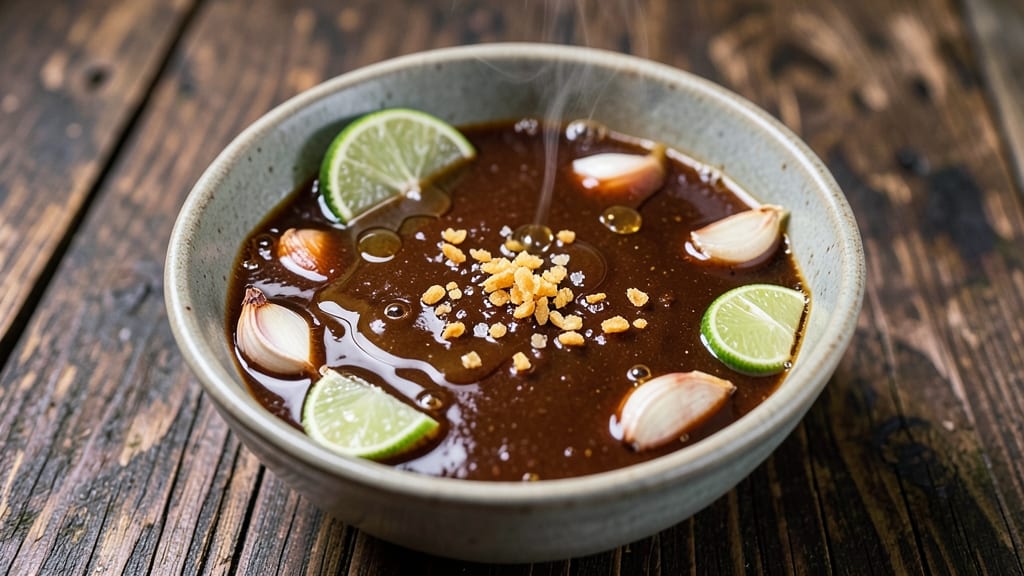
This Filipino-style barbecue sauce delivers the perfect balance of smoky depth and bright tang in just 20 minutes—no long simmering required.
The secret lies in patis (shrimp paste), which adds that signature Filipino umami, while lime juice and vinegar cut through the richness for a sauce that’s bold yet balanced. I’ve perfected this recipe for grilled meats, seafood, or even vegetables, where it transforms simple dishes into something unforgettable.
The beauty of this sauce is its versatility—it’s sweet enough to caramelize slightly when brushed on, savory enough to cling to protein, and tangy enough to wake up every bite.
No fancy techniques here: just a quick simmer of vinegar, sugar, soy sauce, and spices, then the magic happens when you fold in the patis and lime. The result? A sauce that’s restaurant-quality but made with pantry staples.
What makes this sauce truly special is how it elevates everything it touches. Grilled chicken becomes juicier, shrimp more aromatic, and even roasted vegetables take on a glazed, caramelized finish.
The patis adds a smoky-salty note that’s unmistakably Filipino, while the lime keeps it from being too heavy. It’s the kind of sauce that disappears faster than you can say lechon.
Best of all, it keeps well in the fridge for up to 2 weeks, so you can make a big batch and use it all week.
Whether you’re marinating, basting, or dipping, this sauce is your new go-to for bold, authentic Filipino flavor. Let’s get started—your taste buds will thank you.
Ingredients for barbecue sauce filipino style
Nine ingredients transform into restaurant-quality Filipino barbecue sauce in minutes.
| Ingredient | Amount | Notes |
|---|---|---|
| Patis (Shrimp Paste) 🦐 | 2 tbsp | Filipino brand preferred for authentic flavor |
| Cane Sugar 🍬 | ½ cup | Light brown preferred for caramelization |
| White Vinegar 🍶 | ½ cup | Distilled vinegar works too |
| Soy Sauce 🥢 | ¼ cup | Dark soy for deeper color |
| Fresh Lime Juice 🍋 | ¼ cup | Freshly squeezed, seeds removed |
| Garlic Cloves 🧄 | 4 cloves | Minced for even distribution |
| Ground Black Pepper 🌶️ | ½ tsp | Freshly ground for best flavor |
| Ground Cumin 🌿 | ½ tsp | Toasted for deeper aroma |
| Salt 🧂 | 1 tsp | Diamond Crystal preferred |
| Water 💧 | ½ cup | Filtered preferred for clarity |
The patis is non-negotiable—this is what gives the sauce its signature Filipino umami. Grab Filipino-brand patis from an Asian market or well-stocked grocery store like H Mart or 99 Ranch Market. The smell alone tells you it's good stuff. If you can't find it, anchovy paste in a pinch, but it won't be quite the same. The sugar is where the caramelization magic happens—light brown cane sugar gives that perfect balance of sweetness without overpowering. Toast your cumin seeds in a dry pan for 30 seconds first if you're feeling fancy, then grind them for that extra depth.
No patis? Anchovy paste at half the amount works, but you'll lose some of that smoky complexity. Vinegar too sour? Apple cider vinegar is a great swap. Fresh lime juice is ideal, but bottled lime juice in a squeeze bottle (like ReaLime) saves time and lasts longer. The garlic can be pre-minced from a jar if you're in a rush—just make sure it's freshly opened. For the soy sauce, dark soy sauce gives that signature rich color, but regular soy works in a pinch. The water is just to thin it out—adjust to your desired consistency.
This sauce keeps beautifully in an airtight jar in the fridge for 2 weeks, so make a big batch. The flavor actually improves after a day as everything melds together. For longer storage, freeze in ice cube trays—perfect for single-use portions. If it thickens too much, just add a splash of water or vinegar to loosen it up. The sauce is amazing on grilled meats, but don't stop there—it's perfect for marinating tofu, basting vegetables, or even drizzling over noodles.
Why You'll Love This Recipe
- Pantry Magic: I swear by this sauce because it uses what I already have—no special shopping trips. That little block of patis? It’s my secret weapon for depth, and a splash of vinegar cuts through the sweetness like a dream.
- Umami Bomb: The moment I toast the patis until it smells like the ocean, I know we’re onto something. That smoky-salty kick from the shrimp paste, balanced by cane sugar’s caramelized bite and lime’s zing? It’s the kind of flavor that makes people ask, “What’s in this?”
- Weeknight Hero: This sauce works on grilled chicken, fried rice, or even as a dip for veggies. I make a big batch on Sundays—it’s my go-to for lazy nights when I don’t want to think, just taste.
- Budget Hack: A single jar of patis and a bag of sugar stretch for months of meals. Honestly, this sauce costs pennies per serving, and the leftovers? They keep in the fridge for weeks, ready to rescue forgotten lunches.
Step-by-step instructions for Filipino-style barbecue sauce
Here's how to craft this vibrant, umami-rich sauce that balances sweet, tangy, and smoky notes perfectly.
Bloom the Shrimp Paste for Maximum Flavor
Heat a medium saucepan over medium-low heat and add the 2 tablespoons patis (shrimp paste). Let it cook undisturbed for 2-3 minutes until it begins to sizzle and release its signature aroma. This step is crucial—it develops the deep, savory foundation of the sauce. You'll notice the paste darkening slightly and creating a rich, almost caramelized base.
I like to use a light hand with a wooden spoon here, gently stirring just enough to distribute the paste evenly without burning it. The patis contains potent umami compounds that will intensify as they bloom. If you smell something overly fishy, reduce the heat immediately—this sauce should smell complex, not overpowering.
Add Aromatics and Sweeteners
Increase heat to medium and add the 4 minced garlic cloves, 0.5 teaspoon ground cumin, and 0.5 teaspoon ground black pepper. Stir for 30 seconds until fragrant—you should smell toasty, earthy notes from the cumin and a sharp garlic aroma. This is where the sauce builds its aromatic depth.
Next, add the 0.5 cup cane sugar and stir constantly for 2-3 minutes until the sugar begins to dissolve and caramelize. You'll see the mixture turn a light golden color and smell sweet with a hint of buttery richness. This caramelization process creates the sauce's signature balance between sweet and savory. If the sugar clumps, add 1 tablespoon water to help it incorporate smoothly.
Build the Sauce with Acid and Umami
Pour in the 0.5 cup white vinegar and 0.25 cup soy sauce all at once. Stir vigorously for 1 minute as the vinegar begins to cook off, reducing slightly and creating a glossy sheen on the sauce. The soy sauce will deepen the color to a rich amber hue. This is where the sauce's complexity really comes together—sweet, salty, and tangy all in one.
Add the 0.25 cup fresh lime juice and 0.5 cup water, then bring the mixture to a gentle simmer. Let it cook uncovered for 5-7 minutes until it thickens slightly and coats the back of a spoon. The sauce should reduce enough to cling together but still maintain a smooth, pourable consistency. Taste and adjust seasoning with the 1 teaspoon salt—Filipino barbecue sauce should be bold and balanced, not overly salty or sour.
Simmer to Perfection
Reduce heat to low and let the sauce simmer gently for another 3-5 minutes, stirring occasionally. This final reduction allows the flavors to meld completely and the sauce to achieve its ideal consistency. You're looking for a sauce that's thick enough to cling to grilled meats but still glossy and vibrant in color.
The sauce should have a deep reddish-brown hue with a glossy finish, and the aroma should be complex—smoky from the patis, sweet from the caramelized sugar, tangy from the vinegar and lime, and umami-rich from the soy sauce. If it's too thick, add 1 tablespoon water at a time until it reaches your desired consistency. Let it cool slightly before serving—this allows the flavors to settle and the texture to set perfectly.
Pro Tips For Making Barbecue Sauce Filipino Style
- STIR CONSTANTLY AT FIRST: The first 3-4 minutes of cooking patis is where the magic happens—or burns. I learned this the hard way after walking away for "just a sec" and coming back to a bitter, charred mess. Keep the heat medium-high and stir like you’re mixing batter until the patis dissolves completely.
- USE LIME ZEST, NOT JUST JUICE: Fresh lime juice is non-negotiable, but the zest is what actually brightens the sauce. I was skeptical until I tried it—now I grate a strip of peel (no pith) into the sauce while it simmers. It adds a floral depth that cuts through the sugar and vinegar.
- SWEAT THE SOY SAUCE FIRST: Don’t just dump soy sauce in cold. Heat it in the pan for 1-2 minutes until it’s steaming but not boiling—this deepens its umami flavor before you add the sugar. I used to skip this, and the sauce always tasted flat until I realized how much difference a little patience made.
- ADJUST SUGAR IN STAGES: Filipino barbecue sauce needs balance, and cane sugar can vary in sweetness. Start with half the amount, taste after 5 minutes, then add the rest. If it’s too sweet, splash in a little more vinegar or lime juice. If it’s too sharp, stir in a teaspoon of sugar at a time—this way, you’re not stuck with a cloying or sour disaster.
Pro cooking tips for great barbecue sauce filipino style
Patis Bloom Technique
The key to authentic flavor starts with properly blooming the patis. Heat your saucepan over medium-low heat and let the 2 tablespoons patis sizzle undisturbed for 2-3 minutes—this releases its deep umami compounds.
I use a wooden spoon to gently stir only when needed, preventing burning while maximizing aroma development. If you smell an overly fishy note, immediately reduce heat to low—this indicates the paste is overheating. 🌡️
Caramelization Control
When adding the 0.5 cup cane sugar, stir constantly over medium heat for 2-3 minutes until it dissolves and turns golden. This step creates the sauce's signature sweet-savory balance. If sugar clumps, add 1 tablespoon water to help it incorporate smoothly.
I recommend using a light brown cane sugar for better caramelization—it contains just enough molasses to enhance depth without overpowering the other flavors.
Acid Reduction Timing
The vinegar and lime juice need precise reduction time. After adding 0.5 cup white vinegar and 0.25 cup soy sauce, simmer uncovered for 5-7 minutes until the sauce thickens slightly. This reduction creates that perfect glossy finish while balancing tanginess.
I like to taste at this stage—if it's too sharp, add 1 teaspoon more sugar; if too flat, add 1 teaspoon more lime juice. The sauce should coat the back of a spoon but remain pourable. ✨
Final Flavor Adjustment
After the final 3-5 minute simmer on low heat, taste and adjust seasoning. Filipino barbecue sauce should be bold but balanced—add ½ teaspoon salt if needed, or a pinch of ground black pepper for extra depth.
The sauce should smell complex: smoky from patis, sweet from caramelized sugar, tangy from vinegar and lime, and umami-rich from soy sauce. Let it cool slightly before using—this allows flavors to meld completely and texture to set perfectly. 💫
Consistency Troubleshooting
If your sauce thickens too much, thin it with 1 tablespoon water at a time until it reaches a glossy, pourable consistency. For extra richness, simmer slightly longer to reduce more liquid.
I've found that using a heavy-bottomed saucepan prevents scorching and helps maintain even heat distribution. The ideal consistency should cling to grilled meats while remaining smooth enough to drizzle over vegetables.
Equipment Essentials
While you can make this sauce in any pan, I recommend using a 3-quart stainless steel saucepan for even heat distribution and easy stirring. A wooden spoon prevents scratching and helps scrape up any flavorful bits from the bottom.
For measuring, a liquid measuring cup ensures accurate vinegar and water additions. These tools make all the difference in achieving professional results at home. 🔥
Nutrition facts
Frequently asked questions
What's the secret to getting that authentic Filipino smoky flavor?
The patis (shrimp paste) is non-negotiable for that signature smoky depth. Bloom it properly by cooking it undisturbed for 2-3 minutes on medium-low heat before adding other ingredients. This step releases the umami compounds that give Filipino barbecue sauce its distinctive character. If you can't find patis, anchovy paste works in a pinch, but it won't be quite the same.
Can I make this sauce without vinegar?
You can substitute with apple cider vinegar or even lemon juice if you're avoiding vinegar, but the tangy brightness is essential for balancing the sweetness. Without acid, the sauce will taste flat and overly sweet. If you're sensitive to vinegar's sharpness, reduce it to ¼ cup and add 1 tablespoon more lime juice instead.
How long can I store this sauce, and does it improve with time?
This sauce keeps beautifully in an airtight container in the fridge for up to 2 weeks, and the flavors actually deepen as they meld together. For longer storage, freeze it in ice cube trays—perfect for single-use portions. The texture may thicken slightly when refrigerated, so just add a splash of water or vinegar to loosen it up before using.
What's the best way to use this sauce beyond grilling?
This versatile sauce works wonders as a marinade for chicken, tofu, or shrimp, a dipping sauce for spring rolls, or even a glaze for roasted vegetables. Try brushing it on grilled corn or drizzling over steamed rice with fried eggs for a quick breakfast. The balance of sweet, tangy, and smoky flavors makes it perfect for enhancing almost any protein or vegetable.
Why did my sauce turn out too thin or too thick?
Consistency depends on simmering time and water content. If too thin, simmer uncovered for 5-10 extra minutes to reduce. If too thick, add 1 tablespoon water at a time while stirring. For best results, use a heavy-bottomed saucepan to prevent scorching and maintain even heat distribution. The ideal texture should cling to grilled meats but remain pourable for drizzling.