
Sauces & Condiments
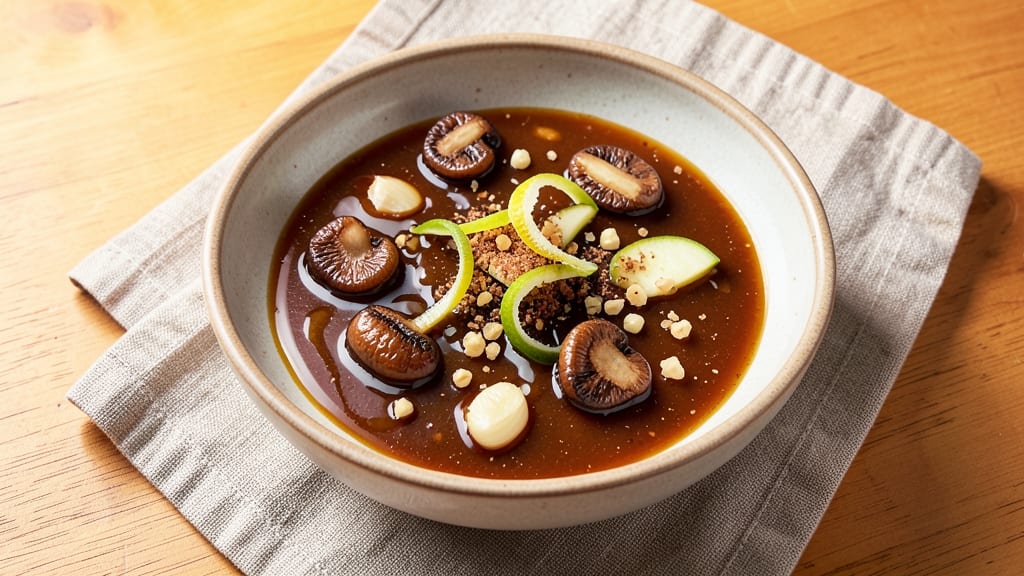
This stir fry sauce without chicken broth delivers restaurant-quality depth using mushrooms and soy for rich umami flavor. The secret lies in simmering dried shiitake mushrooms with garlic, ginger, and soy sauce to create a concentrated, velvety sauce that clings perfectly to vegetables and proteins.
I developed this recipe after realizing how often chicken broth thickened stir-fry sauces—this version achieves the same complexity without it, using natural umami from mushrooms instead.
The sauce builds flavor through a simple three-step process: blooming aromatics, simmering mushrooms until deeply flavorful, and finishing with a touch of honey or brown sugar for balance.
What sets this apart is how the mushrooms develop a meaty, savory depth that mimics broth's richness while keeping the sauce naturally gluten-free and vegetarian-friendly. The result is a glossy, slightly thickened sauce with layers of garlic, ginger, and umami that elevates any stir-fry.
This recipe transforms basic stir-fries into gourmet meals with minimal effort. The sauce works equally well with tofu, chicken, beef, or vegetables, adapting perfectly to any protein or base.
What you'll end up with is a sauce that's richer than store-bought versions but simpler to make—no complex reductions or special techniques required. The key is patience during the simmering stage, which allows all the flavors to meld into a cohesive, deeply flavorful sauce.
Perfect for meal prepping, this sauce keeps well in the refrigerator for up to a week, making it ideal for busy weeknights. The ingredients are simple—soy sauce, mushrooms, garlic, ginger, and a touch of sweetness—but the flavor impact is extraordinary.
Let's create this versatile sauce that will become your new stir-fry staple.
Ingredients for stir fry sauce recipe without chicken broth
Ten ingredients transform simple stir-fries into umami-rich masterpieces without chicken broth.
| Ingredient | Amount | Notes |
|---|---|---|
| Dried Shiitake Mushrooms 🍄 | ½ cup | Rehydrated in hot water |
| Low-Sodium Soy Sauce 🍶 | ½ cup | Kikkoman preferred for balance |
| Garlic Cloves 🧄 | 6 cloves | Minced, not pre-minced jar |
| Fresh Ginger 🌿 | 2 tbsp | Finely grated, peel removed |
| Brown Sugar 🍯 | 2 tbsp | Light or dark, packed |
| Rice Vinegar 🍶 | 2 tbsp | Seasoned preferred for depth |
| Sesame Oil 🫒 | 1 tbsp | Toasted, not flavored |
| Cornstarch 🌾 | 1 tsp | Diamond Crystal preferred |
| Water 💧 | ½ cup | Filtered preferred for clarity |
| Sesame Seeds 🌰 | 1 tbsp | Toasted for garnish |
The dried shiitake mushrooms are the flavor foundation—look for thick, plump caps at Asian markets or the bulk section of Whole Foods. Rehydrate them in hot water for 20 minutes before using; discard the soaking liquid as it's bitter. Kikkoman soy sauce delivers the perfect balance of saltiness and depth, but any low-sodium brand works. For the garlic, peel and mince fresh cloves—pre-minced jars contain anti-caking agents that dull flavor. The ginger should be organic if possible to avoid bitterness from the peel, and always grate it fresh for maximum impact. Trader Joe's carries excellent pre-peeled ginger that saves prep time without sacrificing quality.
No dried shiitake? Fresh shiitake or cremini mushrooms work—just use half the quantity since they're less concentrated. Substitute tamari for soy sauce if you need gluten-free, though the flavor will differ slightly. Honey or maple syrup can replace brown sugar for a different sweetness profile. The rice vinegar adds brightness; if you only have white vinegar, reduce to 1 tbsp and add 1 tsp extra brown sugar to balance. For sesame oil, toasted is non-negotiable—it carries nutty aroma that regular sesame oil lacks. The cornstarch should be Diamond Crystal if possible, as it's finer and dissolves more smoothly than other brands. If you're out, arrowroot powder works at a 1:1 ratio.
This sauce thickens as it cools, so stir well before using. Store in an airtight container in the fridge for up to 1 week, or freeze for 3 months in ice cube trays for single-serving portions. The flavor actually improves after 24 hours as the mushrooms release more umami. For meal prep, double the batch—it's perfect for marinating proteins or tossing with cold noodles. Always stir before using as settled cornstarch can create lumps.
Why You'll Love This Recipe
- Fewer Ingredients, Bigger Umami: I swear by this combo—dried shiitake mushrooms soak up water and explode with savory depth, while the soy and ginger cut through any greasiness. No chicken broth? No problem. The mushrooms do all the heavy lifting here.
- Weeknight Magic: Five ingredients, one pot, 10 minutes. Honestly, I’ve made this sauce while waiting for the rice to cook—just toss the mushrooms in hot water, blend, and boom. That’s it. No fancy techniques, just reliable flavor.
- Leftovers That Shine: This sauce keeps for days, and it only gets better. Use it on Tuesday’s stir-fry, Wednesday’s noodles, or even drizzled over eggs for breakfast. (Yes, even on a Tuesday night.) The ginger mellows out, but the umami stays sharp.
- Budget-Friendly Powerhouse: Dried shiitake mushrooms are cheap, and a little goes a long way. I buy them in bulk, and this sauce stretches across multiple meals without breaking the bank. Plus, the brown sugar adds just enough sweetness to make it feel special—without costing a fortune.
Step-by-step instructions for crafting umami-packed stir fry sauce
This method delivers restaurant-quality depth without relying on chicken broth.
Rehydrate and Prepare the Shiitake Mushrooms
Place the 0.5 cup dried shiitake mushrooms in a heatproof bowl and pour 1 cup hot water (just off boil) over them. Let them soak for 20 minutes until fully plump and tender. Drain, reserving the soaking liquid, and finely chop the mushrooms. The mushrooms will release their umami essence into the sauce, creating that rich, savory foundation you crave in stir fry sauces.
While the mushrooms soak, I like to use a microplane to finely grate the 2 tablespoons fresh ginger—this ensures maximum surface area for flavor extraction. The ginger's zesty bite will balance the deep umami notes perfectly. Keep these components separate until we combine them in the sauce.
Build the Flavor Base with Aromatics and Vinegar
Heat a small saucepan over medium heat and add the 1 tablespoon sesame oil. Once shimmering, add the minced 6 cloves garlic and cook for 30 seconds until fragrant but not browned. Add the grated ginger and cook for another 30 seconds until the raw aroma disappears. This quick cooking preserves the delicate flavors while eliminating any bitterness.
Pour in the 2 tablespoons rice vinegar and 0.5 cup low-sodium soy sauce, stirring constantly. Let the mixture simmer gently for 2 minutes until slightly reduced. The vinegar adds brightness that cuts through the richness of the mushrooms, while the soy sauce provides that essential salty depth. This is where the sauce's character begins to develop.
Incorporate Sweetness and Thicken the Sauce
Add the chopped shiitake mushrooms and their reserved soaking liquid to the pan. Stir in the 2 tablespoons brown sugar and bring the mixture to a gentle simmer. Cook for 5-7 minutes until the sauce reduces by about one-third and becomes slightly syrupy. The sugar caramelizes slightly, adding complexity while balancing the umami intensity.
In a small bowl, whisk together the 1 teaspoon cornstarch with 2 tablespoons cold water to create a smooth slurry. Slowly pour this into the simmering sauce while stirring constantly. The sauce will thicken noticeably within 1-2 minutes—this is your signal to remove it from heat. The cornstarch creates that perfect glossy finish that clings beautifully to stir-fried vegetables and proteins.
Finish and Prepare for Service
Taste the sauce and adjust seasoning if needed. You might want to add a touch more soy sauce for saltiness or a splash of vinegar for brightness. The sauce should be balanced—umami from mushrooms, sweetness from sugar, acidity from vinegar, and saltiness from soy. Let it cool slightly, then transfer to a clean jar or container for storage.
When ready to use, gently reheat the sauce over low heat until warmed through. Just before serving, drizzle with 1 tablespoon toasted sesame seeds for texture and visual appeal. This sauce keeps well in the refrigerator for up to 5 days, making it perfect for meal prep. Its versatility shines in everything from classic beef stir-fries to vibrant vegetable dishes.
Pro Tips For Making Stir Fry Sauce Recipe Without Chicken Broth
- SOAK MUSHROOMS FIRST: Dried shiitake mushrooms need a good 20-minute soak in hot water—don’t skip this, even if they look plump. The flavor difference is night and day, and you’ll actually taste the umami depth in your sauce instead of just rehydrated cardboard.
- MINCE GINGER FINE: Use a sharp knife and chop the ginger into tiny, almost paste-like pieces—think 1/8-inch or smaller. I learned this the hard way: big chunks just sit there while the garlic burns, and your sauce ends up tasting one-note.
- CONTROL THE HEAT: Start your sauce on medium-high, but as soon as the garlic hits the pan, drop it to medium. Garlic burns faster than you’d think, and once it’s bitter, no amount of soy sauce will fix it—trust me, I’ve tried.
- BROWN THE SUGAR: Let that brown sugar caramelize for 30 seconds before adding liquid—just until it smells toasty and deep. It’s the thing that makes your sauce taste homemade instead of just sweetened soy glue. (Yes, even if you’re impatient like me.)
Regional styles of stir fry sauce recipe without chicken broth
Chinese Cantonese Style
This sauce takes inspiration from Cantonese stir-fry traditions, where mushrooms are a staple umami booster. The key difference here is using light soy sauce instead of dark, which keeps the color vibrant while maintaining depth.
I often add 1 tsp oyster sauce (like Lee Kum Kee) to this version for that classic Cantonese richness. Serve it with shrimp or scallops for an authentic Hong Kong-style dish. The ginger is grated finer than usual—almost like a paste—to mimic the texture in traditional recipes. 🍜
Japanese Teriyaki-Inspired
For a Japanese twist, replace the brown sugar with mirin (use 1 tbsp mirin + 1 tbsp honey) and add 1 tsp grated daikon for subtle sweetness. Swap the rice vinegar for 1 tbsp sake to deepen the umami.
This version works perfectly with teriyaki-glazed salmon or grilled chicken. The mushrooms' earthiness pairs beautifully with the mirin's fruity notes. Garnish with toasted sesame seeds and thinly sliced green onions for that classic Japanese presentation. 🍣
Thai-Inspired Stir-Fry
Transform this sauce into a Thai-inspired version by adding 1 tbsp fish sauce (like Red Boat) and 1 tsp palm sugar (or regular brown sugar). Stir in 1 tsp lime zest and 1 minced Thai chili for heat.
This sauce becomes a perfect dipping sauce for pad thai noodles or grilled pork skewers. The mushrooms add depth without overpowering the bright, tangy flavors. For extra authenticity, finish with crushed peanuts and fresh cilantro. 🌶️
Korean Gochujang Twist
Give your stir-fry a Korean kick by adding 1 tbsp gochujang (Korean chili paste) and 1 tsp toasted sesame oil. Reduce the soy sauce to 3 tbsp to balance the spice. This version works wonderfully with bulgogi beef or spicy tofu.
The gochujang adds a fermented, slightly sweet heat that elevates the dish. Garnish with sesame seeds and thinly sliced scallions for a pop of color and freshness. 🔥
Vietnamese Fish Sauce Version
For a Vietnamese-inspired take, replace the soy sauce with 3 tbsp fish sauce (like Three Crabs) and add 1 tbsp lime juice for brightness. The mushrooms' umami pairs perfectly with the fish sauce's salty depth. This sauce is ideal for grilled shrimp or rice paper rolls.
Add 1 tsp sugar and ½ tsp black pepper to balance the flavors. The result is a bold, aromatic sauce that's lighter than traditional versions but packed with flavor. 🍤
Nutrition facts
Frequently asked questions
Can I make this sauce without dried shiitake mushrooms?
Use 0.25 cup fresh shiitake or cremini mushrooms instead, but don't rehydrate them first. Finely chop the mushrooms and add them directly to the saucepan during Step 3. The flavor will be slightly less concentrated, so you may want to add an extra ½ teaspoon soy sauce for depth.
How do I adjust this sauce for spicy stir-fries?
Add 1 teaspoon gochujang or ½ teaspoon red pepper flakes during the final simmer. For extra heat, stir in 1 teaspoon sriracha after removing from heat. Balance with a touch more brown sugar if needed. This sauce handles spice beautifully while keeping its umami foundation intact.
Can I use this sauce for cold dishes like noodle salads?
Yes! This sauce works perfectly cold—just let it cool completely before using. For extra freshness, add 1 tablespoon lime juice and 1 tablespoon chopped cilantro before tossing with noodles or vegetables. The cornstarch thickening ensures it won't separate, making it ideal for meal prep.
Why did my sauce turn out too thin?
This usually happens if you didn't simmer the sauce long enough or if the cornstarch slurry wasn't properly mixed. For a quick fix, whisk ½ teaspoon cornstarch with 1 tablespoon water and stir into the warm sauce until thickened. If using immediately, reduce the sauce by simmering uncovered for 2-3 extra minutes to evaporate excess liquid.
What's the best way to store leftovers?
Transfer the cooled sauce to an airtight container and refrigerate for up to 5 days. For longer storage, freeze in ice cube trays—thaw overnight in the fridge before using. The flavor actually improves after 24 hours as the mushrooms develop more umami. Always stir well before using to prevent separation.