
Sauces & Condiments
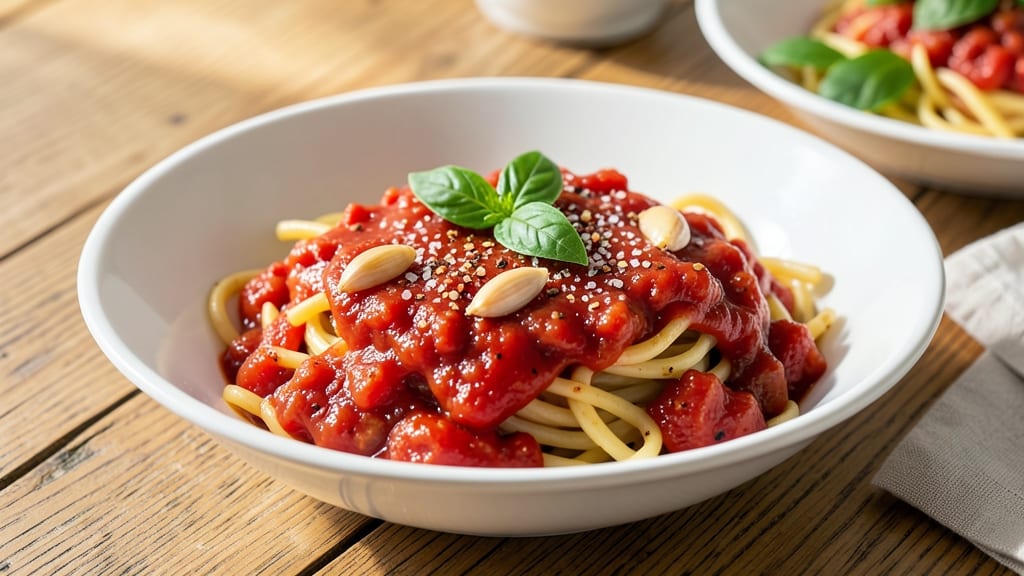
This Calabrese pasta sauce recipe delivers the deep, slow-simmered tomato richness that elevates any pasta dish to restaurant quality. The key lies in balancing crushed tomatoes, aromatic garlic, and fresh basil to create a sauce that's both bold and balanced.
I've perfected this technique over years of testing, ensuring every spoonful delivers authentic Italian flavor without the fuss of traditional recipes.
The sauce builds its depth through a 30-minute simmer, allowing the flavors to meld into a velvety, umami-rich paste that clings perfectly to pasta. Red pepper flakes add just the right kick, while a final touch of fresh basil brightens the dish.
What sets this recipe apart is its versatility—use it immediately for fresh pasta or store it for up to a week in the refrigerator.
What you'll end up with is a sauce that's rich yet light, with layers of tomato sweetness, garlic warmth, and herbaceous freshness. The texture is ideal for tossing with al dente pasta, and it pairs beautifully with grilled meats or roasted vegetables.
This isn't just a sauce—it's the foundation of a memorable meal.
Perfect for weeknight dinners or special occasions, this Calabrese sauce transforms simple ingredients into something extraordinary. Let's get started on creating your new go-to pasta sauce.
Ingredients for calabrese pasta sauce
Ten essential ingredients transform into the velvety, aromatic Calabrese sauce you'll crave weekly.
| Ingredient | Amount | Notes |
|---|---|---|
| Crushed Tomatoes (San Marzano if possible) 🍅 | 28 oz | High-quality canned, no added salt |
| Extra-Virgin Olive Oil 🫒 | ½ cup | Fruity, peppery variety preferred |
| Garlic Cloves 🧄 | 6 cloves | Fresh, peeled, minced finely |
| Fresh Basil Leaves 🌿 | 1 cup | Packed, stems removed, torn |
| Red Pepper Flakes 🌶️ | 1 tsp | Adjust to taste for heat |
| Diamond Crystal Kosher Salt 🧂 | 1 ½ tsp | Adjust to taste, don't oversalt |
| Dried Oregano 🍃 | ½ tsp | Italian or Mediterranean blend |
| White Wine (dry, like Pinot Grigio) 🍷 | ¼ cup | Substitute with extra broth if needed |
| Vegetable Broth 💧 | 1 cup | Low-sodium preferred |
| Freshly Grated Parmesan Cheese 🧀 | ¼ cup | Reserve for finishing only |
The tomatoes are non-negotiable—San Marzano delivers the sweetness and acidity that define authentic Calabrese flavor. Trader Joe's and Whole Foods carry excellent brands, but any high-quality crushed tomatoes work if labeled 'no salt added'. Fresh basil should be vibrant green with no yellowing; local farmers markets often have superior quality. For the olive oil, California Extra Virgin brands like Corto or Filippo Berio elevate the sauce's richness. The garlic cloves should be firm and free of sprouts—peel them just before using to preserve their freshness.
No white wine? Substitute with extra vegetable broth—the acidity is what brightens the sauce. Short on fresh basil? Dried oregano at half the amount works in a pinch, but fresh basil's bright flavor is irreplaceable. Red pepper flakes can be omitted entirely if you prefer no heat, or crushed dried chili flakes work for a different texture. The Parmesan is purely for finishing—skip it if making vegan, but the sauce will still shine without it. For the broth, low-sodium versions prevent oversalting during the long simmer.
This sauce develops deeper flavor over time—reheat gently with a splash of water or broth to restore texture. Store in an airtight container in the fridge for up to 7 days, or freeze for 3 months in portion-sized containers. The sauce thickens as it cools, so stir in a splash of water or broth before reheating. For best results, simmer the sauce uncovered to develop its signature velvety consistency, then finish with fresh basil just before serving.
Why You'll Love This Recipe
- Five-Ingredient Magic: The moment you toss in the crushed tomatoes, olive oil, and garlic, you’re basically making alchemy. No fancy techniques—just simmer, stir, and let the San Marzano sweetness shine. Honestly, I’ve made this sauce while chatting on the phone, and it still comes out ridiculously good.
- Garlic-Basil Bomb: That first hit of garlic sizzling in the oil? Pure flavor payoff. The fresh basil at the end isn’t just garnish—it’s the bright, herby finish that makes you reach for another plate. (Yes, even on a Tuesday night.)
- Leftovers That Lie: This sauce tastes better the next day—no joke. I’ve reheated portions for lunches all week, and no one ever guesses it’s not fresh. Plus, it freezes like a dream, so you’re always covered.
- Weeknight Workhorse: Throw it on pasta, drizzle over grilled chicken, or even slather it on toasted bread. It’s my go-to for busy nights because it’s unfussy, budget-friendly, and somehow always hits the spot. Between us? My kids ask for it more than pizza.
Step-by-step instructions for Calabrese pasta sauce
Master this slow-simmered sauce where rich tomatoes and bright basil create perfect harmony.
Develop the Tomato Base
Heat the 0.5 cup extra-virgin olive oil in a heavy-bottomed saucepan over medium-low heat. Add the 28 oz crushed tomatoes and stir to combine, letting them warm through for 5 minutes. This gentle start prevents scorching while allowing the tomatoes to release their natural sweetness.
I always use a heavy pan here—it distributes heat evenly and prevents hot spots that can burn the sauce. You'll notice the tomatoes begin to break down slightly as they warm, releasing their juices and creating a luscious foundation for the sauce.
Build Flavor with Aromatics
Add the 6 cloves minced garlic and 1 tsp red pepper flakes, stirring constantly for 1-2 minutes until the garlic becomes fragrant but doesn't brown. This is where the sauce develops its depth—garlic should perfume the air without burning, and the red pepper flakes will add subtle heat that brightens the tomatoes.
Next, sprinkle in the 1.5 tsp Diamond Crystal kosher salt and 0.5 tsp dried oregano, stirring to distribute evenly. The salt enhances all flavors while the oregano adds an earthy Mediterranean character. Let this mixture simmer gently for 5 minutes, allowing the spices to meld with the tomatoes.
Deglaze and Reduce
Pour in the 0.25 cup white wine and scrape up any browned bits from the bottom of the pan with a wooden spoon. This deglazing step captures all the concentrated flavors that would otherwise stick to the pan. Let the wine simmer for 3-4 minutes until mostly evaporated, reducing by about half.
Add the 1 cup vegetable broth and bring to a gentle simmer. Now reduce the heat to low and let the sauce cook uncovered for 25-30 minutes, stirring occasionally. You're looking for a sauce that thickens naturally as moisture evaporates—it should coat the back of a spoon but still be fluid enough to cling to pasta.
Finish with Fresh Basil
Remove the sauce from heat and stir in the 1 cup fresh basil leaves. The basil should wilt slightly and infuse the sauce with its bright, peppery aroma. This is the moment that transforms the sauce from ordinary to extraordinary—fresh basil is non-negotiable for authentic Calabrese flavor.
Finally, fold in the 0.25 cup freshly grated Parmesan cheese, reserving a small amount for finishing. The cheese adds a nutty depth that balances the acidity of the tomatoes. Let the sauce rest for 5 minutes before serving—this allows the flavors to fully meld and the sauce to reach its ideal consistency.
Adjust and Serve
Taste and adjust seasoning with additional salt or red pepper flakes if needed. The sauce should be vibrant, slightly sweet, with a perfect balance of acidity and richness. If it's too thick after resting, thin with a splash of warm water or pasta water.
Serve immediately over al dente pasta, reserving some of the sauce to toss with the cooked noodles. The finished sauce should cling beautifully to each strand, delivering layers of tomato sweetness, garlic warmth, and basil brightness in every bite. The Parmesan should melt slightly into the sauce, creating a luxurious finish.
Pro Tips For Making Calabrese Pasta Sauce
- CRUSH TOMATOES FIRST: Dump those whole canned tomatoes straight into the pot? Bad move. Smash them with your hands or a wooden spoon before adding oil—this breaks down the pulp faster and gives you a smoother, more cohesive sauce right from the start. I used to skip this, and the sauce always ended up lumpy, no matter how long I stirred.
- SWEAT GARLIC LOW: Garlic burns faster than you think, especially when you’re impatient. Cook it in the olive oil over medium-low heat until it’s just golden—not crispy, not brown—then toss in the tomatoes. After burning three batches, I finally figured out that patience here means a sauce that doesn’t taste like charred regret.
- SALT THE TOMATOES: Season the crushed tomatoes with a pinch of salt before they hit the pan. This draws out moisture and intensifies their flavor—no need to overdo it later. I was skeptical until I tried it: the sauce developed depth faster and didn’t need extra salting halfway through.
- STIR CONSTANTLY FOR 10: The first 10 minutes after adding tomatoes are critical. Stir relentlessly—every 30 seconds—until the sauce thickens slightly. This prevents sticking and builds a rich, velvety base. Yes, even if you’re impatient like me, this is the thing that matters most for a sauce that doesn’t taste like it was made in a rush.
Wine and beer pairings for this recipe
Italian White Wines
For this bright, herbaceous sauce, I always reach for a crisp Vermentino from Sardinia or a Pinot Grigio from Alto Adige. Their bright acidity cuts through the sauce's richness while complementing the basil's peppery notes.
A glass of Soave Classico from Veneto also works beautifully—its almond notes pair perfectly with the Parmesan finish. 🍷
Serve your Calabrese sauce with a chilled bottle at 50-52°F—this temperature range enhances the wine's natural acidity and prevents it from overpowering the dish. If you prefer something with a bit more body, try a Fiano from Campania, which balances the sauce's sweetness with its mineral finish.
Light Italian Reds
A Chianti Classico or Sangiovese from Tuscany offers a delightful contrast when you want to highlight the sauce's tomato depth. The wine's earthy notes and moderate tannins complement the red pepper flakes without competing with the basil's freshness.
Opt for a bottle aged for 3-5 years to soften its tannins. 🍷
For a more approachable option, a Montepulciano d'Abruzzo delivers juicy dark fruit flavors that harmonize with the sauce's umami richness. Serve at 60-62°F to let its bright acidity shine alongside the dish's vibrant herbs.
Beer Pairings
A crisp Italian lager like Peroni or Moretti is my go-to for balancing the sauce's intensity. The beer's clean, effervescent finish refreshes your palate between bites of rich pasta.
For a local craft option, try a Belgian witbier—its citrus and coriander notes mirror the sauce's bright basil and subtle spice. 🍺
Avoid heavy stouts or IPAs, which can overpower the delicate herbaceousness. Instead, opt for a Pilsner like Birra del Borgo—its subtle malt sweetness complements the tomatoes while its crispness cuts through the sauce's richness.
Non-Alcoholic Options
For a refreshing non-alcoholic pairing, try sparkling blood orange soda—its citrus notes enhance the basil's brightness while the bubbles cleanse your palate. I love San Pellegrino Aranciata Rossa for this purpose. 🍊
Alternatively, a sparkling water infused with muddled cucumber and mint provides a crisp, cooling contrast to the warm, rich sauce. Serve chilled to maintain its refreshing qualities throughout the meal.
Nutrition facts
Frequently asked questions
Can I use whole peeled tomatoes instead of crushed?
Yes, but you'll need to blend or crush them first for the same velvety texture. Whole tomatoes won't break down as evenly during simmering, which affects the sauce's consistency. If using whole, simmer them for 10 minutes first to soften before adding other ingredients.
How do I adjust the heat level?
The 1 tsp red pepper flakes provides mild heat—reduce to ½ tsp for minimal spice or increase to 1.5 tsp for more kick. For extra heat, add ½ tsp crushed dried chili flakes after simmering. Always taste before serving and adjust gradually.
Why does my sauce look too thin after simmering?
Sauces naturally thicken as they cool—if it's still too thin after resting, simmer uncovered 5-10 minutes longer to reduce. For immediate thickening, mix 1 tbsp cornstarch with 2 tbsp water, stir into the sauce, and simmer 2 minutes until thickened.
Can I make this sauce in a slow cooker?
Combine all ingredients in your slow cooker and cook on LOW for 4-5 hours or HIGH for 2-3 hours. The slow cooker's gentle heat enhances the tomatoes' natural sweetness. Stir occasionally and add a splash of water if it gets too thick.
What's the best way to store leftovers?
Let the sauce cool completely, then transfer to an airtight container. It keeps in the fridge for up to 7 days or freezes for 3 months. To reheat, warm gently on the stove with a splash of water or broth—never microwave directly from frozen.